Author: Dorian

  • What Causes Health Disparities? Breaking It Down | PHuncle Explains

    What Causes Health Disparities? Breaking It Down | PHuncle Explains

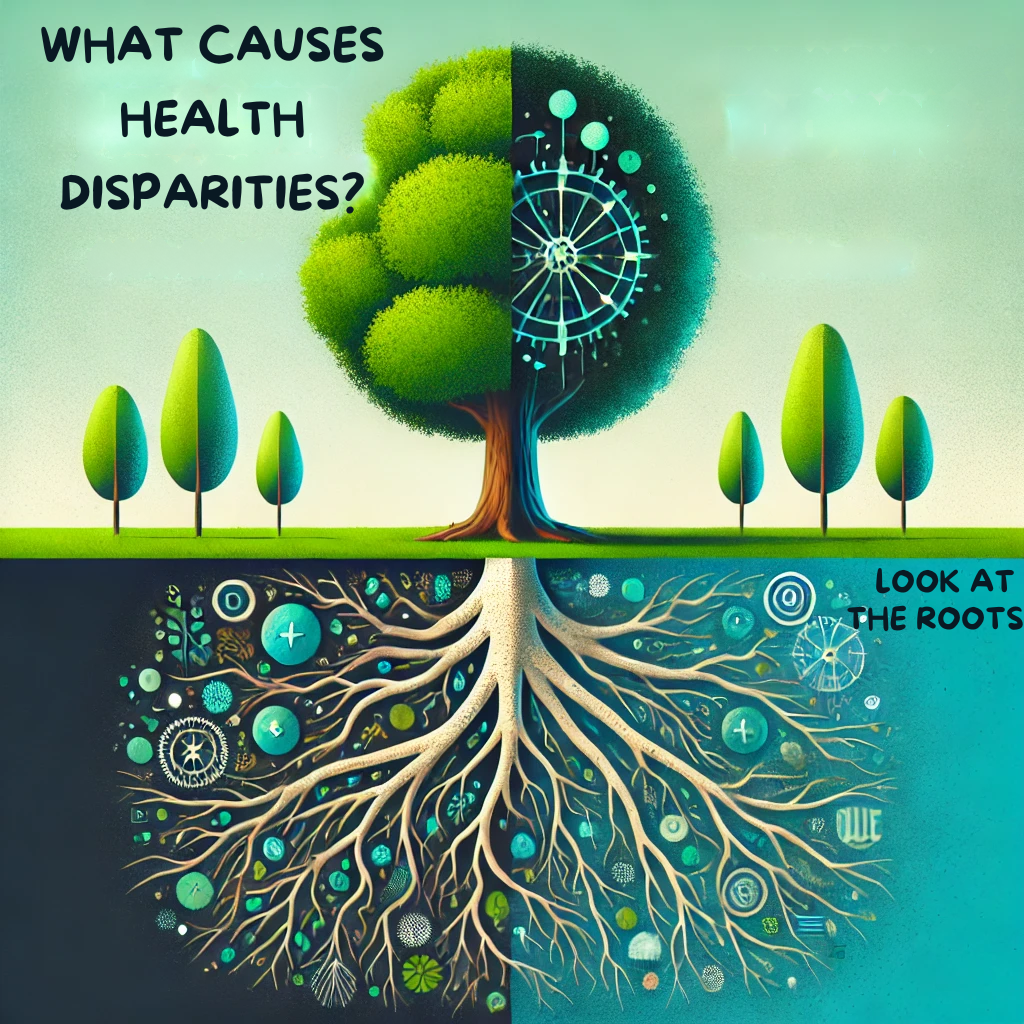
    When people get sick more often in certain neighborhoods, it’s easy to blame individual choices. But let me tell you why that’s like focusing on the leaves while ignoring the roots.

    Take Type 2 diabetes rates in different neighborhoods. Easy to say, “Well, people should just eat better,” right? But what happens when the closest grocery store is two bus rides away while the corner store selling processed foods is right there?

    And let me break down this transportation piece real quick – having your own car isn’t just about convenience. It’s about access to better jobs, better healthcare, better food options, better everything.

    But between car payments, insurance, maintenance, and gas, that’s a major investment many can’t swing. Even if they could, some neighborhoods are designed to make driving more difficult—poor road maintenance, limited parking, and safety concerns.

    So when we talk about “food choices,” we’re really talking about:

    • Transportation access
    • Neighborhood design
    • Time constraints
    • Resource availability
    • Economic barriers

    Digging Up the Real Causes

    First, let’s be clear about what we mean by health disparities: these are differences between groups in health outcomes that are systematic, unjust, and – this is key – avoidable. We’re not talking about random chance here. We’re talking about predictable patterns that follow lines of advantage and disadvantage. Here are some examples of what these may look like.

    Food Access and Chronic Disease:

    • Food deserts in certain neighborhoods
    • Limited access to fresh produce
    • Higher concentration of fast food
    • Time and transportation barriers
    • Result: Higher rates of type 2 diabetes, heart disease

    Maternal Health Disparities:

    • Limited healthcare access in certain areas
    • Fewer prenatal care options
    • Transportation challenges
    • Stress from systemic racism
    • Result: Higher rates of low birth weight and complications

    These disparities can also show up across different realms:

    Economic Stability:

    • Higher stress-related conditions in financially insecure communities
    • Limited ability to take time off for preventive care
    • Choosing between medicine and other necessities
    • Result: Worse management of chronic conditions

    Neighborhood and Built Environment:

    • Food deserts leading to poor nutrition
    • Lack of safe spaces for physical activity
    • Environmental hazards in certain areas
    • Result: Higher rates of chronic diseases and respiratory problems

    Health and Healthcare:

    • Limited healthcare facilities in certain areas
    • Insurance coverage gaps
    • Cultural barriers with providers
    • Result: Delayed care and worse health outcomes

    Language Access:

    • Misunderstandings during medical visits
    • Difficulty understanding medication instructions
    • Limited health education materials
    • Result: Medical errors and poor treatment adherence

    Social and Community Context:

    • Isolation affecting mental health
    • Limited social support networks
    • Chronic stress from discrimination
    • Result: Higher rates of depression and anxiety

    Education:

    • Lower health literacy levels
    • Difficulty navigating health systems
    • Limited access to health information
    • Result: Poorer health management

    We also see disparities in:

    • Deaths of despair (overdose, suicide, alcohol-related)
    • Injury rates (workplace, environmental)
    • Violence exposure
    • Access to mental health services
    • Preventive care utilization

    Beyond Individual Choices

    Let’s be real—telling people to “make better choices” when the system is designed against them is like telling someone to cook a healthy meal in a kitchen with no power. I mean, they could build a fire pit in the living room, but maybe we should address the electricity situation(plus, open fire in the crib? That’s a manufacturing a hazard to try and relieve a situation, something else to think about fam.)

    These root causes create a web of challenges:

    • Limited transportation affects job opportunities
    • Job limitations affect income
    • Income affects housing options
    • Housing location affects healthcare access
    • Healthcare access affects health outcomes

    That’s that merry-go-round.

    Real Talk About Solutions

    Addressing health disparities means changing systems, not just behaviors. Let’s break this down by where we need to make changes:

    System Level:

    • Better public transportation networks
    • More healthcare facilities in underserved areas
    • Language access services in all healthcare settings
    • Cultural competency requirements in healthcare
    • Living wage policies
    • Affordable housing initiatives

    Community Level:

    • Local food access programs
    • Community health worker programs
    • Mental health support networks
    • Social support systems
    • Cultural and language-specific resources
    • Safe spaces for physical activity

    Policy Changes:

    • Healthcare coverage expansion
    • Environmental protection in all neighborhoods
    • Education funding equity
    • Housing quality standards
    • Workplace safety regulations
    • Anti-discrimination enforcement

    Because here’s the truth: health disparities aren’t accidents. They’re the result of decisions and systems that were designed this way. The good news? What humans design, humans can redesign.

    Every disparity we see—whether in chronic disease rates, mental health access, or health literacy—has root causes we can address. Each barrier we remove opens up opportunities for better health.

    Next time you hear someone talk about “personal responsibility” in health, ask them: responsibility for what?

    The food deserts?

    The lack of healthcare access?

    The transportation barriers?

    Sometimes, the most responsible thing we can do is acknowledge these root causes and work to change them.

  • The Health Behavior Script: Who’s Really Writing Your Health Story?

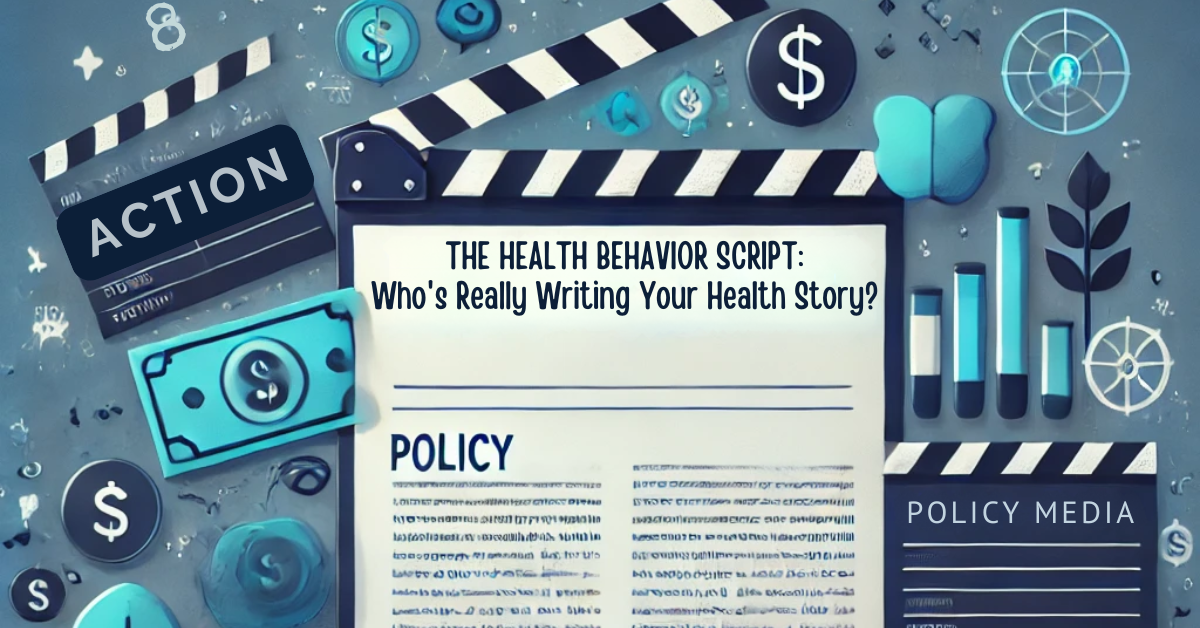
    The Health Behavior Script: Who’s Really Writing Your Health Story?

    You know that feeling when you’re watching a show, and even though you know it’s probably not good for you, you can’t stop hitting “next episode”?

    That’s exactly how Big Food designed their products to hit.

    And just like your favorite streaming service knows exactly what’ll keep you up until 3am, these food giants have spent millions studying what makes you reach for “just one more.”

    Let me take you behind the scenes of the biggest production you never knew you were cast in…

    The Production Studio


    We’re not talking about some indie film here. This is a multi-billion dollar operation that makes Hollywood look like those wack PSAs from the 90’s.

    In Nestlé’s research facility alone, you’ve got:

    • 700 scientists cooking up your next craving
    • Brain imaging labs watching how your pleasure centers light up
    • Engineers designing fat to feel richer than it is
    • Testing labs finding your exact “bliss point”

    And that’s just ONE studio.

    The Writers’ Room

    Inside these corporate writers’ rooms, they’re not just creating recipes – they’re engineering addiction storylines:

    • Scientists studying your brain like it’s a code they need to break
    • Marketing teams crafting your emotional triggers
    • Executives demanding higher “consumption scores”
    • Labs testing how to make you binge more

    They pilot and focus group to get a pulse on what the streets think. Every ingredient, every formula, every package gets tested until they know it’s a hit that’ll have you hooked on the series.

    The Casting Call

    Here’s where it gets wild – they’re not just casting adults; they’re auditioning for your kids. Why? If they can get your kid hooked on Episode 1 (sugar), they’ll have a lifetime subscriber.

    Their playbook:

    • Cast them young (when taste buds are still in training)
    • Hook them with the “bliss point” (that perfect sugar hit)
    • Make it convenient (because busy parents = easy targets)
    • Keep them coming back (building that brand loyalty early)

    Can’t Stop, Won’t Stop: The Binge Formula

    You know how a good show always ends right when you NEED to know what happens next? These food companies engineered that same feeling – but with your taste buds.

    Check out their cliffhanger playbook:

    • Hit you with that perfect sweet-salt combo that makes your brain light up
    • Give you just enough satisfaction to feel good but not enough to feel done
    • Time the “flavor fade” so you’re reaching for more before you’re even finished
    • Keep you thinking about their “show” even when you’re not watching

    Here’s what hits different: Just like streaming services track what keeps you glued to your screen, these food giants study what keeps you reaching in the bag. They know:

    • When you’re most likely to crave (stress eating? They got a special episode for that)
    • How to make you feel like you need the whole season (not just one episode)
    • What makes you a “superfan” (buying the same snack every grocery run)
    • How to keep you from changing the channel (even when you try to quit)

    And just like how one episode turns into a whole season at 2 am, they’ve designed these foods so “just one” turns into “where did the whole bag go?”

    Breaking the Fourth Wall

    Let me tell you something about being an extra in somebody else’s show – most times, you don’t even know you’ve been cast.

    Think about your last snack run:

    • That craving that hit you out of nowhere? That was your cue card
    • Those bright packages catching your eye? That’s strategic set design
    • That “I’ll just grab one” moment? That’s your scripted line
    • That empty bag you didn’t mean to finish? That’s their signature plot twist

    This ain’t some random improv show. Everything – from where products sit on the shelf to why you suddenly “need” certain snacks – is choreographed.

    You’re not just watching their show; you’re starring in it:

    • When you’re stressed, they’ve got your comfort food episode ready
    • When you’re tired, they’ve got your quick-fix special lined up
    • When you’re celebrating, they’ve got your treat season prepared
    • And they’ve got ads running 24/7 to remind you what your next line should be

    Rewriting the Script

    But here’s the thing about any show – even the biggest productions can flop when the audience gets wise to the plot.

    Once you see the strings, you can’t unsee them:

    • That “all natural” label? That’s just fancy costume design
    • Those “healthy” options? Often just the same show with different lighting
    • That “guilt-free” marketing? Classic misdirection
    • Those “fortified with vitamins” claims? Props to distract from the main plot

    Some communities are already changing the channel:

    • Reading the fine print instead of just the highlight reel
    • Teaching kids to be critics, not just consumers
    • Demanding better casting in their neighborhood stores
    • Running their own shows with fresh, real ingredients

    You might be in their show, but you don’t have to stick to their script. Because once you know how the magic trick works, it loses its power.

    Season Finale: Your Story, Your Show

    Listen – you can’t just cancel your subscription to Big Food overnight. We’re all still living in their cinematic universe. But you can start producing your own content.

    Here’s what that looks like:

    • Being your own director (making informed choices)
    • Writing your own narrative (not the one they scripted for you)
    • Casting better characters (real food, real ingredients)
    • Creating your own special effects (finding joy in food that serves you)

    This ain’t just about individual plot lines. The whole system needs a reboot.

    Some communities are already filming their pilot episodes:

    • Building their own grocery stores when big chains won’t cast their neighborhood
    • Starting community gardens when fresh food feels like premium content
    • Teaching kids about nutrition so they can spot product placement
    • Making healthy food the star, not just a side character

    Because at the end of the day, this is bigger than just changing channels – it’s about who gets to run the network.

    Next time you feel that craving hit, ask yourself: Am I watching their show, or am I ready to direct my own?

    And remember – every time you choose not to hit “play” on their production, you’re writing a new episode in your health story.

  • Social Determinants of Health: Why Your ZIP Code Matters More Than Your Genetic Code | PHuncle Explains

    Social Determinants of Health: Why Your ZIP Code Matters More Than Your Genetic Code | PHuncle Explains

    Did you know that your ZIP code can predict your life expectancy better than your genetic code? That’s not just a catchy phrase – it’s backed by research showing up to a 15-year difference in life expectancy between neighborhoods just a few miles apart!

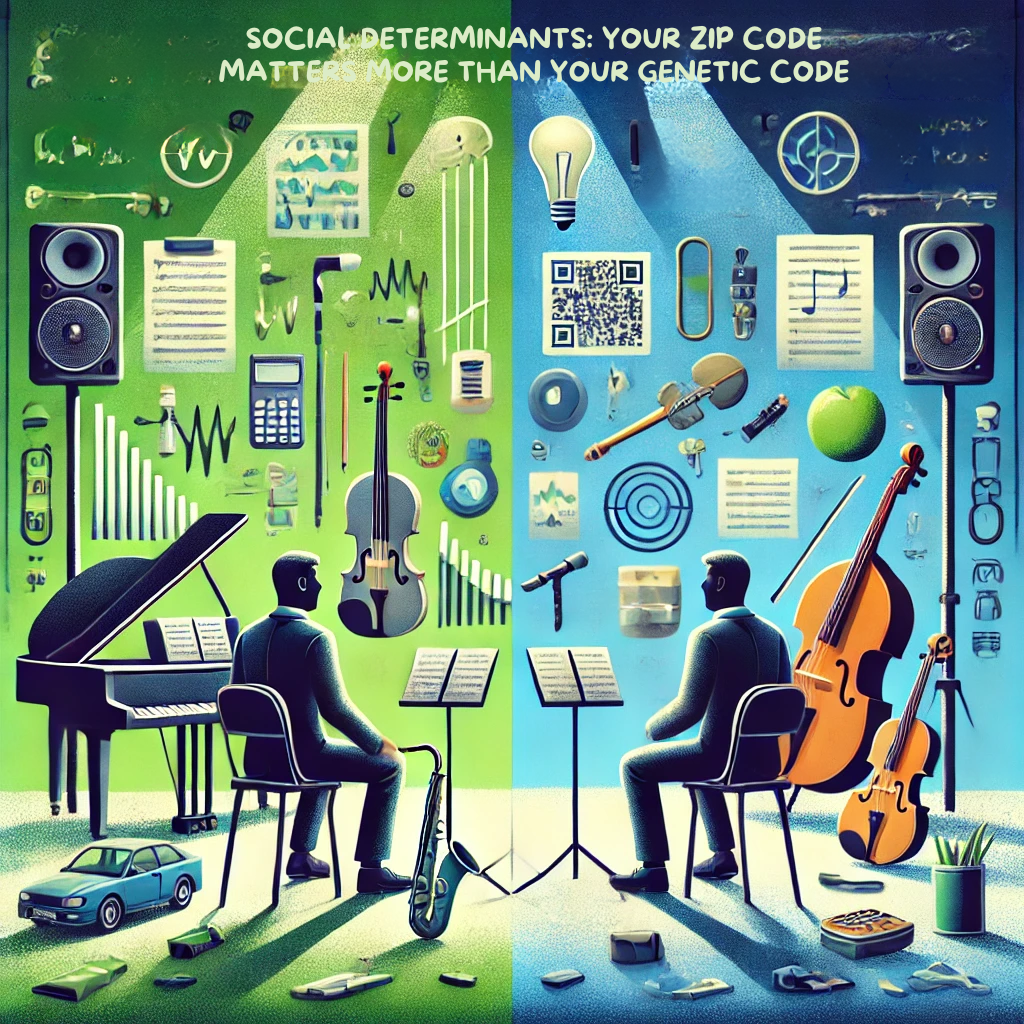
    Think about health like a band trying to make music. Your genetics? That’s just the sheet music. But to actually make that music happen, you need instruments (resources), a place to practice (environment), music education (opportunities), bandmates (community), and a whole support system to keep it all together.

    Some communities got the full orchestra setup – good instruments, proper training, sound-proof practice rooms, supportive music programs. Others? They’re trying to make music with broken instruments, no practice space, cut music programs, and constant noise interference. Before anyone plays a single note, the conditions for success are already unequal.

    Let me break something down for you. When we talk about health, most people think about doctor visits, medications, or their family history. But here’s the real talk: those things only account for about 20% of your health outcomes. The other 80%? That’s what we call social determinants of health – the conditions where you live, work, learn, and play.

    Just like you can’t blame a musician for a bad performance when they’ve got a broken instrument and no place to practice, we can’t talk about health outcomes without looking at the whole system that creates them. And just like music programs in schools? These conditions didn’t happen by accident. They were designed this way.

    Understanding the Band: What Makes Health Happen

    When a band sounds good, it’s easy to focus just on the musicians. But anyone who’s been in a band knows – making good music takes way more than just talent and practice. Let me break down this health orchestra for you:

    Think of social determinants of health like different sections of the band:

    • Economic Stability (The Equipment): Just like you can’t play without instruments, you can’t maintain health without basic resources
    • Healthcare Access (The Sheet Music): Having it available doesn’t help if you can’t read it or reach
    • Education (The Music Lessons): Learning how to play – and how to take care of yourself
    • Built Environment (The Practice Space): Where and how you can actually make it happen
    • Social Context (The Band Members): Who’s playing with you and supporting you

    And here’s the thing about making music – when one part is off, everything’s off. You can be the most talented musician in the world, but if your instrument is broken, your practice space is full of noise, and your music program got cut… well, you see where I’m going with this.

    Let’s dive deeper into two crucial parts of this health symphony: the practice space (our built environment) and music education (our learning opportunities). Because just like in music, these fundamentals can make or break the whole performance.

    The Practice Space: How Environment Shapes the Sound

    Let’s talk about acoustics for a minute. You know how some spaces just make music sound better? While others seem to fight against every note? That’s exactly how our built environment affects our health.

    Think about it: Just like you can’t expect someone to practice violin next to a construction site or create beautiful music in a moldy basement, we can’t expect communities to thrive when their environment works against them.

    Here’s what I mean:

    • Some neighborhoods got perfect acoustics:
      • Clean air to breathe
      • Parks and green spaces
      • Grocery stores with fresh food
      • Safe streets for exercise
      • Easy access to healthcare
      • Good public transportation

    Meanwhile, other communities are trying to make health happen in spaces with:

    • Bad acoustics:
      • Air pollution from nearby highways
      • No safe spaces for physical activity
      • Food deserts for miles
      • Limited healthcare facilities
      • Unreliable public transit
      • Run-down housing with health hazards

    And just like a musician will tell you – it’s not just about one thing being off. That highway noise isn’t just about noise. It’s about:

    • Air quality affecting breathing
    • Traffic making walking dangerous
    • Stress from constant noise
    • Property values affecting resources
    • Community spaces being cut off

    See how one “acoustic” problem creates a whole symphony of health challenges? And here’s the thing – these aren’t natural acoustics. Someone designed these spaces this way. Someone decided where to put the highways, the grocery stores, the parks, and the pollution.

    Music Education: More Than Reading Notes

    Now, let’s talk about learning the music – because just like in health, it’s not just about having access to the notes, it’s about having the support to understand and use them.

    Imagine trying to learn an instrument under these conditions:

    • Your school cut the music program
    • Private lessons cost more than your family makes in a month
    • The only teacher who speaks your language is three towns over
    • You’re working two jobs and can barely find time to practice
    • Nobody in your community has ever played this instrument

    Sound familiar? Because that’s exactly what trying to navigate health information feels like for many communities. It’s not just about “here’s some health pamphlets” or “just Google it.” Real health education is like learning music – it needs:

    • Good Teachers (Healthcare Providers Who Understand Your Context)
    • Proper Learning Materials (Accessible Health Information)
    • Practice Time (Access to Health Resources)
    • Cultural Connection (Health Messages That Resonate)
    • Community Support (People Who Share Your Experience)

    And just like music education isn’t just about reading notes, health literacy isn’t just about reading medical terms. It’s about:

    • Understanding how the whole orchestra (your body and environment) works together
    • Knowing when something sounds off (recognizing health issues)
    • Having the resources to tune up (accessing healthcare)
    • Being able to play with others (navigating health systems)
    • Creating your own music (making informed health decisions)

    Making Music Together: Creating Health Harmony

    So now we see how our practice space (environment) and music education (health literacy) work together. When both are off? It’s like trying to learn violin in a thunderstorm – technically possible, but let’s be real about those odds.

    But here’s the thing about music – and health: Even when conditions aren’t perfect, communities find ways to make it work. Think about how:

    • Blues came from struggle but created beauty
    • Jazz evolved by breaking traditional rules
    • Hip hop turned limited resources into a whole new sound
    • Community choirs make music without fancy concert halls

    Our communities do the same thing with health:

    • Creating food co-ops in food deserts
    • Organizing walking groups for safety
    • Sharing health knowledge through trusted networks
    • Building community gardens in vacant lots
    • Teaching each other to navigate health systems

    But – and this is important – celebrating community resilience doesn’t mean accepting broken systems. Just like we shouldn’t have to rely on school bake sales to fund music programs, communities shouldn’t have to create workarounds for basic health needs.

    What we need is:

    • Better “Acoustics” (Healthy Environments):
      • Clean air and water
      • Safe spaces for activity
      • Access to healthy food
      • Reliable transportation
      • Quality housing
    • Strong “Music Education” (Health Resources):
      • Culturally relevant health information
      • Accessible healthcare
      • Community health workers
      • Health education programs
      • Language appropriate services

    The Final Note: Making Health Harmony Possible

    Let me bring this all home. Understanding social determinants of health is like understanding what it really takes to make music. It’s never just about individual talent or effort – it’s about having the right conditions, resources, and support to make it happen.

    Some communities are forced to perform miracles with broken instruments in noisy spaces, while others have full orchestras and perfect acoustics. That’s not about choice or chance – that’s by design. But here’s the thing about design: what humans design, humans can redesign.

    We need to:

    • Fix the acoustics (improve our environments)
    • Fund the music programs (invest in health education)
    • Maintain the instruments (ensure resource access)
    • Support all musicians (create equitable systems)
    • Let communities conduct their own orchestras (empower local leadership)

    Because at the end of the day, health isn’t a solo performance – it’s a community symphony. And every community deserves the chance to play their best music.

    Ready to join the band? Here’s what you can do:

    • Learn about health conditions in your community
    • Support organizations working for health equity
    • Speak up about environmental health issues
    • Share knowledge with your network
    • Advocate for better health policies

    Remember: Just like music can change how we feel, how we think, and how we move, understanding social determinants of health can change how we approach wellness, how we support our communities, and how we fight for better systems.

    Let’s make some noise for health equity.

  • Health Equity vs Health Equality: Why It Matters

    Health Equity vs Health Equality: Why It Matters

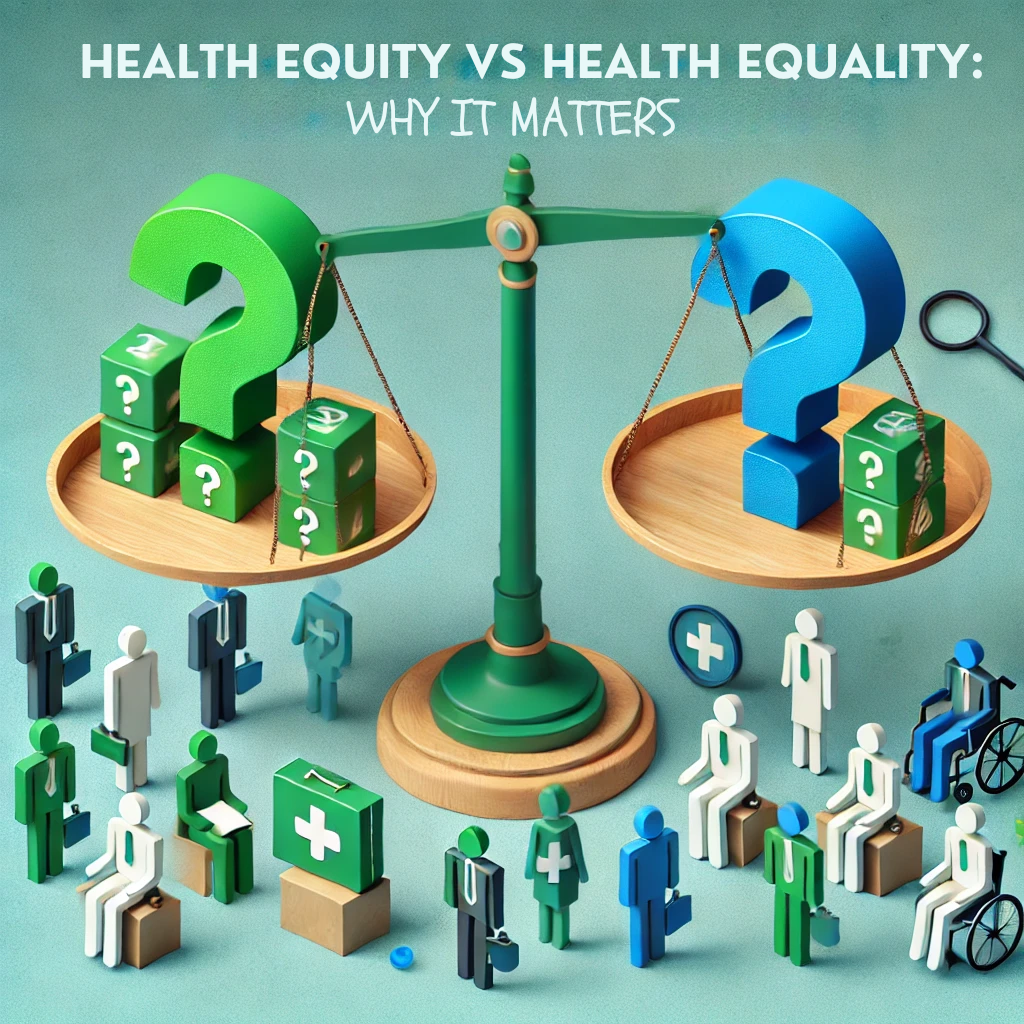
    Using a garden metaphor, let me break down the difference between health equity and health equality. Because once you see it this way, you’ll never confuse these terms again.

    Imagine you’re responsible for a community garden.

    You’ve got different plots, different soil conditions, and different gardeners with different needs.

    Health equality would be giving everyone the exact same things: same size plot, same seeds, same tools, same amount of water.

    Sounds fair, right?

    But here’s the thing – some parts of your garden are in the shade.

    Some areas have soil that’s been damaged by past pollution.

    Some gardeners need raised beds to tend their plants.

    And some plots need more water because they’re in direct sun all day.

    That’s where health equity comes in.

    Understanding the Garden: Equality vs Equity in Action

    Let’s dig deeper into what this means in real life.

    Health equality is like saying, “Everyone gets five tomato plants and two bags of soil.”

    Same resources for everyone. But this approach ignores some crucial realities:

    • Some plots have been growing healthy plants for generations
    • Others have soil that’s been stripped of nutrients
    • Some areas lack basic water access
    • Different plots face different challenges

    Health equity, though?

    That’s about making sure every plot can actually grow healthy plants. It means:

    • Adding extra nutrients to depleted soil
    • Installing irrigation where it’s needed
    • Building raised beds for accessibility
    • Providing education about specific growing conditions
    • Creating solutions based on actual needs

    Historical Context: Understanding Your Soil

    Here’s something crucial: your garden’s soil tells the story of what came before. Just like communities facing health challenges today often have histories of:

    • Redlining affecting neighborhood resources
    • Environmental injustice leaving lasting damage
    • Disinvestment in healthcare facilities
    • Limited access to healthy food options

    You can’t just say, “Well, everyone has seeds now,” and expect equal results.

    Some communities are trying to grow in soil that’s been systematically depleted for generations.

    Solutions: Creating Fertile Ground for All

    So, what does health equity actually look like in practice?

    It means understanding that different communities need different resources to thrive:

    Some neighborhoods need more healthcare facilities.

    Others need better transportation to existing facilities.

    Some communities need cultural competency in healthcare.

    Others need language access services.

    Just like in our garden, the goal isn’t to give everyone the exact same things – it’s to give everyone what they need to grow and thrive.

    The Bottom Line

    Here’s what it comes down to:

    Health equality is giving everyone the same tools. Health equity is ensuring everyone can actually use those tools to achieve good health.

    Because at the end of the day, what good is having seeds if your soil can’t support growth? What good is having a clinic nearby if you can’t afford its services? What good is having health information if it’s not in a language you understand?

    What good is an initiative that uses tax payer money, that tries to solve a problem that’s not even the problem? How might that go over when people feel like their ends just got wasted, next time an initiative requires money?

    Real change comes from understanding these differences and working to create conditions where everyone can truly thrive – not just survive.

    Think about areas in your community that need equity-focused solutions rather than just equal distribution of resources.

  • What Is Public Health? | PHuncle Breaks It Down

    What Is Public Health? | PHuncle Breaks It Down

    Let me make this super simple:

    Public health is about keeping entire communities healthy and safe, not just one person at a time. It’s like having a whole team of people working to stop people from getting sick in the first place, rather than waiting to treat them after they’re already ill.

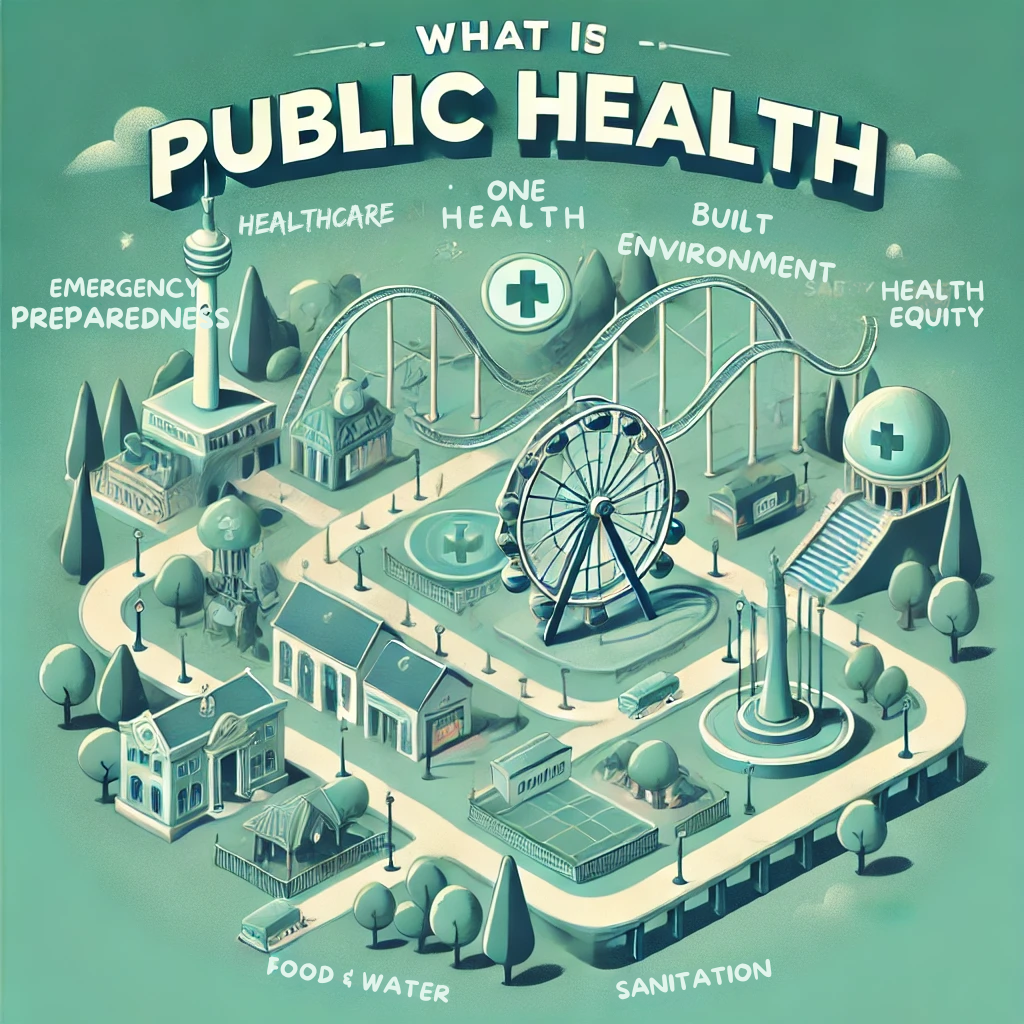
    Think of it like running a huge theme park. The people who operate the park don’t just wait for accidents to happen – they work hard to make sure everyone stays safe and healthy while having fun. They check the rides before opening, make sure the food is safe to eat, keep the bathrooms clean, and have plans ready in case something goes wrong.

    That’s exactly what public health does for our communities. But instead of rides, we’re checking on:

    • Clean water to drink
    • Clean air to breathe
    • Safe food to eat
    • Places to exercise
    • Ways to prevent disease
    • Plans for emergencies

    And just like theme park workers don’t focus on just one visitor at a time, public health focuses on entire communities. We’re not the doctors treating you when you’re sick (that’s healthcare) – we’re the ones working to keep you from getting sick in the first place.

    Public health is working at its best when you don’t even notice it – just like a well-run theme park. You’re not thinking about the water quality when you get a drink from the fountain. You’re not wondering if the food court passed inspection. You’re not worried about emergency exits. Why? Because someone’s already thought about all of that for you.

    Just like a theme park needs different teams working together – safety inspectors, food service, cleaning crews, first aid staff – public health involves many different people working to keep communities healthy:

    • Scientists tracking disease patterns
    • Experts checking environmental safety
    • Educators teaching about health
    • Policymakers creating safety rules
    • Community workers connecting people to resources

    Here’s another way to think about it: If our theme park is the community, then:

    Healthcare is like:

    • Individual ride operators helping one rider at a time
    • First aid stations treating injuries after they happen
    • Customer service dealing with specific complaints
    • Maintenance fixing broken equipment

    While Public Health is like:

    • Park operations making sure ALL rides are safe
    • Safety teams preventing accidents before they happen
    • Systems designers making the whole park accessible
    • Planning team creating healthy environments for everyone

    Healthcare is crucial – just like you need ride operators and first aid stations. But public health? That’s the whole system working to make sure fewer people need first aid in the first place.

    The Three P’s of Public Health: How We Keep the Park Running

    Public health has three main jobs in our community “theme park.” Let’s break them down:

    Prevent: Stopping Problems Before They Start

    Just like theme parks inspect rides before anyone gets hurt, public health works to prevent health problems before they happen:

    • Vaccinations to stop disease spread
    • Food safety inspections
    • Air quality monitoring
    • Water system testing
    • Health education programs

    Protect: Keeping Everyone Safe

    Like park security and safety teams, public health protects communities from health threats:

    • Disease outbreak response
    • Emergency preparedness
    • Environmental health monitoring
    • Workplace safety standards
    • Consumer safety regulations

    Promote: Creating Healthy Environments

    Think of this like designing a park where it’s easy for everyone to have fun safely. Public health promotes healthy choices by:

    • Creating walkable communities
    • Ensuring access to healthy foods
    • Building safe spaces for activity
    • Supporting mental health resources
    • Developing health education programs

    Public Health: More Departments Than Your Favorite Theme Park

    Just like how a theme park has different zones – from thrill rides to kiddie areas, from food courts to entertainment venues – public health covers a LOT of ground. Let me show you just how many areas public health touches:

    Environmental Health (The Park’s Environment)

    • Air quality monitoring (like Beijing’s air pollution crisis)
    • Water safety (think Flint water crisis)
    • Climate change impacts
    • Housing conditions
    • Noise pollution
    • Waste management

    Disease Control (Safety Protocols)

    • Tracking disease outbreaks (COVID-19 response)
    • Vaccination programs (global polio elimination)
    • Infection prevention
    • Health screenings
    • Contact tracing

    Maternal and Child Health (Family Services)

    • Prenatal care access
    • Child nutrition programs
    • School health services
    • Family planning
    • Child safety measures

    Mental Health (Guest Services)

    • Community support programs
    • Crisis intervention
    • Suicide prevention
    • Substance use programs
    • Mental health awareness
    • Stress reduction initiatives

    Occupational Health (Staff Safety)

    • Workplace safety standards
    • Ergonomic guidelines
    • Chemical exposure limits
    • Heat stress prevention
    • Noise level control
    • Worker wellness programs

    City Planning (Park Layout)

    • Walkable neighborhoods
    • Green spaces
    • Transportation access
    • Food access
    • Safe recreation areas
    • Community gathering spaces

    Emergency Preparedness (Crisis Response)

    • Natural disaster planning
    • Pandemic response
    • Mass casualty preparation
    • Emergency communication
    • Community resilience
    • Resource distribution

    And here’s what’s wild: this isn’t even the full list! Public health really be wearing SO many hats, its like that theme park that keeps adding new attractions – always expanding to meet community needs.

    When All the Park Zones Connect: The Web of Public Health

    Here’s what makes public health hit different: everything connects. Just like how a problem in one part of a theme park affects the whole experience, public health issues are all tangled up. Let me show you:

    The Ripple Effect

    Take city planning (park layout) for example:

    • Poor street lighting affects safety
    • Which impacts physical activity
    • Which affects mental health
    • Which influences work performance
    • Which affects family wellbeing
    • Which loops back to community health

    Or think about air quality:

    • Environmental health issue? Obviously.
    • But also affects maternal health
    • And children’s ability to play outside
    • Which impacts physical health
    • And mental wellbeing
    • While adding healthcare costs
    • Creating economic strain
    • Leading to stress…

    and the cycle continues.

    The Public Health Paradox: Why Nobody Notices a Well-Run Park

    Now here’s the tricky part about public health: when it’s working best, it’s invisible. Think about it – nobody walks through a clean, safe theme park saying “wow, look at all these accidents that AREN’T happening!”

    This creates what we call the Public Health Paradox:

    • When public health works, problems don’t happen
    • When problems don’t happen, people don’t notice
    • When people don’t notice, funding gets cut
    • When funding gets cut, problems start happening
    • Only then do people ask “why didn’t we prevent this?”

    Beyond the Paradox: Other Public Health Challenges

    The invisibility problem isn’t our only challenge. Let me break down what else public health is up against:

    The Long Game vs. Quick Fixes

    Imagine trying to convince theme park investors that preventing problems is better than fixing them. That’s our daily struggle:

    • Prevention takes years to show results
    • Treatment shows immediate impact
    • People want quick solutions
    • Long-term investments are harder to justify
    • Success means nothing happening (try putting that on a quarterly report!)

    System-Level Solutions in an Individual-Focused World

    “Just make better choices!” Yeah, like it’s that simple. Try making healthy choices when your neighborhood has no grocery stores, unsafe parks, and air that’s trying to give you asthma. That’s the thing about systems – they shape our options before we even get to “choose.”

    • People focus on individual responsibility
    • Systems feel too big to change
    • Change requires collective action
    • Results aren’t immediately visible

    Building a Better Park: Making Public Health Work

    But here’s the good news: just like theme parks have evolved from simple carnivals to complex entertainment systems, public health is adapting too. Here’s how we’re working to make things better:

    Tell Better Stories

    Instead of just throwing statistics at people, we need to show what public health success looks like:

    • Lives saved through vaccination programs
    • Communities transformed by better design
    • Health gaps closed through targeted programs
    • Diseases stopped before they spread
    • Generations growing up healthier

    Make Prevention Visible

    We need to get better at showing the disasters that didn’t happen:

    • Track and share “problems prevented”
    • Document health improvements
    • Show cost savings from prevention
    • Highlight community benefits
    • Celebrate public health wins

    Build Community Power

    Just like a theme park needs engaged visitors to thrive, public health needs active community participation:

    • Community health workers sharing knowledge
    • Local leaders advocating for resources
    • Residents identifying neighborhood needs
    • Youth getting involved in health initiatives
    • Communities designing their own solutions

    Connect the Dots

    We need to help people see how public health connects to everything they care about:

    • Better schools = better health
    • Cleaner air = stronger communities
    • Safe neighborhoods = active families
    • Good jobs = healthier lives
    • Strong communities = resilient health

    Invest in the Future

    Just like theme parks need regular upgrades to stay relevant, public health needs consistent support:

    • Stable funding for prevention
    • Investment in public health workforce
    • Resources for new challenges
    • Support for research and innovation
    • Long-term commitment to community health

    The Park Never Closes: Public Health’s Ongoing Mission

    Let me bring this full circle: Public health is like running the world’s most important theme park – one where the stakes are people’s lives and wellbeing. We don’t just work to prevent problems, protect communities, and promote health – we’re trying to create a world where everyone has a fair shot at a healthy life.

    And just like you probably never think about all the people working to keep a theme park safe and fun, you might not notice public health working in your community. But we’re here – checking the water, monitoring the air, tracking diseases, designing healthier spaces, and planning for emergencies you hopefully never face.

    The challenges are real: invisible successes, complex systems, and the constant push for prevention in a treatment-focused world. But here’s what makes this work worth it: every life improved, every disease prevented, every community made healthier is a win for all of us.

    Because at the end of the day, we’re all in this park together. And the more people who understand and support public health, the better we can make it for everyone.

  • Social Factors and Health: Why Your Circle Matters More Than Your Choices

    Social Factors and Health: Why Your Circle Matters More Than Your Choices

    Think of health like your social media feed – it’s not just about what you post (your individual choices), but your entire network, environment, and the algorithm that shapes everything. Just like social media shows you more of what you engage with, your social environment deeply influences your health patterns. The people you’re around, the places you live, the resources you can access – they all shape health outcomes like an algorithm shapes what shows up in your feed.

    What Do We Mean By Social Forces and Factors?

    Let me break down what I mean by “social factors” and “social forces” – because these aren’t just fancy terms, they’re real things that shape our daily lives.

    Social factors are the conditions in which people are born, grow, live, work, and age. Think:

    • Who’s in your community
    • What resources are available
    • Where you live
    • How your neighborhood is designed
    • What opportunities exist
    • What barriers you face

    Social forces? Those are the bigger patterns and pressures that create these conditions:

    • Economic systems
    • Cultural norms
    • Political decisions
    • Historical patterns
    • Institutional practices
    • Power structures

    Together, these factors and forces work like an invisible hand, shaping everything from your stress levels to your healthcare access to your health outcomes.

    These social factors and forces create patterns that ripple through our health in ways you might not even notice. For example:

    Economic Forces → Social Factors → Health Outcomes:

    • A factory closes (economic force)
    • Jobs disappear from a community (social factor)
    • Families lose income and insurance (social factor)
    • Stress levels rise (health impact)
    • Healthcare becomes unaffordable (social factor)
    • Health conditions go untreated (health outcome)

    Cultural Forces → Social Factors → Health Outcomes:

    • Cultural stigma about mental health (social force)
    • Limited discussion in communities (social factor)
    • Less knowledge about resources (social factor)
    • Delayed care seeking (health impact)
    • Conditions worsen (health outcome)
    • Community health suffers (broader impact)

    These aren’t just theoretical connections – they’re real patterns playing out in communities every day. Just like that social media algorithm we talked about, these forces and factors create feedback loops that either support or challenge health.

    Understanding the Social Web of Health

    Let’s talk about how this health “algorithm” really works. Just like your social media feed isn’t really your “choice” – it’s shaped by who you follow, what content gets promoted, and how the platform is designed – your health exists within a social system that’s bigger than individual decisions.

    When people say “just be healthy,” they’re missing how the system is designed. It’s like telling someone to “just post better content” when their feed is filtered, their network is limited, and their access to the platform is restricted.

    Think about it:

    • Some communities have an algorithm pushing fresh food, safe parks, and healthcare access
    • Others face a feed full of environmental hazards, food deserts, and medical barriers
    • And just like you can’t simply “choose” what your social media algorithm shows you, people can’t simply “choose” to override these social patterns

    Here’s what makes this hit different: These aren’t random patterns. They’re not about personal worth. They’re about how society is structured – and what we’re shown, given access to, and surrounded by shapes our health experiences.

    How These Social Patterns Play Out

    Ever notice how your social media feed starts looking like the people you follow? Health patterns work similarly. But it’s not just about “following” the right people – it’s about what society makes available to you.

    Let’s look at the receipts:

    But here’s what’s wild – these aren’t “choices.” They’re patterns created by social structures.

    The Power of Class: More Than Just a Price Tag

    Now, let’s talk about the importance of class.

    When we talk about class and health, people often think it’s just about affording healthcare. But it’s way deeper than that. Class shapes:

    • Where you can live
    • What foods are available
    • What environmental hazards you face
    • How much time you have for health activities
    • What kind of healthcare you can access

    Check this out:

    But remember – this isn’t about personal worth. It’s about how society distributes resources and opportunities. So, instead of blaming those with poor health off rip, I encourage you to unpack what’s happening and reflect on how systems constrain agency.

    The Deep Roots of Class and Health

    Let me break down something crucial about class – it’s not just about money in your account. It’s a whole system that shapes how health plays out:

    The Class Cascade:

    • Socioeconomic and political systems create social hierarchies
    • Your position in these hierarchies shapes your life circumstances
    • These circumstances determine where you live, work, and who you know
    • All of this influences how you see the world
    • And ultimately, how you behave

    Here’s where it gets interesting: We express our class through what we buy and do. It’s not random that certain communities have certain health patterns.

    Beyond “Choice”:

    • We develop tastes for foods our class typically eats
    • We engage in activities common in our social circles
    • We adopt habits that fit our circumstances
    • We make decisions within our structural constraints

    So when we talk about “lifestyle choices” like:

    • Whether to exercise
    • What foods to eat
    • When to seek preventive care
    • How to manage stress

    We need to ask: Are these really “choices”? Or are they behaviors shaped by social structures that:

    • Mold our options
    • Define what’s “normal”
    • Create class-based patterns
    • Reproduce health inequities

    Yes, we have some agency – some ability to push against these patterns. But we can’t ignore how social structures stack the deck. Compassion and empathy for those struggling would yield significantly more solutions than just passing judgement and criticism.

    Identity: How the Algorithm Hits Different

    Your identity – age, gender, race/ethnicity – it’s like having different platform settings in this health algorithm. Some settings come with advantages, others with extra challenges.

    Think about it:

    • Women’s pain often gets dismissed in healthcare settings
    • Black maternal health outcomes persist regardless of education or income
    • Older adults face different barriers to care
    • Language differences can mean limited health information
    • Geographic location can determine healthcare quality

    Where Factors Intersect: The Compound Effect

    Think about how these factors stack:

    Transportation + Healthcare Access:

    • No car means relying on public transit
    • Limited transit means missed appointments
    • Missed appointments mean delayed care
    • Delayed care means worse outcomes
    • Worse outcomes affect work ability
    • Work affects income
    • Income affects transportation options
    • And the cycle continues…

    Class + Neighborhood + Race:

    • Redlining shaped neighborhood resources
    • Neighborhood resources affect health options
    • Health options influence outcomes
    • Outcomes affect economic opportunity
    • Economic opportunity affects neighborhood choice
    • And historical patterns repeat

    Language + Healthcare + Culture:

    • Language barriers limit health information
    • Cultural misunderstandings affect treatment
    • Treatment experiences influence trust
    • Trust affects future healthcare use
    • Future use impacts health outcomes

    Age + Social Support + Technology:

    • Older adults facing digital health portals
    • Limited tech access affects appointment scheduling
    • Isolation reduces help with navigation
    • Reduced navigation means missed care
    • Social connections influence tech adoption
    • Tech barriers reinforce isolation

    Education + Health Literacy + Class:

    • School quality affecting health knowledge
    • Health literacy shaping system navigation
    • Understanding medical instructions
    • Confidence questioning providers
    • Access to health information
    • Generational knowledge gaps
    • Resource awareness

    Mental Health + Culture + Healthcare:

    • Stigma in certain communities
    • Provider cultural competency
    • Language affecting therapy effectiveness
    • Family support systems
    • Traditional healing practices
    • Access to culturally relevant care
    • Trust in mental health systems

    Here’s what makes all this matter: Understanding these patterns isn’t about blame or shame. It’s about recognizing that health happens in a social context. Just like you can’t understand someone’s social media feed without understanding the algorithm, you can’t understand health without understanding these social factors.

    Community Solutions: Learning While Staying Local

    Let’s look at some real solutions communities have created, while remembering that each community needs its own unique approach.

    Real Examples in Action:

    These programs show what’s possible, but here’s what’s crucial to understand: what works in the Bronx might not work in rural Montana. What succeeds in Chicago might not translate to Miami. Why? Because:

    • Each community has its own history
    • Cultural contexts differ
    • Resource landscapes vary
    • Trust has to be built locally
    • Leadership needs to come from within

    Potential Solutions Communities Might Explore:

    While respecting each community’s unique needs, here are some possibilities to consider and adapt:

    Building Health Knowledge Networks:

    • Community health worker programs
    • Cultural health education workshops
    • Multi-language health materials
    • Peer health educator training
    • Health system navigation support

    Addressing Access Barriers: Real Examples

    These solutions worked because they were designed with their specific communities in mind. Other communities might explore similar approaches like:

    • Evening clinic hours
    • Transportation partnerships
    • Childcare solutions during appointments

    Environmental Health Initiatives: Success Stories

    Each of these succeeded by addressing their community’s specific needs. Similar approaches might include:

    • Local environmental monitoring
    • Food access programs
    • Green space initiatives

    If you’re not entirely familiar with the connection of humans, animals, the environment, and health, highly recommend my One Health blog post.

    Building Social Support: Community Examples

    These programs work because they grow from deep community understanding. Other communities might consider approaches like:

    • Cultural wellness programs
    • Intergenerational mentoring
    • Health advocacy training
    • Community wellness events
    • Social connection initiatives

    Learning From Success While Staying Local

    Looking at these successful programs, we can see some common threads:

    • They’re led by community members
    • They address multiple barriers at once
    • They build on cultural strengths
    • They create sustainable solutions
    • They develop local leadership

    But remember: Success in one community doesn’t guarantee success in another. Real change comes from:

    • Understanding local context
    • Building on community strengths
    • Addressing specific needs
    • Creating local ownership
    • Developing sustainable solutions

    The Bottom Line: Social Forces Shape Our Health Story

    Let’s bring this full circle. Remember how we started talking about social media algorithms? How what shows up in your feed isn’t just about your choices, but about your whole environment? Health works the same way – but with much bigger stakes.

    Social factors aren’t just background noise in our health story – they’re main characters. They can:

    • Create pathways to better health
    • Build barriers to wellness
    • Shape how we understand health
    • Influence our health decisions
    • Determine what resources we can access

    But here’s what makes this hit different: Unlike a social media algorithm we can’t control, we CAN change these social factors. Not overnight, and not with one-size-fits-all solutions, but through:

    • Understanding our community’s unique needs
    • Building on local strengths
    • Creating sustainable changes
    • Supporting each other
    • Demanding systemic changes

    Remember: When we talk about health disparities or poor health outcomes, we’re not talking about personal failure or moral worth. We’re talking about social forces that need social solutions.

    So next time someone says “just be healthy,” remind them: Health isn’t just about individual choices. It’s about the social fabric we’re all part of – and we all have a role in making that fabric stronger.

    What social factors do you see affecting health in your community? How might we start addressing them together?

  • Health Education: Cooking Up Connection | The PHuncle’s Guide

    Health Education: Cooking Up Connection | The PHuncle’s Guide

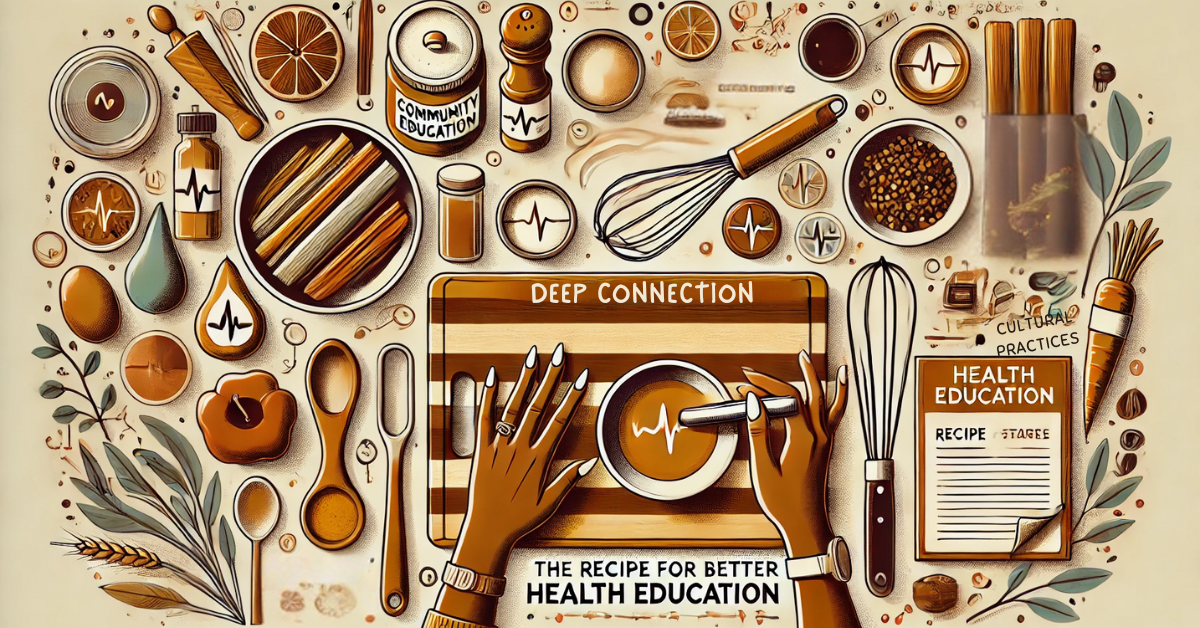
    Health education is like cooking – nobody learns just from reading recipes. You learn in the kitchen, usually from someone who knows what they’re doing, understands the ingredients, and most importantly – knows how to connect with YOU.

    That’s why your grandma’s cooking hits different – it’s made with understanding, history, and connection. And that’s exactly how we need to approach health education.

    Let me tell you something: In all my years of teaching health – from personal training to public health – I’ve learned that information alone doesn’t change behavior.

    You can have the perfect “recipe” for health, but if you’re not connecting with people where they are, understanding their “kitchen,” and respecting their existing “family recipes,” that information isn’t going to be transformative.

    It might not even be acted upon.

    Think about it – having a recipe tells you WHAT to do, but it doesn’t teach you HOW to do it. You might know you need to “sauté until golden,” but what does that actually look like? What’s the right heat? How do you know when to flip? That’s where connection and guidance come in.

    The gap between knowing WHAT to do and knowing HOW to do it? That’s where education happens. That’s where relationship matters. That’s where an experienced guide – whether it’s your grandma in the kitchen or a health educator in the community – helps turn information into understanding, and ultimately action.

    Know Your Kitchen: Understanding Your Learning Space

    Before you start cooking – or teaching – you need to understand your environment. Every kitchen has its own setup, its own tools, its own flow. Try cooking a feast in a kitchen where you don’t know where anything is, and you’ll spend more time searching for utensils than actually cooking.

    Health education works the same way. Before you can teach effectively, you need to understand:

    • What “tools” your learners have access to
    • What “ingredients” are available in their community
    • What “cooking methods” have worked for them before
    • What “kitchen setup” they’re working with daily

    Let me break this down with a real example: Imagine teaching someone about “healthy cooking at home” without knowing they’re working with:

    • A microwave and a hot plate instead of a full kitchen
    • Limited access to fresh ingredients
    • A schedule that barely allows time for meal prep
    • Food traditions that might clash with standard “healthy” recipes

    That’s like giving someone a recipe that requires an air fryer, specialty ingredients, and two hours of prep time when they’ve got 20 minutes and a microwave. The information might be correct, but it’s not connecting with reality.

    This is a major missed opportunity to connection.

    This is why effective health education starts with learning about your community’s “kitchen.” You need to understand:

    • What resources are actually available
    • What barriers exist
    • What cultural practices matter
    • What solutions are truly practical
    • What knowledge already exists

    And let me be crystal clear about something: it’s not on the community to bridge this gap.

    As health educators, the responsibility to learn these things falls on us.

    We need to show up, listen, and understand before we even think about teaching. Sometimes that means investing time and energy into building trust before anyone shows any interest in what we’re teaching.

    Invite them into your kitchen. Connect and share stories. Make them feel welcome. Earn their trust. That’s when the real teaching(and learning) can begin.

    Because here’s the thing – people aren’t blank recipes waiting to be written. They come with their own knowledge, their own methods, their own traditions. Effective health education isn’t about replacing their “cookbook” – it’s about enhancing it.

    Family Recipes: Honoring Cultural Knowledge

    Let’s talk about something that gets overlooked in health education way too often – the “family recipes” people already have. I’m talking about the knowledge, practices, and wisdom that already exist in communities.

    You know how every family has that one recipe that’s been passed down through generations? Maybe it’s not written down anywhere – it’s just known. The measurements aren’t exact (“a pinch of this, a handful of that”), but somehow, it works. That’s because there’s knowledge built into those inexact measurements – knowledge that comes from experience, from understanding, from culture.

    Communities have their own “health recipes” too. Their own ways of:

    • Maintaining wellness
    • Supporting mental health
    • Building community resilience
    • Passing down health knowledge
    • Caring for each other

    Instead, we need to:

    • Recognize existing health knowledge
    • Understand why certain practices exist
    • Learn from community wisdom
    • Build on what’s already working
    • Blend new information with trusted traditions

    Let me keep it real with you – coming in with that outsider, patriarchal “I know better than you” energy? That’s a surefire way to create discord, distrust, and disengage your community. Nobody’s trying to learn from someone who dismisses generations of knowledge and experience because it doesn’t come with a peer-reviewed stamp of approval.

    It’s like walking into someone’s kitchen, throwing out all their seasoned cast iron pans, and replacing them with the “latest and greatest” cookware. Sure, your new tools might work fine, but you’ve just disrespected something that’s been working for generations – and lost all credibility in the process.

    The goal isn’t to replace – it’s to enhance. Maybe there are new techniques that could complement those traditional practices. Maybe there’s research that explains why those family traditions were right all along. The key is building bridges, not burning them.

    Tasting As You Go: Making Learning Interactive

    You ever try to cook something without tasting it along the way? That’s a recipe for disaster (pun intended). Yet somehow, that’s exactly how some people try to do health education – just dump information out there and hope it comes out right in the end.

    Real cooking, like real education, is interactive. You taste, you adjust, you learn what works. Sometimes you need:

    • More heat (intensity)
    • Different seasoning (approach)
    • Longer cooking time (patience)
    • New ingredients (methods)
    • Another taste-tester’s opinion (feedback)

    In health education, “tasting as you go” means:

    • Checking for understanding
    • Adapting to feedback
    • Making space for questions
    • Adjusting your approach based on responses
    • Learning from your learners
    • Creating dialogue, not monologue

    Because here’s the truth: if you’re doing all the talking, you’re probably doing it wrong. Education isn’t about pouring information into empty vessels – it’s about cooking together, learning together, growing together.

    And let me tell you something about cooking together – every time I’m in someone else’s kitchen, I learn something new. Maybe it’s a different way to cut onions, a secret ingredient I never thought of, or a completely new dish. That’s exactly how health education should work.

    As educators, we need to throw out this idea that knowledge only flows one way. Your learners will teach you:

    • New perspectives you never considered
    • Solutions you didn’t think of
    • Cultural contexts you didn’t understand
    • Community wisdom you never knew
    • Barriers you hadn’t recognized

    Some of the most valuable lessons I’ve learned about health didn’t come from textbooks or research papers – they came from the communities I was supposed to be “teaching.” When we stay humble and remain open to learning, we become better educators. That’s a secret ingredient to real connection.

    Fusion Cooking: Blending Knowledge and Experience

    Let’s talk about fusion cooking – that beautiful thing that happens when different culinary traditions come together to create something new. Not by erasing what came before, but by building on it. That’s what effective health education looks like.

    It’s about finding those sweet spots where:

    • Traditional wisdom meets new research
    • Cultural practices align with current recommendations
    • Community knowledge enhances professional training
    • Local solutions inspire systemic changes
    • Different ways of knowing strengthen each other

    Think about how fusion cuisine works – it doesn’t just throw ingredients together randomly. It understands both traditions deeply. It respects the original contexts. It creates something that honors both while being uniquely its own.

    In health education, this means:

    • Understanding why traditional practices evolved
    • Recognizing what current research validates
    • Finding common ground between different approaches
    • Creating space for multiple truths
    • Building bridges between different ways of knowing
    • Developing solutions that work in real life

    Setting the Table: Making Health Education Matter

    At the end of the day, health education is a lot like preparing a meal that matters. It’s not just about having the right ingredients (information) or following a recipe (curriculum). It’s about:

    • Creating a welcoming space
    • Understanding who’s at the table
    • Respecting what they bring
    • Learning from each other
    • Building connections that last

    Remember: Nobody becomes a great cook by simply memorizing recipes, and nobody becomes a great health educator by just knowing the facts. It takes understanding your kitchen (community), respecting family recipes (cultural knowledge), tasting as you go (staying responsive), and being willing to create new fusion dishes (blending approaches) together.

    And just like the best meals aren’t just about the food – they’re about the connection, the conversation, the community – the best health education isn’t just about the information. It’s about creating spaces where people feel seen, heard, and valued. Where their knowledge matters. Where learning goes both ways.

    So next time you’re thinking about health education, ask yourself:

    Am I just handing out recipes, or am I inviting people into the kitchen?

    Am I making assumptions about what tools people have, or am I understanding their reality?

    Am I trying to replace family recipes, or am I helping create something new together?

    Am I just teaching, or am I also learning?

    Because at the end of the day, the measure of good health education isn’t just what people know – it’s how connected, empowered, and equipped they feel to use that knowledge in their own lives.

  • One Health: The Ultimate Jenga Tower We Can’t Afford to Topple

    One Health: The Ultimate Jenga Tower We Can’t Afford to Topple

    Let me tell you something wild: Earth had a 4-billion-year streak of keeping everything in balance.

    Then humans showed up with our ‘progress,’ and in just 400 years, we’ve got the planet looking like somebody’s project the night before it’s due.

    But before you think this is another doom and gloom story, the PHuncle’s about to break down how everything’s connected AND how we can fix what we done messed up.

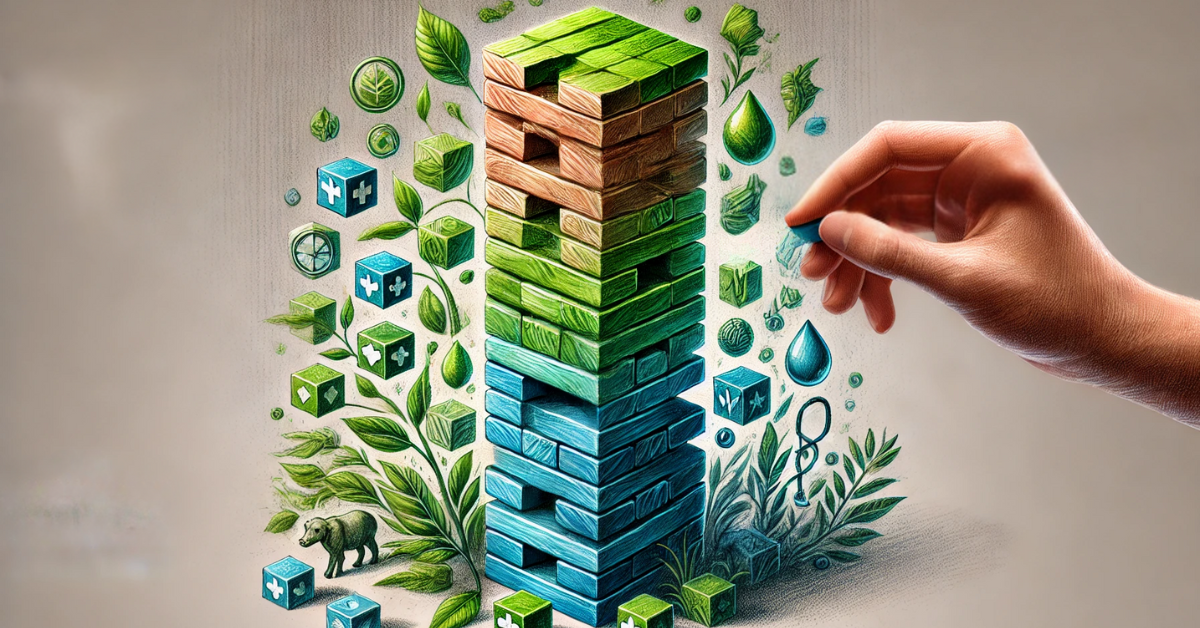
    You ever played Jenga? You know, that game where you’re pulling pieces out of a tower, trying not to make it fall?

    Well, One Health – the connection between human health, animal health, and environmental health – is the highest stakes game of Jenga ever played. Except this not a game.

    Let me break it down for you…

    See, in regular Jenga, if the tower falls, you just set it up again.

    But with our planet? There’s no reset button.

    No new game. No “my bad, let’s start over.”

    Each piece we pull – whether it’s a species, a forest, or clean air – affects every other piece in ways we might not see until it’s too late.

    And unlike Jenga, we can’t afford to find out what happens when it all comes down.

    Let’s talk about why every move we make matters, and why your PHuncle stays up at night thinking about this stuff.

    Understanding the Tower: How One Health Works

    Let me tell you something about this tower we’re all living in. Just like in Jenga, every piece matters – not just the ones you can see, not just the ones you think are important, but every single one. We’ve got three main types of pieces in our tower:

    • Human health (that’s us)
    • Animal health (from pets to wildlife)
    • Environmental health (the air, water, land – everything)

    Now, here’s where folks mess up: they think they can just focus on “their” pieces.

    Like, “I’m only concerned about human health; let me pull these other pieces out real quick.”

    But check it – you start pulling pieces that affect animals or the environment, thinking it won’t affect you? That’s a dangerous though.

    For example: Remember when COVID-19 hit?

    That wasn’t just a human health crisis that came out of nowhere.

    It’s a textbook example of could happen when we keep messing with the tower – pushing wildlife into smaller spaces, creating more contact between humans and animals, ignoring how our choices affect the whole structure.

    The virus didn’t care that we thought we were separate from nature – it showed us real quick how connected everything is. The world had to shut down because of it.

    Let’s talk about bees for a minute. We’ve been pulling their pieces out of the tower through:

    • Pesticide use that kills them
    • Destroying their habitats
    • Climate change disrupting their patterns
    • Industrial agriculture limiting their food sources

    And now we’re seeing the tower wobble because those “little insects” were actually holding up way more than we thought. Without bees pollinating:

    And here’s something that’ll really blow your mind: even mosquitos, yeah, those annoying little blood suckers everybody hates, are crucial pieces in this tower.

    Your first thought might be “can we just remove all mosquitos from the game?” I feel you – nobody’s out here being a mosquito fan club president, especially because they the world’s deadliest animal.

    But pull that piece out, and watch what happens:

    • Many birds lose a major food source
    • Fish that eat mosquito larvae start declining
    • Plants that depend on mosquitos for pollination struggle
    • Arctic food webs (where mosquitos are a huge food source) start falling apart
    • Even some chocolate production gets affected (yes, really – mosquitos pollinate cacao trees)

    This is what I mean about every piece mattering.

    Even the ones we don’t like are holding something up. Nature didn’t put these pieces in the tower for no reason – they’ve been part of the winning strategy for billions of years.

    The Cascade Effect: When One Move Leads to Another

    Listen, one of the trickiest parts about this One Health Jenga tower is that some moves look stable at first.

    You pull a piece – maybe clear out a forest for development – and everything seems fine.

    The tower’s still standing. But what you don’t see is how that one move forces riskier and riskier moves down the line.

    Let me break down how these cascade effects work:

    Say we clear that forest for new housing (pulling that piece). Looks good at first, right? But watch what happens:

    • Wildlife lose their home
    • These animals gotta go somewhere
    • Now they’re moving into other areas, including human neighborhoods
    • This closer contact means more chances for disease spread
    • Meanwhile, that forest isn’t there to clean our air anymore
    • Or to prevent soil erosion
    • Or to absorb flood waters
    • Or to keep the local temperature regulated

    Suddenly, what looked like one simple move has us scrambling to deal with:

    • New public health risks
    • Property damage from floods
    • Higher AC costs from heat islands
    • Water quality issues from erosion
    • More respiratory problems from poor air quality

    And here’s the thing about cascade effects – once they start, they’re hard to stop, slow down, or reverse.

    It’s like when you make a shaky move in Jenga, and now every move after gets more dangerous because the tower’s not as stable as it was.

    But unlike Jenga, we can’t just laugh it off when things get shaky.

    These cascade effects impact real communities, real lives, and real futures.

    And usually? It’s the communities with the least resources that feel these effects first and worst.

    Let me show you another cascade that’s happening right now – our oceans.

    People think “I don’t live near the ocean, why should I care?” But watch how pulling these pieces affects the whole tower:

    We dump plastics and pollution in the ocean (pulling pieces):

    • Fish eat these microplastics
    • We eat those fish
    • Ocean temperatures rise
    • Coral reefs start dying
    • Fish lose their homes
    • Coastal communities lose protection from storms
    • Fishing communities lose their livelihoods
    • Food security takes a hit
    • Prices go up at your local seafood spot
    • And those microplastics? They’re showing up in our blood, in breast milk, in rainwater

    See how what seemed like “just ocean problems” ended up on your plate and in your body?

    Here’s another one that’s hitting close to home – antibiotic resistance. Watch this cascade:

    • We use antibiotics heavy in farming
    • These drugs get into soil and water
    • Bacteria adapt and get stronger
    • Now our medical antibiotics don’t work as well
    • Common infections become dangerous again
    • Hospital stays get longer
    • Healthcare costs rise
    • And that’s not even counting the effects on the farm workers
    • Or the communities living near these farms
    • Or the animals themselves

    Playing Smarter: Solutions We Can’t Afford to Ignore

    Now, I know what you’re thinking: “PHuncle Dorian, you’re telling me everything’s connected and we’re pulling pieces out left and right – what are we supposed to do about it?”

    First thing we gotta do is change how we think about “progress.”

    Right now, we’re playing like amateur Jenga players – making quick moves, thinking short-term, and only counting certain kinds of wins (usually the ones with dollar signs).

    We need to start playing like pros who understand the whole game.

    What does that look like? Let me break it down:

    Better Planning (Studying the Tower):

    • Before we pull a piece (like developing land), we need to understand what that piece is holding up
    • Stop pretending that “environmental costs” and “health costs” are somebody else’s problem
    • Look at successful examples – some communities are already doing this right
    • Learn from indigenous knowledge that’s kept ecosystems stable for generations

    Policy Changes (New Game Rules):

    • Support regulations that consider human, animal, AND environmental health together
    • Stop rewarding moves that destabilize the tower
    • Fund research that helps us understand these connections better
    • Create incentives for development that preserves rather than destroys

    Communities Getting It Right

    Let me show you some real examples of people who understand you can’t just yank pieces out the tower without thinking it through:

    Milwaukee’s Urban Ecology Center

    Instead of just building another concrete jungle, they:

    • Turned abandoned lots into living classrooms
    • Created green spaces that work for both people AND wildlife
    • Got kids connecting with nature right in their neighborhood
    • Saw crime rates drop as community engagement went up
    • Improved local air quality
    • Created jobs in environmental education
    • Started seeing wildlife return to urban areas

    Portland’s Urban Planning

    Installing green roofs that:

    • Cool buildings naturally
    • Provide habitats for pollinators
    • Reduce stormwater runoff
    • Improve air quality
    • Lower energy costs
    • Making sure new developments include wildlife corridors
    • Creating policies that consider environmental impact before approval

    Designing for All Life: The Cradle to Cradle Revolution

    Here’s an idea that’ll blow your mind – Cradle to Cradle design.

    Architect William McDonough asked a very insightful question: “What if we designed everything thinking about all children, all species, for all time?”

    That’s not just some nice quote for your Instagram – that’s One Health thinking at its finest. Instead of the usual “take-make-waste” game we’ve been playing, Cradle to Cradle is about designing like nature does:

    Think about it:

    • In nature, nothing is “waste” – everything becomes food for something else
    • A tree drops leaves? That’s nutrients for the soil
    • A fallen log? That’s a home for other species AND future soil
    • Everything has a purpose, even after its “first life”

    The Ford Rouge Factory Transformation

    Let me tell you about a glow-up that matters. The Ford Rouge Factory – yeah, Henry Ford Ford (who, let’s be clear, had some REALLY problematic views we don’t mess with) – went from being one of the world’s largest industrial complexes to becoming something its original owner probably couldn’t even imagine: a model for environmental sustainability.

    Sometimes, the best revenge is proving how much better we can do than our predecessors(or, secondary to your paper, as per Beyonce.)

    They took this massive 10.4-acre industrial complex – one that represented old-school manufacturing with all its problems – and transformed it into something that actually gives back to the environment. Talk about a redemption arc:

    Transformed their massive roof into a living ecosystem that:

    • Provides habitat for birds and insects where there was once just metal and concrete
    • Naturally filters rainwater instead of contributing to stormwater runoff
    • Keeps the building cooler without extra energy use
    • Makes the roof last twice as long
    • Shows how even the most industrial spaces can support life
    • Turned a symbol of traditional industry into a blueprint for sustainable manufacturing

    This transformation hits different because it shows we don’t have to tear everything down and start over. We can take what we inherited – even from folks who got it wrong – and make it work WITH nature instead of against it. Sometimes, the places with the darkest histories have the most potential for positive change.

    Method Soap’s Chicago Factory

    • Has the world’s largest rooftop greenhouse
    • Uses renewable energy
    • Creates zero waste
    • Provides jobs in a neighborhood that needed them
    • Shows how industry and environment can work together

    This right here? This is how you play the game smart. You’re not just avoiding pulling pieces from the tower – you’re actually adding stability to it. You’re thinking about:

    • What happens to materials after we’re done with them
    • How buildings can give back to nature, not just take
    • Ways to create systems that strengthen the whole tower
    • How to make “progress” that doesn’t come at the expense of our future

    Connecting the Dots: The Bigger Picture

    See what all these examples have in common? Whether it’s Milwaukee’s Urban Ecology Center, indigenous practices, or Cradle to Cradle design – they’re all understanding something crucial about our Jenga tower: the goal isn’t just to avoid making it fall, it’s to make it stronger.

    This is what One Health is really about. It’s not just about preventing problems – it’s about creating systems where:

    • Human health improves BECAUSE we improved environmental health
    • Animal welfare supports human welfare
    • Progress doesn’t come at the expense of the planet
    • Every move we make considers “all children, all species, for all time

    What You Can Do: Personal Power Moves

    Look, I get it. When we talk about big systems and global issues, it’s easy to feel like your moves don’t matter. Like you’re just one player in a worldwide game. But remember what I said about pieces being connected? That works both ways – positive moves can create positive cascades too.

    Understanding Your Moves:

    When you choose public transit or bike instead of driving(if applicable, which, is a problem on its own):

    • You’re not just saving gas money
    • Traffic? Near guaranteed going home from work, less likely for delays
    • You’re reducing air pollution
    • Which helps people with respiratory issues
    • Which reduces healthcare costs
    • Which affects community health
    • Plus, you’re showing others it’s possible
    • And creating demand for better transit options

    Making Informed Choices:

    When you support local farmers markets(once again, if able. There’s a lot of issues that feed into each other and bigger ones y’all):

    • You’re reducing transportation emissions
    • Supporting pollinator-friendly farming
    • Keeping money in your community
    • Creating demand for sustainable agriculture
    • And yeah, getting fresher food too

    Building Community Power:

    When you get involved in local planning meetings:

    • You’re having a say in how your community develops
    • Which affects everything from air quality to food access
    • Which impacts both human and animal health
    • Which strengthens the whole tower

    Game Plan Forward: More Than Just Staying in the Game

    Listen, I know we’ve covered a lot here. But let me be crystal clear about something: in this whole One Health equation, humans are the ones with the controller. We’re the ones making the moves.

    The environment? It was doing just fine for billions of years before we started “improving” things.

    The animals? They’ve been playing their natural roles perfectly until we started changing the rules of their game.

    Let that sink in – 4 billion years of balance, and then here we come with our “progress” which has us at catastrophe in 400.

    See, that’s what makes this so different from a regular game of Jenga.

    In actual Jenga, everybody’s taking turns making moves.

    But in our One Health tower?

    We’re the only ones choosing which pieces to pull, which ones to leave, which ones to stress.

    The environment and animals aren’t volunteering to be removed from the game – that’s all us. And how they adapt? Which, is to say, how we effed them up, we deal with the consequences.

    But here’s the flip side: if we’re the ones with the power to destabilize everything, we’re also the ones with the power to stabilize it. That’s both the heaviest responsibility and our biggest opportunity.

    While any single move CAN topple the whole tower (we’ve seen how one environmental change can cascade into disaster), every single move also matters for keeping it stable. That’s both the scary AND empowering part of One Health:

    • One bad move can start a devastating cascade
    • BUT one good move can also start positive ripple effects(in fact, two people’s idea saved the O Zone layer and humanity bruh. I constantly reflect on that when pessimistic)
    • And when enough players start making smart moves together:
      • Policies change
      • Markets shift
      • Communities transform
      • Systems adapt

    Ready to make your next move count? Think about this next time you play Jenga.

    Resource Guide (Bonus Content)

    Official One Health Organizations

    • Centers for Disease Control One Health
    • Office World Health Organization One Health Initiative
    • One Health Commission
    • United States Department of Agriculture
    • One Health American Public Health Association One Health Section

    Environmental Action Resources

    • Environmental Protection Agency (EPA)
    • Community Action Guide National Resources Defense Council (NRDC)
    • Environmental Justice Network
    • Local Environmental Action Groups
    • Climate Action Resources

    Learn More About One Health

    • CDC’s One Health Basics
    • WHO’s One Health Framework
    • One Health Institute Resources
    • Environmental Health Education Materials
    • Zoonotic Disease Prevention Guidelines

    Get Involved Locally

    • Find your local health department
    • Community garden initiatives
    • Local environmental advocacy groups
    • City planning meeting schedules
    • Sustainability programs in your area
  • The Game is Rigged: A PHuncle’s Guide to Health Equity

    The Game is Rigged: A PHuncle’s Guide to Health Equity

    Look, lemme tell you something bout Health Equity: Health Equity is like a video game, but not everybody’s playing the same version. Some folks out here playing on “Easy Mode” with all the cheat codes and power-ups they could need. Meanwhile, others are stuck on “Legendary Difficulty” – you know, where one hit takes out half your health bar, and the healing stations are few and far between.

    I remember the exact moment this hit different for me. I was in undergrad, working on a paper about maternal health for my Medical Anthropology course when the stats knocked me back: The United States is out here spending more on healthcare than ANY other country in the world, but our maternal mortality rate is higher than any other developed nation – and it’s getting worse.

    And let me tell you, these numbers ain’t hitting everybody the same way. Depending on who you are and where you live, your odds of making it through childbirth healthy can be dramatically different. That’s not just a skill issue – that’s a system issue.

    That’s what we call health inequity, and trust me, it’s not a glitch – it’s a feature of the system. When you dig deeper, you see how these maternal health outcomes connect directly to where people live. Same game, different difficulty settings based on your ZIP code(among other thing).

    But here’s the thing: once you understand how the game is rigged, you can start working on changing the rules. And that’s exactly what the PHuncle is here to break down for you.

    In this guide, we’re gonna explore everything from how your starting point affects your whole gameplay to why some players seem to have unlimited resources while others are struggling to maintain their health bar. More importantly, we’re gonna talk about how we can patch this game to make it fair for everybody— the core of Health Equity.

    Before we dive in deep, let me make something clear: this isn’t about giving everybody the same health potion. This is about understanding why some players need more healing than others, and making sure everyone has a fair opportunity to level up.

    Let’s get into it.

    Level 1: Understanding the Game Settings

    Listen, if you’ve ever played a game, you know the first thing it asks you is to choose your difficulty setting. But in this health game? That choice gets made for you before you even hit start.

    Think about it like this: Some players spawn into a world with high-end gaming setups— clean air, fresh food on deck, parks everywhere, doctors in walking distance, good schools, and low-stress levels. That’s your “Easy Mode” right there.

    But for too many people, especially in our Black and Brown communities, the game loads up on “Legendary Difficulty” automatically. Their spawn point comes with:

    • Air quality dropping their health stats daily
    • Food deserts limiting their healing items
    • No healing stations (healthcare) in sight
    • Environmental hazards everywhere
    • Limited save points (preventive care opportunities)
    • Higher damage from everyday encounters (cumulative chronic stress)

    The Tutorial Level: What is Health Equity?

    Now, a lot of folks hear “equity” and think it’s just another way to say “equality.” These are not the same.

    Equality is giving everybody the same health potion, regardless of their damage level. Sounds fair, right?

    But what if one player has full health and another is down to their last heart? Why are we even giving a health potion to someone at full health? They can’t use it, don’t need it, and meanwhile, that other player is one hit away from game over. That’s wasteful game design right there. Those resources could’ve gone to the player actually fighting for survival.

    That’s where equity comes in. Health equity means understanding that different players need different levels of support to reach full health. It’s about:

    • Getting more healing stations in health desert areas
    • Directing resources to where they’re needed most
    • Removing barriers that keep certain players from accessing power-ups
    • Rewriting the game’s code to give everybody a fair chance

    Level 2: The Game Mechanics (Social Determinants of Health)

    Resource Distribution

    Y’all ever played a game where some areas have all the shops, supplies, and resources, while other areas are just… empty? That’s exactly how our health system is set up right now.

    Let’s break down these game mechanics:

    Food Access:

    Picture this – you need to restore your health, but the only shops in your area are selling items that drain your health bar slowly over time. That’s what a food desert feels like. Sure, you technically have “choices,” but when the nearest fresh food vendor is three bus rides away, and the only quick options are convenience stores and fast food, what kind of choice is that really? The structure constrains your agency.

    Transportation (Fast Travel Points):

    Some players got fast travel unlocked – hop in their car, straight to the doctor’s office, no problem. Others? They’re playing on hardcore mode where getting to one appointment means:

    • Taking off work (losing coins)
    • Catching three different buses (time penalty)
    • Hoping the schedule lines up (pure chance if it works out)
    • Praying it doesn’t rain (try waiting for a bus in the cold, holding groceries)

    Healthcare Access (Healing Stations):

    Ever notice how some areas got healing stations on every corner, while others don’t have any for miles? And even when you find one, you might not have enough coins to use it, or maybe it doesn’t accept your type of currency (insurance). That’s not just bad game design – that’s by design.

    Education (Skill Points):

    Education in this game works like skill points – the more you have, the better you can navigate the health system. But here’s the thing: some players start with a fully upgraded skill tree because of their ZIP code, while others are trying to level up with limited resources and outdated information.

    Environmental Factors

    Now let’s talk about how your spawn location affects your entire gameplay:

    Air Quality:

    Some players take environmental damage just by breathing—that’s their default state. We’re talking about neighborhoods next to highways, industrial zones, landfills, and pollution sources. Their health bar is constantly ticking down, while other areas have clean air buffs.

    Green Spaces (Rest Areas):

    You know how games have safe zones where you can recover and reduce your stress meter? That’s what parks, walking trails, and green spaces do in real life. But check the map – these recovery zones ain’t distributed equally.

    Safe Neighborhoods (Safe Spawn Points):

    Your stress meter matters. When you’re constantly on alert because your spawn point isn’t secure, your health stats take a hit. Chronic stress is like having a constant drain on your health that affects every aspect of your gameplay.

    Housing Quality (Base Stats):

    Your home base should be where you recover and rebuild your stats. But for too many players, their housing is causing status effects like:

    • Asthma triggered from mold
    • Sleep penalty from noise pollution
    • Stress multipliers from housing density
    • Health drain from poor insulation

    Here’s the real talk: none of these mechanics exist in isolation. They’re all connected, creating compound effects that can either boost your gameplay or make it nearly impossible to progress.

    And just like any game, if the mechanics are broken, no amount of “just do better” or pulling yourself up by your bootstraps, or simply working harder is gonna fix it, and victim-blaming sure ain’t helping.

    Level 3: Understanding the Meta (Systemic Issues)

    Historical Context:

    Listen, to understand why the game is rigged today, we need to look at who wrote the original code, nah mean?

    Redlining (Restricted Map Areas)

    Back in the day, they straight up took whole areas of the map and marked them as “no-go zones” for certain players.

    Banks wouldn’t give loans, insurance companies wouldn’t provide coverage, and resources wouldn’t flow to these areas.

    The practice might be illegal now, but the map restrictions? Those effects are still in play.

    That’s like having your character start every new game with negative stats because of where your grandparents’ character had to live versus continuing progress from your ancestors’ high score.

    Discriminatory Policies (Rigged Rule Set)

    The original game developers wrote rules that deliberately gave some players advantages while holding others back. Think about it:

    • Some players couldn’t access certain healing stations
    • Certain areas were zoned for environmental hazards
    • Educational resources were distributed unequally
    • Healthcare research excluded certain player groups

    These weren’t glitches – they were features of the original game design.

    Generational Wealth (Inherited Inventory)

    Some players start the game with their inventory already filled with resources passed down from previous players. Others start with empty pockets and system-imposed barriers to collecting resources. When your starting gear affects your ability to maintain your health bar, that’s not just about individual gameplay – that’s about system design.

    Medical Mistrust (Damaged Player-NPC Relations)

    When the healing stations have a history of harming certain players instead of helping them, you can’t just patch that with a quick update.

    That trust damage carries forward through generations. Now we got players avoiding healing stations altogether because the history of how the game treated their ancestors is still fresh.

    Current Systems

    Insurance (Pay-to-Win Mechanics)

    Let’s keep it a buck: the current health system is running on pay-to-win mechanics. Got premium currency? Full access to healing stations.

    Working with basic currency or none at all? Good luck finding a station that’ll accept your payment type.

    And even with insurance, some players still gotta solve a whole puzzle just to figure out what’s covered.

    Digital Divide (Limited Server Access)

    In 2024, health resources are increasingly moving online, which is great. But what happens when some players:

    • Can’t afford the equipment to connect
    • Don’t have reliable internet in their area
    • Never got the tutorial on how to use these systems
    • Can only access services through a small phone screen

    Language Barriers (Communication Filters)

    Imagine playing a complex game where all the important information is in a language you’re still learning. Now, add health decisions to that mix. We got players out here trying to navigate crucial health choices through:

    • Google Translate (assuming they have devices with that function)
    • Their kids interpreting (which may mean pulling them out of school)
    • Incomplete information
    • High-stakes misunderstandings

    Cultural Competency (Character Class Understanding)

    Too many healing stations are operating without understanding different player types. They’re using a one-size-fits-all approach when we know different communities:

    • Have different healing traditions
    • Process health information differently
    • Face unique environmental challenges
    • Carry different historical experiences

    The meta of this game needs a serious update, fam.

    But here’s the thing – once you understand how these systems were built, you can start seeing ways to change them.

    And let me be crystal clear: these health barriers weren’t created by nature or chance – they were designed by people, which means people can redesign them.

    Remember: Every single one of these barriers was socially produced. They didn’t fall from the sky or grow from the ground – they came from policies, practices, and decisions made by actual people.

    And what humans build, humans can rebuild. That “this is just how it’s always been” excuse? We’re not accepting that anymore.

    And that’s exactly what we’re gonna talk about next – how we can rewrite these rules together.

    Level 4: Player Strategies (Community Solutions)

    Individual Actions

    Now, let me be real with you – individual players shouldn’t have to carry the weight of a broken system. But while we’re working on changing the game itself, here are some strategies to help you level up and protect your health stats:

    Preventive Care (Armor Upgrades)

    Think of preventive care like upgrading your armor before the big boss fight. Regular check-ups, screenings, and vaccinations? Those are your basic protection stats.

    Yeah, the system might make these harder to access for some players, but knowing they exist and how to find them? That’s your first power-up.

    Health Literacy (Skill Development)

    The more you understand about health, the better equipped you are to navigate the system. It’s like learning the combo moves in a fighting game:

    • Know your rights as a patient
    • Understand your health numbers
    • Learn to read nutrition labels
    • Question what doesn’t make sense
    • Keep records of your health journey

    Advocacy (Team Buffs)

    Your voice matters, and it gets stronger when you combine it with others. Learn to:

    • Speak up about your health needs
    • Connect with community organizations
    • Share knowledge with your squad
    • Support others in their health journey
    • Document what’s not working

    Resource Navigation (Map Knowledge)

    Knowing where to find resources is like having a detailed game map:

    • Community health centers
    • Sliding scale clinics / FQHC (Federally Qualified Health Centers)
    • Transportation assistance
    • Food support programs
    • Mental health resources

    Team Strategies (Community Action)

    But here’s where it gets good – when players team up, that’s when real change starts happening.

    Community Organizations (Guilds)

    Community organizations are like guilds in an MMO – they’re where players come together, share resources, and tackle bigger challenges. These groups:

    • Pool knowledge and resources
    • Create support networks
    • Share survival strategies
    • Build collective power
    • Fight for system changes

    Policy Advocacy (Pushing for Game Updates)

    Remember what I said about these systems being socially produced? That means we can push for better game rules:

    • Attend community meetings
    • Contact your representatives
    • Join advocacy groups
    • Support health justice initiatives
    • Share your story

    Coalition Building (Squad Assembly)

    Different players bring different skills to the team. When we build coalitions, we’re creating a squad that can:

    • Combine different types of knowledge
    • Share resources across communities
    • Create stronger support networks
    • Generate more pressure for change
    • Protect vulnerable players

    Resource Sharing (Inventory Management)

    Look, some of us might have access to resources, but others don’t. That’s when we need to think like a team:

    • Share information about programs and services
    • Help others navigate the system
    • Connect people to resources
    • Organize community support networks
    • Create mutual aid systems

    Here’s what’s beautiful about team strategies – they build power beyond individual actions. When we coordinate our moves, suddenly we’re not just playing defense against a rigged system – we’re actually changing how the game works.

    And that power to change the game? That’s what we’re gonna explore in our next level.

    Level 5: Changing the Game (Systems Change)

    Policy Solutions

    Alright, let’s talk about how we patch this game at the system level. Because individual players and even guilds can only do so much when the core game mechanics need updating.

    Health in All Policies (Universal Game Balance)

    Imagine if every policy update had to consider its health impacts before dropping. Whether we’re talking about:

    • Housing development
    • Transportation planning
    • Education funding
    • Economic policies
    • Environmental regulations

    Every single update needs to answer the question: “How does this affect players’ health stats?” That’s not just a good idea – it’s essential for fair gameplay.

    Universal Healthcare (Equalizing Access to Healing)

    Let’s just call it what it is: having health tied to what kind of currency you hold or where you work is a broken system.

    And before someone jumps in with the “but that’s socialism!” battle cry, let your PHuncle hit you with some game stats:

    Remember, we’re spending more coins than ANY other player nation on healthcare, but our survival rates are in the gutter. Make it make sense!

    That’s like having the most expensive gear in the game but still getting wiped out by basic enemies.

    And let’s address these classic boss-fight arguments:

    “But I want choice!”

    My friend, what choice? Your employer hands you a pre-selected menu of healing potions (if you’re lucky enough to have that), tells you which healing stations you can use, and still hits you with random damage costs.

    Meanwhile, other nations with universal health systems are out here letting players choose their healers AND paying less for better outcomes.

    “The wait times, though!”

    Please, try getting an appointment with a specialist right now – they’ll tell you spin the block 6 months from now.

    We’re already waiting; we’re just paying premium prices for the privilege.

    Here’s the wildest part – about 35% of American players are ALREADY using government health systems through Medicare and Medicaid. That’s right – we’re already running a partial socialist healing system, and guess what? The world didn’t end!

    The cherry on top – in countries with universal healthcare, you can STILL get private insurance if that’s your jam!

    That’s right, these nations said “why not both?” You want the universal basic healing system?

    Bet.

    You want to pay extra for premium options? Go for it!

    But let’s talk about this mindset for a minute.

    Some players are really out here choosing to take damage themselves just to make sure other players don’t get healing. That’s like refusing to use a health potion yourself because you’re mad that someone else might get one too.

    Who does that help? While you’re busy blocking other players from getting care, you’re also blocking YOURSELF from better options.

    The game isn’t zero-sum, dawg. Someone else getting healthcare doesn’t mean you get less – it means we ALL level up together.

    Environmental Justice (Map Rebalancing)

    We need to rewrite the code that’s allowing some areas to be dumping grounds for environmental hazards while others get all the green spaces. This means:

    • Clean air requirements for all zones
    • Fair distribution of green spaces
    • Removal of toxic spawn points
    • Protection for all player communities
    • Resources for environmental cleanup

    Educational Equity (Tutorial Access)

    Knowledge about health shouldn’t be locked behind paywalls or ZIP code barriers. We need:

    • Health education in all schools
    • Community health worker programs
    • Cultural competency training
    • Accessible health information
    • Multiple language support

    Community Power

    But here’s the real talk – these changes don’t just happen because they make sense. They happen when players organize and demand better.

    Grassroots Movements (Player-Driven Updates)

    The most powerful updates often come from players who got tired of dealing with broken mechanics:

    • Community organizing
    • Direct action
    • Policy Advocacy
    • System accountability
    • Power building

    Leadership Development (New Player Support)

    We need to build up the next generation of players who understand both the game mechanics AND how to change them:

    • Youth leadership programs
    • Community health training
    • Advocacy skill building
    • Political education
    • Movement building skills

    The power move here? Understanding that we’re not just players in this game – we can be the developers too.

    Every major health justice win came from communities coming together and demanding change. From clean water requirements to workplace safety standards, it was organized players who made it happen.

    Remember what we said about these systems being socially produced? Reminder, that means they can be socially RE-produced.

    We can rewrite this game’s code. We can change the rules. We can create new systems that actually serve all players.

    But first, we gotta know what moves to make. And that’s what we’re getting into next with our Final Boss section.

    The Final Boss: Taking Action

    Look, now that we understand the game mechanics and how they’re rigged, it’s time for the boss fight. But remember – this ain’t a solo mission. This is a raid, and we need everybody’s skills to win.

    Personal Level

    First, let’s get your character build right:

    Stay Informed (Knowledge Build)

    • Follow health justice organizations
    • Sign up for policy alerts
    • Learn about local health issues
    • Keep up with community needs
    • Share what you learn with your squad

    Use Your Voice (Communication Skills)

    • Speak up about health injustice
    • Share your story
    • Challenge harmful myths
    • Support others speaking out
    • Document what’s broken

    Build Your Network (Alliance System)

    • Connect with health advocacy groups
    • Join community organizations
    • Find your people
    • Support mutual aid networks
    • Share resources

    Community Level

    Now, here’s where the real power-ups happen:

    Get Organized (Squad Goals)

    • Join local health justice organizations
    • Attend community meetings
    • Support grassroots movements
    • Build coalitions
    • Create action networks

    Push for Change (Boss Fight Strategies)

    • Contact your representatives
    • Attend policy meetings
    • Support health justice legislation
    • Vote for health equity
    • Hold systems accountable

    Remember, the final boss isn’t really a single enemy – it’s a system of barriers, policies, and practices that keep health equity locked away.

    But here’s what makes this winnable: We know exactly how these barriers were built, which means we know exactly how to tear them down.

    And look, I know it can feel overwhelming. Trust and believe, I know it can be overwhelming.

    The health system’s got more layers than a bean dip.

    But remember – every major health victory we’ve ever had came from regular players who got tired of the game being rigged and decided to change it.

    The PHuncle’s gonna keep it 100: This is a long game.

    We’re not talking about a quick side quest – we’re talking about changing the whole damn game. But that’s exactly why we need you in it.

    Because at the end of the day, health isn’t just about individual players – it’s about all of us.

    Every time we make the game more fair for one player, we make it better for everybody. Every barrier we break down opens paths for others. Every victory we win becomes a spawn point for more victories.

    So what’s your next move? Whether you’re ready to join a raid party for major system change, or you’re just starting to learn the controls, there’s a role for you in this fight. The only wrong move is staying on the sidelines thinking the game can’t change.

    Remember: These health barriers were socially produced, which means they can be socially dismantled. The game is rigged – but together, we got the cheat codes for justice.

    Ready, player? Pick up that controller and headset, and let’s lock in.

    Resource Guide (Bonus Content)

    Organizations to Level Up With

    National Players

    • National Health Law Program (NHeLP) – Legal warriors for health justice
    • Prevention Institute – Specializing in systemic health solutions
    • PolicyLink – Masters of health equity strategy
    • Right to Health Movement – Health justice squad
    • Human Impact Partners – Data and research power-ups

    Local Support Guilds

    • County Health Departments
    • Community Health Centers
    • Local Health Equity Coalitions
    • Food Justice Organizations
    • Housing Rights Groups

    Tools for the Journey

    Health Equity Assessment Tools

    Knowledge Power-Ups

    Community Organizing Guides

    Emergency Resources (Quick Access)

    Immediate Support

    • Crisis Hotlines
    • Emergency Food Resources
    • Housing Assistance
    • Healthcare Navigation Services
    • Mental Health Support

    Remember: These resources aren’t just links – they’re power-ups for your health justice journey. Don’t feel like you need to use them all at once. Save this guide, level up gradually, and reach out to the PHuncle if you need help finding the right resource for your situation.