Category: Health Education

  • The Hidden Systems Behind Heart Disease: Why America’s #1 Killer Isn’t Just About Individual Choices

    The Hidden Systems Behind Heart Disease: Why America’s #1 Killer Isn’t Just About Individual Choices

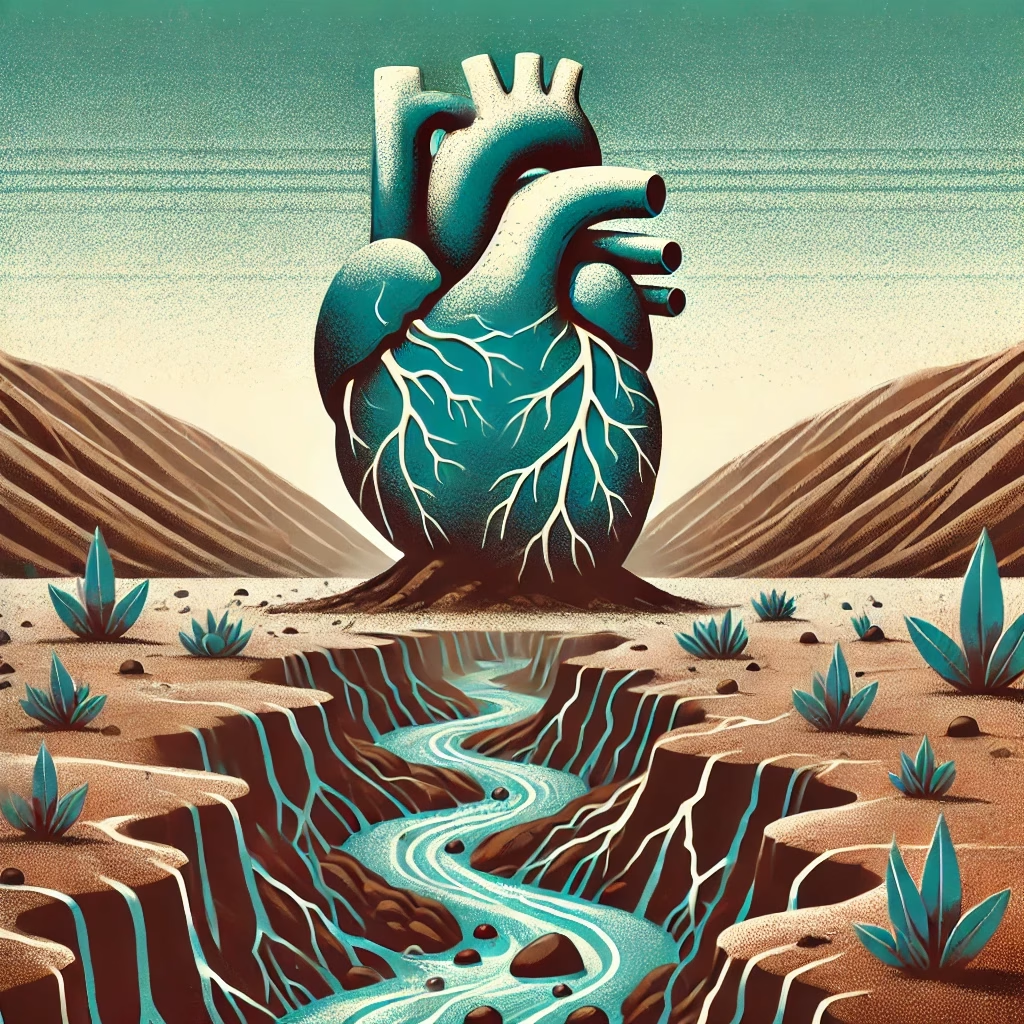
    Heart disease, America’s #1 killer is a lot like soil erosion – it happens so gradually that you don’t notice until there’s a landslide.

    And just like erosion, it ain’t just about what’s happening on the surface.

    941,652 lives. Nearly a million Americans. That’s how many people cardiovascular disease claimed in 2022 alone – up by over 10,000 from the year before.

    And we keep acting like this is just about people making “bad choices” – as if some communities aren’t dealing with stripped land while others got premium soil with perfect drainage.

    When your death toll is pushing seven figures and still climbing? That’s not individual failure – that’s systemic erosion by design.

    The Invisible Process

    Think about erosion for a minute. You don’t see it happening day by day. Each raindrop, each gust of wind takes away a little bit more topsoil.

    By the time you notice, your foundation’s already compromised. Heart disease works the same way – silent, persistent, and devastatingly effective.

    Nearly half of U.S. adults are living with some form of cardiovascular disease right now.

    Most don’t even know it. Just like you can’t see soil washing away grain by grain, you might not notice your arteries narrowing until that heart attack hits.

    And here’s where it gets real: Just like different types of land face different erosion risks, heart disease ain’t hitting everyone the same way. Every fast food desert is another layer of topsoil washing away. Each stressful job is another crack in the foundation. Every underfunded neighborhood loses its protective layers.

    And some communities’ soil has been eroding for generations.

    The Gender Gap: When Medical Research Builds on Shifting Sand

    Now, let me tell you about medicine’s dirty little secret: For decades, we’ve been studying heart disease like it’s a man’s problem in a man’s world. But here’s what hits different: Women’s hearts have been historically neglected.

    When it comes to women and heart disease, they are undertreated and underrecognized. Women haven’t been centered in clinical trials of heart-related conditions, and the confusion is a result.

    • Nausea and vomiting
    • Fatigue
    • Breathlessness

    The numbers tell the story: Between 1995 and 2014, the proportion of heart attacks among women aged 35 to 54 increased from 21% to 31%, while for men in the same age group, it rose from 30% to 33%. This indicates a more pronounced increase among younger women, highlighting a concerning trend.

    That’s not just a gap – that’s a canyon of medical bias.

    It’s like we’ve been using the wrong soil testing equipment all along, then wondering why some gardens ain’t thriving.

    Women are more likely to have high blood pressure or diabetes – conditions that can turn that soil erosion into a landslide – but less likely to get screened or treated for heart disease, even with these risk factors staring doctors in the face.

    The Systems Behind the Symptoms

    Let’s break down how this erosion really works, because these aren’t just differences – they’re designed disparities that shape who lives and who dies.

    In Some Neighborhoods:

    Fresh produce costs more than fast food

    When a bag of apples costs more than three combo meals, that’s not about choice – that’s about survival.

    Families ain’t choosing fast food because they don’t know better; they’re choosing it because when you’re stretching dollars, you buy what fills stomachs. Every time someone picks up that $5 combo meal instead of $8 worth of vegetables, their cardiovascular system takes another hit.

    And it doesn’t have to be this way.

    Parks and safe walking spaces are rare luxuries

    Try telling somebody to “just take a walk” when their neighborhood hasn’t seen a working streetlight in years.

    When every park is a 30-minute bus ride away, when sidewalks are broken or non-existent, when safety concerns keep people indoors – that’s not about motivation, that’s about infrastructure designed to keep people inactive.

    Also, does not have to be this way.

    Healthcare facilities are few and far between

    Assuming there is even a cardiac specialist in a community, that waitlist likely won’t be when it’s conveieint the nearest cardiac specialist is two bus transfers away, that follow-up appointment might as well be on

    People aren’t skipping preventive care because they don’t care – they’re skipping it because accessing care means losing a day’s pay, finding childcare, and navigating a transit system that wasn’t designed for them.

    Once again, assuming the mechanisms are in place to see a cardiac specialist.

    CENTRAL ILLUSTRATION. Supply and Demand of the Cardiovascular Workforce.

    Environmental pollution is just part of daily life

    Some communities are breathing in cardiovascular risk with every breath.

    When your neighborhood sits next to the highway, the factory, or the waste treatment plant, your heart’s working overtime just to handle the daily toxic load.

    Your body’s fighting a battle it never signed up for.

    And highways and factors don’t just show up, they were a choice.

    Stress isn’t just a feeling – it’s a constant companion

    When you’re living paycheck to paycheck, when sirens are your nighttime soundtrack, when every interaction with authority carries risk – your stress response system never gets to rest.

    That constant cortisol cascade? It’s eroding your cardiovascular system like acid rain on limestone.

    While some communities struggle with food deserts, healthcare shortages, and environmental hazards, others enjoy a built environment designed to protect heart health from every angle.

    These differences aren’t incidental—they’re engineered by decades of policy choices.

    In Others:

    Grocery stores compete for your business

    Some neighborhoods got so many organic markets they’re tripping over kale.

    Think about what happens when there are options for healthy produce and foods. It becomes the easy choice, and heart health improves just by proximity to possibility.

    Green spaces invite physical activity

    Well-maintained parks, safe jogging trails, bike lanes that actually go somewhere – movement becomes natural when your environment encourages it.

    These aren’t just amenities; they’re cardiovascular health infrastructure, and built environment cannot be understated for how deeply it influences health.

    Medical centers occupy prime real estate

    When you can see three different cardiac specialists from your front porch, prevention becomes convenient.

    Regular screenings, immediate care for concerns, relationships with providers – all of it’s just part of the neighborhood package.

    Air quality is protected

    Some communities got politicians fighting to keep their air clean, pushing out polluting industries, monitoring quality daily. Their hearts ain’t fighting just to handle the basic act of breathing.

    “Wellness” is a lifestyle brand

    When your biggest stress is choosing between hot yoga studios, when “self-care” is built into your work benefits, when health optimization is your hobby – your heart’s getting every advantage money can buy.

    This ain’t random. When you map out heart disease rates across cities, they follow the same lines as:

    • Historical redlining boundaries that determined where people could live
    • Environmental pollution zones that were intentionally placed in certain communities
    • Food desert locations that reflect decades of corporate disinvestment
    • Healthcare facility distribution that mirrors wealth concentration
    • Income inequality patterns that determine who can afford prevention

    That’s not coincidence – that’s design.

    Every one of these factors was shaped by policy decisions, corporate choices, and systemic biases.

    We’ve literally built a world where your ZIP code can be a better predictor of heart health than your genetic code.

    The True Cost of Stripped Soil

    Behind those 941,652 annual deaths, there’s:

    • Families losing economic contributors(which, can perpetuate health inequities),
    • Communities losing leaders,
    • Children losing parents,
    • Knowledge being buried,
    • Futures getting erased,
    • Generational wealth evaporating

    And the wildest part? We know how to prevent most of this.

    We’ve got the science. We’ve got the solutions.

    What we don’t have is the system design to make those solutions accessible to everyone.

    Beyond “Just Eat Better”

    Every time someone suggests heart disease is just about diet and exercise, I want them to explain:

    • How you’re supposed to “eat fresh” in a food desert
    • How to “get active” in neighborhoods without safe spaces
    • How to “manage stress” while working three jobs
    • How to “see your doctor regularly” without health insurance
    • How to “prioritize health” when you’re just trying to survive

    That heart attack at 50? That wasn’t just about someone’s choices last week. That landslide started decades ago – when certain communities got stripped of their resources while others kept their ground fertile and protected.

    Building Better Soil: Learning from the Land

    We can learn a great deal from farmers who actually know how to prevent soil erosion.

    They don’t just wait for the landslide – they use proven methods that have worked for generations:

    • Crop rotation keeps the soil rich and balanced
    • Conservation tillage protects the ground’s structure
    • Contour farming follows the land’s natural shape
    • Strip farming creates protective barriers
    • Terrace farming prevents rapid runoff
    • Grass waterways guide excess flow safely
    • Diversion structures redirect harmful forces
    • Strategic tree planting holds everything together

    So what can these teach about heart disease?

    Just like crop rotation keeps soil healthy, we need to rotate our community resources – not just focusing on one solution but creating diverse, sustainable health programs that work together.

    Like conservation tillage protects soil structure, we need to preserve and strengthen existing community health networks.

    When farmers use contour farming to work with the land’s natural shape, that’s like tailoring health interventions to fit community cultures and patterns instead of forcing one-size-fits-all solutions.

    Strip farming creates protective barriers against erosion? That’s exactly what we need in healthcare – multiple layers of protection, from primary care to community support to emergency services.

    And just like terrace farming prevents rapid runoff, we need systems that catch health problems early, creating multiple levels of intervention before crisis hits.

    Building Better Systems: Real Solutions for Real Change

    Want to actually address heart disease? Here’s what works:

    Community-Level Solutions:

    • Bringing fresh food markets to underserved areas
    • Creating safe spaces for physical activity
    • Establishing local healthcare facilities
    • Building trust through community health workers
    • Supporting economic development that promotes health

    Policy Changes:

    • Investing in public transportation
    • Implementing strict environmental protections
    • Requiring paid sick leave and mental health days
    • Expanding healthcare access
    • Funding community health initiatives

    Healthcare System Redesign:

    • Training providers in gender-specific symptoms
    • Addressing racial and ethnic health disparities
    • Creating culturally competent care models
    • Focusing on prevention over crisis management
    • Building community-based health networks

    The Path Forward

    Real change means:

    1. Acknowledging the systemic nature of heart disease
    2. Investing in community-level solutions
    3. Addressing social determinants of health
    4. Creating policies that protect everyone’s heart health
    5. Building systems that prevent erosion instead of just responding to landslides

    Because at the end of the day, your heart health shouldn’t depend on your ZIP code, your bank account, your gender, or the color of your skin.

    And until we address these root causes, we’ll keep losing nearly a million Americans every year to a disease that’s preventable – a number that keeps climbing while we keep pretending it’s just about personal choice.

    Next time somebody talks about heart disease like it’s just about personal choice, ask them: How you gonna blame somebody’s garden when their soil’s been washing away for generations?

    It’s time to stop treating the symptoms and start rebuilding the soil. Just like farmers know you need multiple methods working together to prevent erosion, we need comprehensive, interconnected solutions to protect heart health.

    Because you can’t grow healthy hearts in stripped earth – and some communities have been watching their ground wash away for far too long.

    Remember: Every farmer knows it’s easier to prevent erosion than to rebuild destroyed land. The same is true for heart health.

    The question isn’t whether we know how to prevent these problems – it’s whether we’re willing to invest in the solutions we already know work.
  • Environmental Health Crisis: How Earth’s Breaking Point Threatens Public Health

    Environmental Health Crisis: How Earth’s Breaking Point Threatens Public Health

    Like the Wu Tang Clan, environmental health ain’t nun to fuck with.

    via GIPHY

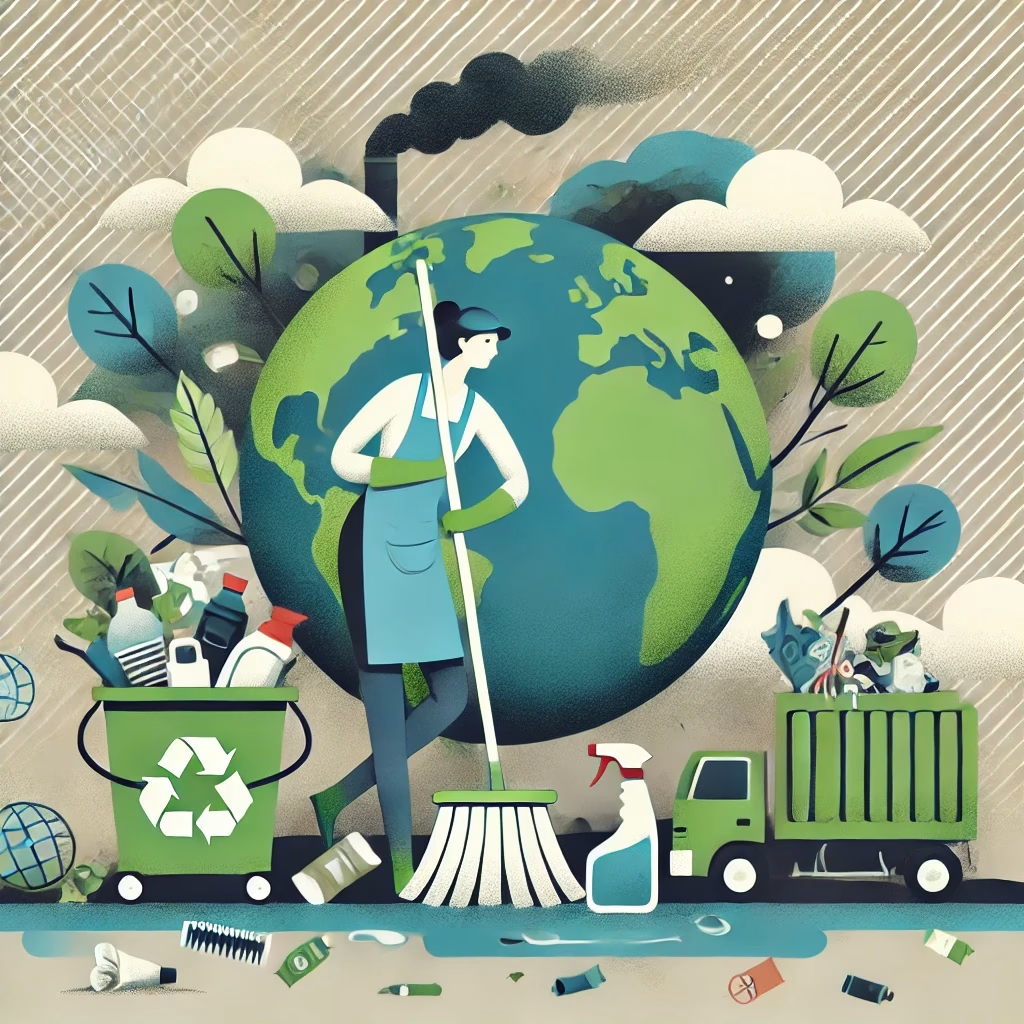
    The Earth’s been our janitor since day one, cleaning our air, filtering our water, and absorbing our mess. But we’re acting like entitled tenants who think cleanup is just “part of the job.”

    And let me tell you – this ain’t working out like we thought it would.

    The Original Cleanup Crew

    Back in the early 1900s, Americans were living rough. Drinking dirty water, eating contaminated food, sharing space with disease-carrying critters – and dying from it.

    No antibiotics, no vaccines, just pure environmental chaos.

    When you got a mess in your building, you generally got two choices:

    • Clean it up,
    • Let it pile up until everybody gets sick

    Our ancestors figured this out the hard way.

    By 1940, they’d dropped infectious disease deaths by 75% – not with medicine, but by improve their environmental condition.

    • Building water systems that actually worked
    • Getting the rats out before the plague got in
    • Making sure food wasn’t trying to take you out

    That was the birth of environmental health – when we finally realized we needed better building maintenance.

    The Laws of the Building (Barry Commoner’s Truth)

    In the 1970s, this homie named Barry Commoner came through and laid down four laws about how our building actually works. An environmental health manual if you will:

    1. Everything Is Connected to Everything Else
      • You can’t just mess up one room and think it won’t affect the whole building.
      • That smoke you’re pumping into the air? It’s coming back in your water.
      • Those chemicals you’re dumping? They’re showing up in your food.
    2. Everything Must Go Somewhere
      • There is no “away” when you throw something away.
      • That plastic you tossed? It’s breaking down into your blood now.
      • Those emissions you released? They’re coming back as climate change.
    3. Nature Knows Best
      • Every time we try to outsmart our janitor, we make things worse.
      • Synthetic chemicals? Nature don’t know how to break those down.
      • Artificial systems? They’re breaking down while natural ones been working for millions of years.
    4. There’s No Such Thing as a Free Lunch
      • Every “shortcut” we take comes with a price.
      • That cheap production? Somebody’s paying with their health.
      • Those quick profits? Earth’s billing us with interest.

    The Corporate Takeover (When Capitalism Hijacked the Building)

    Now here’s where things get wild.

    Capitalism looked at our building’s maintenance needs and said, “Let’s make this profitable.”

    Suddenly, our relationship with the environment wasn’t about sustainability – it was about quarterly earnings.

    Think about what that means:

    • Industries dumping waste because proper disposal cuts into profits
    • Companies fighting environmental regulations to protect their bottom line
    • Corporations privatizing natural resources while socializing the cleanup costs
    • Poor communities becoming sacrifice zones for industrial convenience

    This ain’t just business – it’s environmental violence.

    We’re letting profit motives override our janitor’s maintenance schedule, and the building’s starting to show serious wear and tear.

    Here’s What Hits Different: The Environmental Justice Revolution

    Enter Dr. Robert Bullard, the father of environmental justice, who came through in the 1980s and said, “Hold up – notice how some floors of this building are getting trashed while others stay clean?”

    He exposed how:

    • Toxic facilities “mysteriously” end up in Black and Brown neighborhoods
    • Waste sites “somehow” get placed near low-income communities
    • Indigenous lands become dumping grounds for the nation’s poison
    • Communities of color face the worst environmental health impacts

    The numbers tell the story:

    But Bullard didn’t just expose the problem – he sparked a movement. Environmental justice became about:

    • Communities demanding a say in environmental decisions
    • Connecting local struggles to systemic racism
    • Fighting for equal protection from environmental hazards
    • Building power to challenge corporate polluters
    • Transforming “Not In My Backyard” to “Not In Anybody’s Backyard”

    The Breaking Point

    And just like any overworked, underappreciated worker, Earth’s showing signs of burnout:

    • Ecosystems collapsing faster than streaming services can make new shows
    • Species checking out without leaving a forwarding address
    • Weather patterns acting like they never read the manual
    • Natural filtration systems calling in sick permanently

    We’re treating Earth like that janitor who’s supposed to handle everything – clean up our spills, fix our breaks, absorb our abuse.

    But when janitors finally say “I’m done,” things immediately start to collapse.

    Systems break down. Mess piles up. Everything falls apart.

    Building Better: Real Solutions for Environmental Health x Environmental Justice

    Community Power: From Voices to Votes to Victory

    Let me tell you something about “community input” – it’s usually set up like a suggestion box that leads straight to the trash.

    But real community power? That’s about holding the pen that writes the rules.

    Think about what actual community control looks like:

    • Instead of suits from downtown deciding where to put that new highway, you got neighborhood councils with real veto power
    • Rather than researchers treating communities like lab rats, you got local folks designing the studies, asking the questions that matter to them
    • Not just “consulting” Indigenous leaders after the plans are made, but following their lead on land management practices that worked for thousands of years
    • Grassroots organizing that turns individual complaints into collective action with teeth

    When communities control their environmental decisions, they don’t just prevent harm – they create solutions nobody else could see.

    Like the grandmother who noticed the asthma patterns in her neighborhood and sparked a whole movement against air pollution.

    Or the youth group that turned an abandoned lot into a community garden and food justice hub.

    We’re talking about:

    • Environmental review boards with actual community majority
    • Local health monitoring systems run by the people breathing the air
    • Indigenous fire management practices preventing California wildfires
    • Community land trusts protecting neighborhoods from toxic development

    Because nobody knows what a neighborhood needs like the people living there.

    And when communities get real power?

    They don’t just fight against environmental threats – they build environmental solutions that work for everybody.

    System Overhaul: Putting Teeth in Environmental Protection

    We’ve been playing environmental protection like it’s a friendly game of suggestions, when we need to be treating it like law enforcement – except this time, we’re policing the actual criminals.

    What does environmental law with real teeth look like?

    • Fines big enough to make corporations feel it in their profit margins, not just their petty cash drawer
    • Criminal penalties for executives who knowingly poison communities
    • Whistleblower protections strong enough that people can expose violations without losing their lives
    • Regulatory agencies funded like we actually care about keeping our air breathable and our water drinkable

    Imagine environmental regulations that:

    • Don’t just set limits on pollution but require industry to prove their safety before they operate
    • Make corporate boards personally liable for environmental crimes
    • Tie executive compensation to environmental performance
    • Fund environmental protection like we fund the military – because what’s national defense if we can’t defend our air and water?

    The clean energy transition can’t be optional anymore. We need:

    • Investment in renewable infrastructure like our lives depend on it (because they do)
    • Job training programs that turn fossil fuel workers into clean energy leaders
    • Grid modernization that prioritizes communities historically left in the dark
    • Energy democracy where communities own their power – literally

    Just Transition: Building the Future We Deserve

    A just transition isn’t just about switching from dirty energy to clean energy – it’s about making sure we don’t recreate the same old power dynamics with new technology.

    What does that actually look like on the ground?

    • Solar panel factories in former coal towns, owned by worker cooperatives
    • Transit systems designed by the people who actually ride them
    • Urban farming programs that turn food deserts into food forests
    • Green building programs that create jobs while cutting energy bills

    We’re talking about:

    • Training programs that don’t just offer jobs but career paths with living wages
    • Clean energy projects owned by the communities they serve
    • Transportation systems that connect people to opportunities, not just routes
    • Agriculture that heals the land while feeding the people

    Because a just transition means:

    • The people who bore the costs of pollution get first dibs on clean energy benefits
    • Communities design their own transportation solutions instead of having highways forced through their neighborhoods
    • Urban farms run by the communities that need them most
    • Green jobs that come with union cards and living wages

    Reparative Justice: Making Things Right

    Let’s be real about something: You can’t poison communities for generations and then act like “sorry” fixes it. Reparative environmental justice means actually repairing the harm done.

    That looks like:

    • Full cleanup of toxic sites, not just covering them with pretty grass
    • Healthcare systems specifically designed to address environmental illness
    • Restoration projects that rebuild ecosystems while creating local jobs
    • Direct compensation to communities that have been environmental sacrifice zones

    We need:

    • Health monitoring and care for generations exposed to toxins
    • Trust funds for future medical needs from environmental exposure
    • Ecosystem restoration that creates jobs for impacted communities
    • Real compensation for lost land, health, and opportunities

    Because reparative justice isn’t charity – it’s accountability. It means:

    • Companies that profited from pollution paying for community healthcare
    • Governments acknowledging past harm and funding real solutions
    • Toxic site cleanup that creates local jobs and training
    • Restoration projects that rebuild both nature and community

    Think about it like this: If somebody trashed your house for 100 years, would you accept them just stopping the damage, or would you expect them to fix what they broke? That’s what reparative environmental justice means – actually fixing what’s been broken, not just promising to do better next time.

    The Bottom Line

    These aren’t just nice ideas – they’re survival strategies. Because let’s be real: The same old environmental protection isn’t cutting it. We need solutions as deep as the damage, as comprehensive as the crisis, and as powerful as the problems we’re facing.

    When we talk about environmental solutions, we’re really talking about power – who has it, who needs it, and how we’re going to redistribute it to save ourselves. Because at the end of the day, environmental justice isn’t just about cleaning up pollution – it’s about cleaning up the whole system that made the mess in the first place.

    The Final Notice

    Because let’s be real: Nature’s been recycling our waste for millennia, forests been scrubbing our air without recognition, oceans been absorbing our heat while we crank up the AC – and we act like this free cleanup service is our birthright.

    Next time somebody suggests Earth will always bounce back, remind them: Even the most patient janitor has a breaking point. And when this one puts down the mop? Game over – because there ain’t no other building to move to.

    The question isn’t whether Earth will survive – it’s whether it’ll keep providing the cleanup services we need to survive. And right now? That janitor’s giving us notice.

    Environmental justice isn’t just a movement – it’s our last chance to fix this building before the whole maintenance system collapses. Because when that happens, ain’t no amount of profit gonna matter if we can’t breathe the air or drink the water.

    Time to decide: Are we gonna keep treating Earth like a disposable worker, or are we finally gonna show some respect to the only janitor we’ve got?

  • The Burden of Chronic Disease: America’s Deadly Design

    The Burden of Chronic Disease: America’s Deadly Design

    Your great-grandparents were more likely to die from a bad cough than a bad diet.

    In just three generations, we completely rewrote what takes us out. But here’s the thing about progress: sometimes solving one problem creates another unforeseen one.

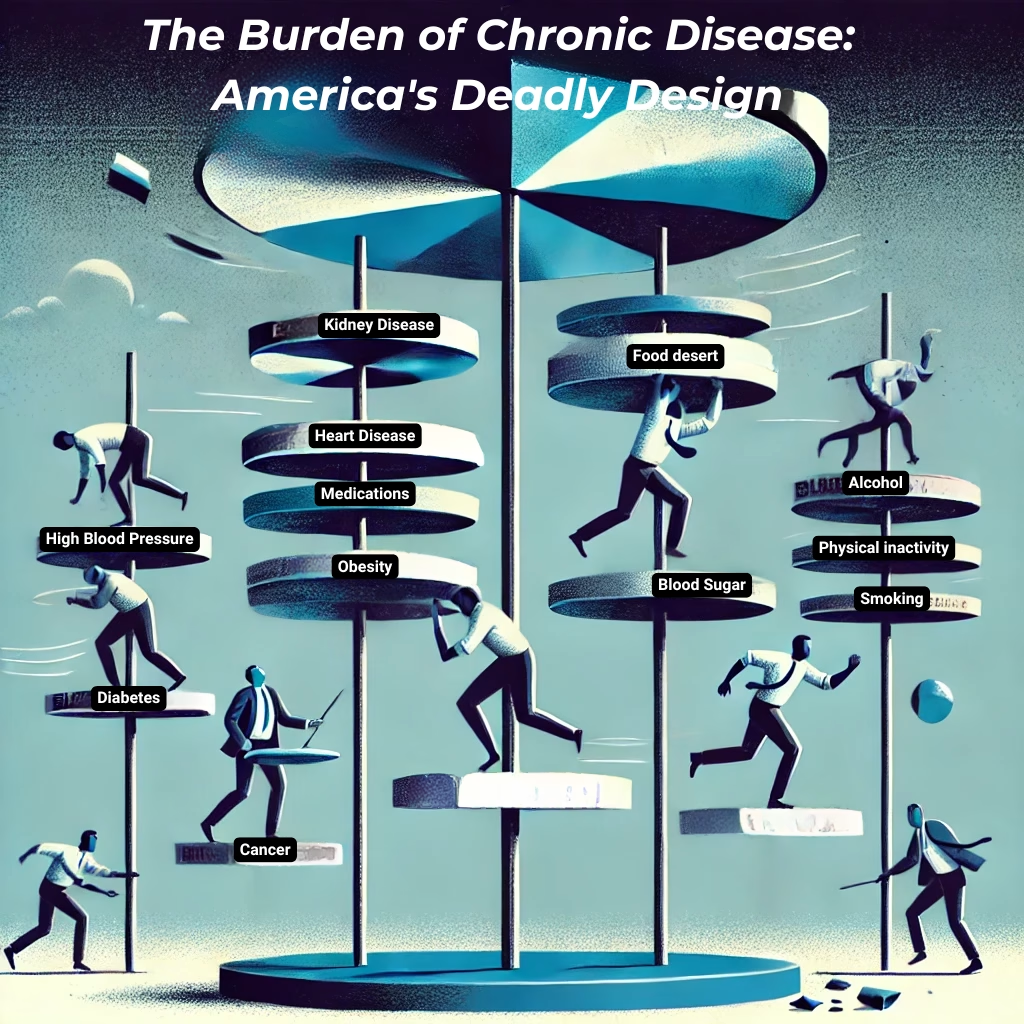
    Think about managing chronic diseases like trying to keep multiple plates spinning on poles. Except instead of a circus act, this is people’s daily reality.

    One plate is your blood pressure.

    Another’s your blood sugar.

    A third’s your medications.

    And for too many folks, the plates keep coming while the system keeps saying “just spin better.”

    A word about chronic diseases in America – they’re complex by design, not by accident. In 1900, if you walked into your local grocery store, one out of every 125 people you saw wouldn’t make it through the year because of infectious disease.

    Public health transformed that reality with clean water systems, food safety regulations, worker protections, and vaccination programs.

    For the first time in human history, we weren’t just accepting early death as inevitable – we were building systems to prevent it.

    By 1980, you’d need to visit 24 different stores to find one person who’d die from infection that year. We didn’t just improve survival rates – we fundamentally changed humanity’s relationship with death itself.

    But that victory came with a plot twist nobody saw coming: Once we stopped dying young from infections, we started living long enough to develop a whole new set of killers.

    Now instead of fighting off smallpox, we’re juggling:

    • Heart disease that runs in families but hits some communities harder than others
    • Diabetes that’s as much about food deserts as food choices
    • High blood pressure that’s tied to stress that some neighborhoods are designed to create
    • Mental health conditions that compound everything else

    And while your great-grandparents might have feared a bad winter could take them out, you’re out here trying to manage multiple chronic conditions in a system that:

    • Treats each condition in isolation like the plates aren’t all connected
    • Blames individuals for systemic failures
    • Makes prevention harder than treatment
    • Turns basic health management into a full-time job

    This ain’t just about personal health – it’s about how we’ve built a system that makes managing chronic diseases feel like trying to spin plates in a front of a big ass fan

    via GIPHY

    Some folks start with heavier plates, shorter poles, and windier conditions.

    Others get handed plate after plate before they even learn the basics of spinning.

    And when plates inevitably fall, we blame the spinner instead of questioning why we built this circus in the first place.

    Let’s break down how we got here, why it matters, and most importantly – what we can do about it. Because understanding chronic diseases isn’t just about managing conditions – it’s about recognizing how our health system takes universal human experiences and turns them into sources of profit and inequality.

    Welcome to the complex world of chronic disease management, where your genetic code meets your ZIP code, and both determine how many plates you’ll have to keep spinning just to stay alive.

    Chronic Disease defined

    So, in good ol’ USA, we’ve got this backwards idea that all health problems should act like a bad cold: show up, cause trouble, then leave.

    But chronic diseases? They move in like that relative who claims they’re “just staying for a week” and then never leaves.

    Think about infectious diseases like uninvited guests – they show up suddenly, make a mess, and either get kicked out by your immune system or taken down by medications.

    That’s what our healthcare system was built to handle.

    But chronic diseases? They’re more like permanent roommates. They:

    • Set up shop in your body for the long haul
    • Change how you live your daily life
    • Require constant management and attention
    • Often invite their friends to stay too

    And something about these long-term “guests” – they don’t just affect one room in the house. When diabetes moves in, it doesn’t just mess with your blood sugar.

    It starts rearranging your cardiovascular furniture, remodeling your kidney function, and rewiring your nerve endings.

    Each condition multiplies the complexity of managing the others.

    The genetic factor hits like a pre-approved rental application – some folks are born more likely to host these unwanted tenants.

    And in America? Some communities are living in constant crossfire.

    We’re running a healthcare system designed for quick evictions in a world where most health problems are permanent residents.

    Doctors trained to write prescriptions for temporary visitors are now trying to manage long-term lease agreements.

    And insurance companies? They’re acting like landlords who want proof of illness every month before they’ll approve basic maintenance.

    Let’s break down what makes a disease “chronic”:

    • It sticks around for the long haul (usually 3+ months)
    • It requires constant management
    • It often can’t be completely cured
    • It impacts multiple aspects of your life
    • It frequently brings friends (comorbidities)
    • It gets more complicated over time

    But that’s just the medical definition. The reality of chronic disease is more complex:

    • It’s the daily calculation of what medications you can afford
    • It’s the mental load of tracking multiple conditions
    • It’s the way it reshapes your relationship with your body
    • It’s how it forces you to navigate a healthcare system that wasn’t built for long-term management

    And here’s the part nobody talks about: chronic diseases aren’t equal opportunity tenants. Your likelihood of hosting these unwanted guests depends on:

    • The genetic cards you were dealt
    • The neighborhood you live in
    • The stress levels you carry
    • The healthcare access you have
    • The support systems around you

    This ain’t just about biology – it’s about how society turns manageable conditions into lifelong struggles. Because when we talk about chronic diseases, we’re really talking about:

    • How poverty makes management harder
    • How racism affects treatment access
    • How education influences outcomes
    • How work affects your ability to care for yourself

    Understanding chronic disease means understanding that these conditions don’t exist in isolation. They’re part of a larger system that determines who gets sick, who gets care, and who gets blamed for both.

    The System Behind the Struggle

    Remember those spinning plates?

    Think about how our healthcare system approaches chronic disease management:

    • Each specialist focuses on their own plate, rarely checking how their adjustments affect the others
    • Insurance companies change the rules mid-performance, swapping out poles or plates without warning
    • Medication costs rise like they’re adding weights to plates already spinning
    • Appointments get scheduled like they assume you don’t have a job, family, or life beyond plate-spinning
    • And somehow, when plates fall, it’s never about the system – it’s always about your “spinning technique”

    Here’s what hits different: The same system that complicates your care is profiting from that complexity. Every plate you’re spinning represents revenue streams for multiple industries:

    • Pharmaceutical companies setting prices like they’re selling luxury goods instead of survival necessities
    • Insurance companies treating basic care like premium add-ons
    • Health systems building empires while communities lack basic services
    • Tech companies creating apps to “help you manage” problems the system itself creates

    The healthcare industrial complex ain’t just watching you spin plates – they’re selling tickets to the show.

    Look at how the system fragments care:

    • Primary care physicians trying to coordinate with specialists who never talk to each other
    • Mental health treated as separate from physical health, like your brain lives in a different body
    • Social workers and community health resources isolated from medical care
    • Prevention treated as a luxury rather than a necessity

    Meanwhile, patients are expected to:

    • Navigate multiple health systems
    • Coordinate their own care
    • Track their own medications
    • Manage their own appointments
    • Battle insurance denials
    • Monitor multiple conditions
    • All while maintaining a “normal” life

    The system turns basic health management into a full-time job you never applied for, didn’t train for, and don’t get paid for. But missing a day of work? That could cost you everything.

    And let’s be clear about who this system works for:

    • Not the patients juggling multiple conditions
    • Not the providers trying to deliver comprehensive care
    • Not the communities facing multiple health challenges
    • Not the families supporting loved ones through chronic illness

    It works for:

    • Companies profiting from complexity
    • Industries benefiting from fragmented care
    • Systems that turn health into a commodity
    • Those who can afford to buy their way around barriers

    The tragedy isn’t just that managing chronic diseases is hard – it’s that we’ve built a system that actively makes it harder. A system that:

    • Prioritizes profits over prevention
    • Fragments care that should be coordinated
    • Creates barriers instead of bridges
    • Blames individuals for structural failures

    When we talk about “managing” chronic diseases, we’re really talking about managing a system that wasn’t built for management at all.

    It was built for profit, designed for acute care, and maintained by industries that benefit from its complexity.

    The Big Four(and their role in Chronic Disease)

    Research showed that 38% of deaths in the United States traced back to four systemic health outcomes: smoking, unhealthy diet, physical inactivity, and excessive alcohol.

    And that was back in 2004.

    Two decades later?

    These same factors are still driving preventable deaths, but now they’re operating in an environment where inequality has only deepened, stress has intensified, and healthy choices have become even more inaccessible for many communities.

    When stress relief is a luxury but cigarettes are available on every corner,

    when fresh food costs more than fast food,

    when your neighborhood ain’t safe for walking, and

    when alcohol is marketed as the only acceptable escape… we’re not just talking about individual behaviors anymore. We’re talking about systemic outcomes that reflect deeper inequities.

    Here’s what hits different: The same system blaming people for their coping mechanisms is the one that created the conditions requiring that cope in the first place.

    Just like how they blame folks for dropping plates while making the plates heavier and the poles shorter, they’re out here creating impossible conditions then acting shocked when people turn to whatever relief they can find.

    We’re watching communities get stripped of resources, hammered with stress, targeted by predatory marketing, then blamed for their survival strategies.

    Let’s break down these “behaviors” and what’s really behind them:

    Smoking

    • Tobacco companies engineering cigarettes to be more addictive with chemical additives
    • Menthol cigarettes specifically targeted at Black communities, knowing they’re even more harmful
    • Corner stores stocked with cigarettes in stressed communities
    • Higher stress levels increasing addiction vulnerability
    • Limited access to cessation resources
    • An industry that studied exactly how to hook people, then blamed them for getting hooked

    Unhealthy Diet

    • Food deserts in low-income neighborhoods
    • Healthy options priced in ways where other financial obligations would be neglected(adding stress)
    • Fast food clustering in certain communities
    • Limited time for meal prep when working multiple jobs
    • Agricultural subsidies making processed foods cheaper
    • Cultural food traditions disrupted by poverty

    Physical Inactivity

    • Neighborhoods designed without walkability
    • Parks and green spaces distributed unequally
    • Unsafe streets limiting outdoor activity
    • Long work hours leaving no time for exercise
    • Gym memberships competing with basic needs in the monthly budget
    • Physical labor jobs that leave you too exhausted for recreational movement

    Excessive Alcoholic Drinking

    • Alcohol marketing targeting stressed communities
    • Limited mental health resources
    • Trauma going untreated
    • Stress relief options priced out of reach
    • Cultural normalization of drinking as coping
    • Liquor stores concentrated in certain neighborhoods

    The system loves to talk about “personal responsibility” while ignoring how:

    • Some communities face higher chronic disease risks from birth
    • Social determinants shape health choices before they’re made
    • Prevention resources get distributed unequally
    • Stress and trauma create biological vulnerabilities
    • Coping mechanisms reflect limited options, not limited willpower

    Your ZIP code predicts your health outcomes better than your genetic code because:

    • Environmental exposures vary by neighborhood
    • Healthcare access clusters in wealthy areas
    • Fresh food availability follows income patterns
    • Safe spaces for exercise reflect community investment
    • Stress levels track with systemic inequality

    And here’s the part nobody talks about: these “behaviors” often represent:

    • The only available stress relief
    • Coping mechanisms for untreated trauma
    • Responses to systematic disempowerment
    • Survival strategies in impossible situations
    • Cultural adaptations to structural violence

    Next time somebody wants to blame individuals for their health behaviors, remind them:

    • Nobody chooses their birth circumstances
    • Stress changes biology before behavior
    • Options get determined by systems
    • Resources follow power, not need
    • “Lifestyle choices” reflect life circumstances

    Because the real question isn’t “Why do people make unhealthy choices?”

    It’s “Why do we keep building systems that make healthy choices impossible for some communities while blaming them for the consequences?”

    The Economics of Chronic Disease

    Chronic disease creates wealth – just not for the people living with it. Every plate you’re forced to keep spinning represents revenue streams for multiple industries that profit from making those plates heavier and those poles shorter.

    Think about the economics of chronic disease management like a system where:

    • The people making the plates more expensive are the same ones deciding if you can afford them
    • The companies adding weights to your plates are selling you tools to help spin them
    • The industries complicating your juggling act are profiting from your struggles to maintain it
    • And walking away isn’t an option – because these plates are your life

    The same system making prevention impossible is engineered to extract maximum profit from managing the inevitable crisis. They’re not just watching you struggle – they’re designing the struggle itself:

    • Insurance companies denying preventive care then profiting from emergency interventions
    • Pharmaceutical corporations pricing life-saving medications like luxury commodities
    • Healthcare systems closing community clinics while building premium care centers
    • Corporations monetizing both the causes and treatments of chronic conditions

    The economics of chronic disease ain’t just about medical bills – it’s about how the system transforms health challenges into profit centers:

    • Lost wages from missed work
    • Careers derailed by health crises
    • Savings depleted by ongoing costs
    • Families drained by caregiving duties
    • Communities stripped of economic stability
    • Generational wealth evaporating into medical debt

    And these costs? They concentrate in communities already carrying the heaviest loads:

    • Some neighborhoods watching health and wealth drain together
    • Others transforming health challenges into financial opportunities
    • Some families choosing between medications and meals
    • Others turning health management into wealth management

    The system’s engineered an economy where:

    • Basic care gets priced like a luxury service
    • Prevention costs more than your rent
    • Management requires resources you can’t access
    • And “lifestyle changes” assume you’ve got lifestyle choices

    Meanwhile, industries are engineering multiple revenue streams:

    • Food companies profiting from both causing and “treating” diabetes
    • Corporations creating stress then selling stress relief
    • Healthcare systems monetizing the problems they could prevent
    • Insurance companies making money by denying care

    Breaking the Cycle: From Prevention to Liberation

    Want to know the real cost of not preventing chronic disease? It’s not just the 38% of deaths linked to preventable factors – it’s the entire economy of exploitation we’ve built around making plate-spinning both necessary and impossible.

    Look at how this circus act plays out:

    • Some communities get handed multiple plates before they learn to walk
    • Others start with shorter poles and heavier plates by design
    • Prevention gets priced like a premium upgrade
    • And when plates inevitably fall, the same system profiting from the setup sells you the cleanup

    The solution isn’t teaching people to spin better – it’s about:

    • Building systems where fewer people end up juggling multiple conditions
    • Creating communities where prevention is possible, not just preached
    • Ensuring everyone has the resources to maintain their health
    • Transforming healthcare from a profit center to a public right

    Because here’s the truth about chronic disease management in America: It’s not failing – it’s functioning exactly as designed.

    Every wobbling plate represents profit for someone, every fall creates revenue for industries that engineered the instability in the first place.

    The revolution in chronic disease care won’t come from new medications or better spinning techniques.

    It’ll come from communities demanding an end to this rigged performance.

    When the same system making your plates heavier is charging you for the privilege of spinning them, individual skill isn’t the problem.

    It’s time to stop treating chronic disease like a personal failure and start seeing it for what it is: a systemic success story of profit over people.

    The question isn’t whether we can afford to build something better – it’s whether we can afford not to.

    Because this isn’t just about keeping plates spinning anymore – it’s about dismantling the system that keeps adding more while telling us to spin faster.

    Our lives are literally hanging in the balance, and the only way forward is to transform this deadly circus into a system that actually supports life.

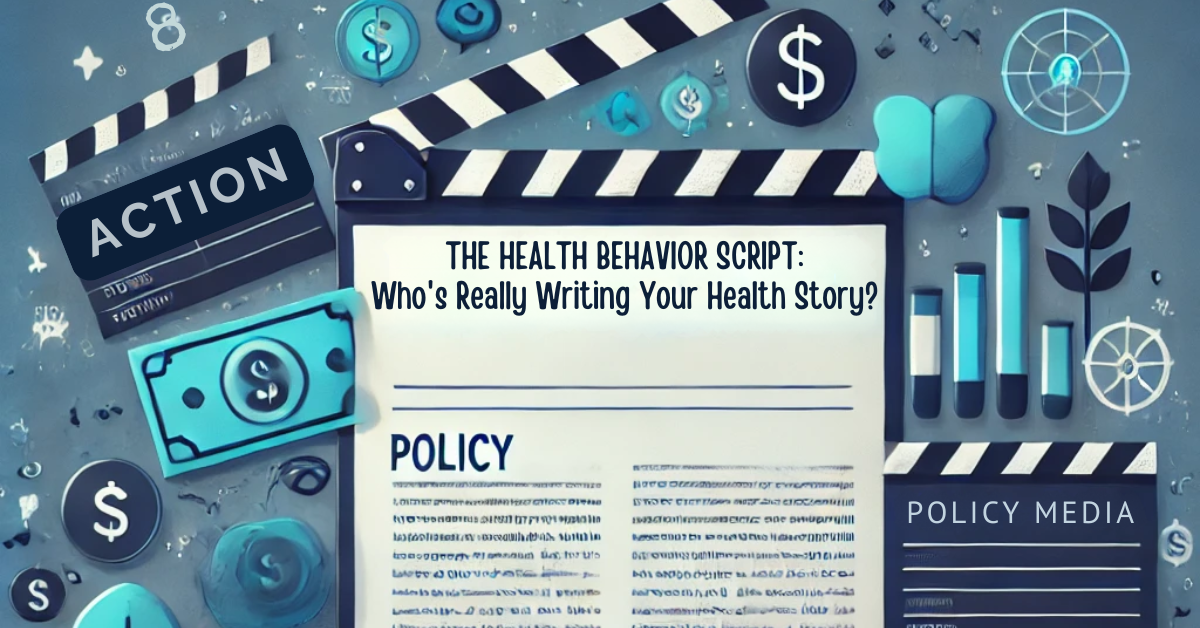
  • The Health Behavior Script: Who’s Really Writing Your Health Story?

    The Health Behavior Script: Who’s Really Writing Your Health Story?

    You know that feeling when you’re watching a show, and even though you know it’s probably not good for you, you can’t stop hitting “next episode”?

    That’s exactly how Big Food designed their products to hit.

    And just like your favorite streaming service knows exactly what’ll keep you up until 3am, these food giants have spent millions studying what makes you reach for “just one more.”

    Let me take you behind the scenes of the biggest production you never knew you were cast in…

    The Production Studio


    We’re not talking about some indie film here. This is a multi-billion dollar operation that makes Hollywood look like those wack PSAs from the 90’s.

    In Nestlé’s research facility alone, you’ve got:

    • 700 scientists cooking up your next craving
    • Brain imaging labs watching how your pleasure centers light up
    • Engineers designing fat to feel richer than it is
    • Testing labs finding your exact “bliss point”

    And that’s just ONE studio.

    The Writers’ Room

    Inside these corporate writers’ rooms, they’re not just creating recipes – they’re engineering addiction storylines:

    • Scientists studying your brain like it’s a code they need to break
    • Marketing teams crafting your emotional triggers
    • Executives demanding higher “consumption scores”
    • Labs testing how to make you binge more

    They pilot and focus group to get a pulse on what the streets think. Every ingredient, every formula, every package gets tested until they know it’s a hit that’ll have you hooked on the series.

    The Casting Call

    Here’s where it gets wild – they’re not just casting adults; they’re auditioning for your kids. Why? If they can get your kid hooked on Episode 1 (sugar), they’ll have a lifetime subscriber.

    Their playbook:

    • Cast them young (when taste buds are still in training)
    • Hook them with the “bliss point” (that perfect sugar hit)
    • Make it convenient (because busy parents = easy targets)
    • Keep them coming back (building that brand loyalty early)

    Can’t Stop, Won’t Stop: The Binge Formula

    You know how a good show always ends right when you NEED to know what happens next? These food companies engineered that same feeling – but with your taste buds.

    Check out their cliffhanger playbook:

    • Hit you with that perfect sweet-salt combo that makes your brain light up
    • Give you just enough satisfaction to feel good but not enough to feel done
    • Time the “flavor fade” so you’re reaching for more before you’re even finished
    • Keep you thinking about their “show” even when you’re not watching

    Here’s what hits different: Just like streaming services track what keeps you glued to your screen, these food giants study what keeps you reaching in the bag. They know:

    • When you’re most likely to crave (stress eating? They got a special episode for that)
    • How to make you feel like you need the whole season (not just one episode)
    • What makes you a “superfan” (buying the same snack every grocery run)
    • How to keep you from changing the channel (even when you try to quit)

    And just like how one episode turns into a whole season at 2 am, they’ve designed these foods so “just one” turns into “where did the whole bag go?”

    Breaking the Fourth Wall

    Let me tell you something about being an extra in somebody else’s show – most times, you don’t even know you’ve been cast.

    Think about your last snack run:

    • That craving that hit you out of nowhere? That was your cue card
    • Those bright packages catching your eye? That’s strategic set design
    • That “I’ll just grab one” moment? That’s your scripted line
    • That empty bag you didn’t mean to finish? That’s their signature plot twist

    This ain’t some random improv show. Everything – from where products sit on the shelf to why you suddenly “need” certain snacks – is choreographed.

    You’re not just watching their show; you’re starring in it:

    • When you’re stressed, they’ve got your comfort food episode ready
    • When you’re tired, they’ve got your quick-fix special lined up
    • When you’re celebrating, they’ve got your treat season prepared
    • And they’ve got ads running 24/7 to remind you what your next line should be

    Rewriting the Script

    But here’s the thing about any show – even the biggest productions can flop when the audience gets wise to the plot.

    Once you see the strings, you can’t unsee them:

    • That “all natural” label? That’s just fancy costume design
    • Those “healthy” options? Often just the same show with different lighting
    • That “guilt-free” marketing? Classic misdirection
    • Those “fortified with vitamins” claims? Props to distract from the main plot

    Some communities are already changing the channel:

    • Reading the fine print instead of just the highlight reel
    • Teaching kids to be critics, not just consumers
    • Demanding better casting in their neighborhood stores
    • Running their own shows with fresh, real ingredients

    You might be in their show, but you don’t have to stick to their script. Because once you know how the magic trick works, it loses its power.

    Season Finale: Your Story, Your Show

    Listen – you can’t just cancel your subscription to Big Food overnight. We’re all still living in their cinematic universe. But you can start producing your own content.

    Here’s what that looks like:

    • Being your own director (making informed choices)
    • Writing your own narrative (not the one they scripted for you)
    • Casting better characters (real food, real ingredients)
    • Creating your own special effects (finding joy in food that serves you)

    This ain’t just about individual plot lines. The whole system needs a reboot.

    Some communities are already filming their pilot episodes:

    • Building their own grocery stores when big chains won’t cast their neighborhood
    • Starting community gardens when fresh food feels like premium content
    • Teaching kids about nutrition so they can spot product placement
    • Making healthy food the star, not just a side character

    Because at the end of the day, this is bigger than just changing channels – it’s about who gets to run the network.

    Next time you feel that craving hit, ask yourself: Am I watching their show, or am I ready to direct my own?

    And remember – every time you choose not to hit “play” on their production, you’re writing a new episode in your health story.

  • What Is Public Health? | PHuncle Breaks It Down

    What Is Public Health? | PHuncle Breaks It Down

    Let me make this super simple:

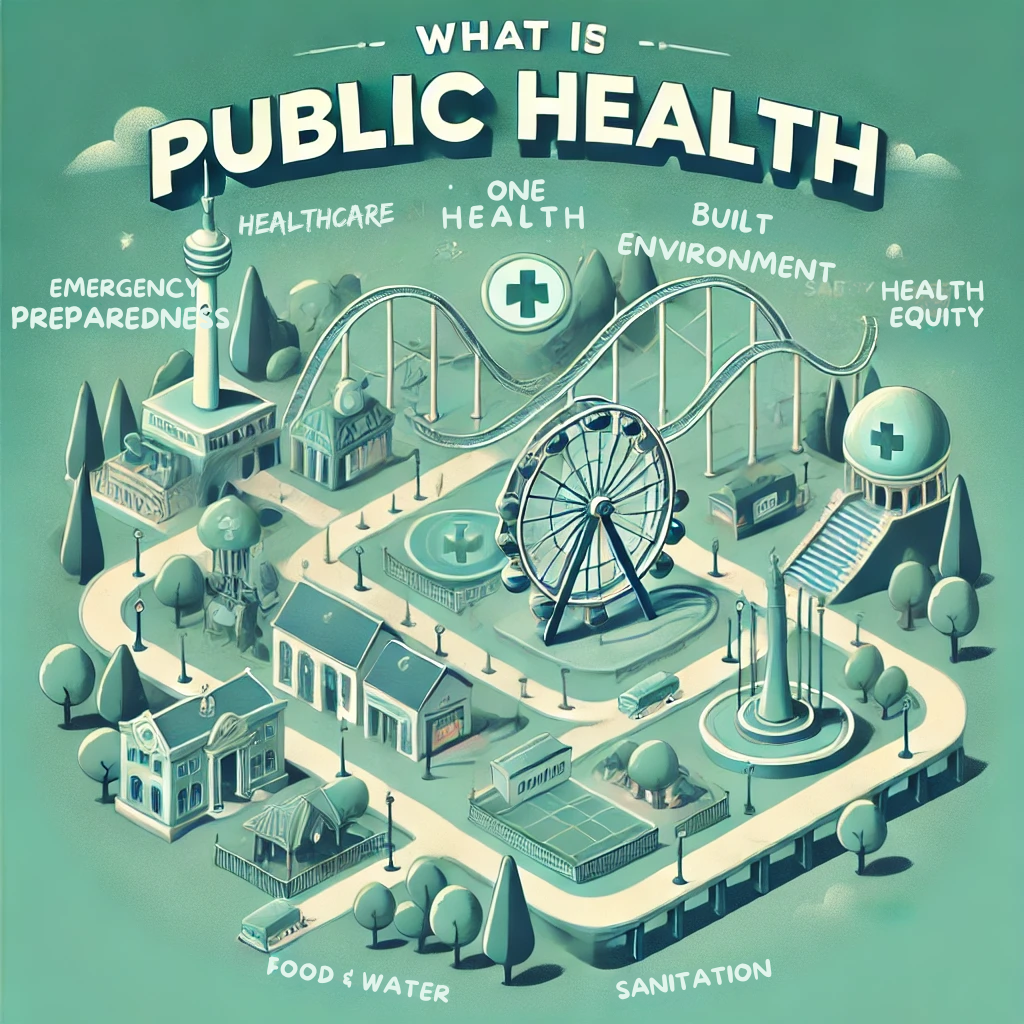
    Public health is about keeping entire communities healthy and safe, not just one person at a time. It’s like having a whole team of people working to stop people from getting sick in the first place, rather than waiting to treat them after they’re already ill.

    Think of it like running a huge theme park. The people who operate the park don’t just wait for accidents to happen – they work hard to make sure everyone stays safe and healthy while having fun. They check the rides before opening, make sure the food is safe to eat, keep the bathrooms clean, and have plans ready in case something goes wrong.

    That’s exactly what public health does for our communities. But instead of rides, we’re checking on:

    • Clean water to drink
    • Clean air to breathe
    • Safe food to eat
    • Places to exercise
    • Ways to prevent disease
    • Plans for emergencies

    And just like theme park workers don’t focus on just one visitor at a time, public health focuses on entire communities. We’re not the doctors treating you when you’re sick (that’s healthcare) – we’re the ones working to keep you from getting sick in the first place.

    Public health is working at its best when you don’t even notice it – just like a well-run theme park. You’re not thinking about the water quality when you get a drink from the fountain. You’re not wondering if the food court passed inspection. You’re not worried about emergency exits. Why? Because someone’s already thought about all of that for you.

    Just like a theme park needs different teams working together – safety inspectors, food service, cleaning crews, first aid staff – public health involves many different people working to keep communities healthy:

    • Scientists tracking disease patterns
    • Experts checking environmental safety
    • Educators teaching about health
    • Policymakers creating safety rules
    • Community workers connecting people to resources

    Here’s another way to think about it: If our theme park is the community, then:

    Healthcare is like:

    • Individual ride operators helping one rider at a time
    • First aid stations treating injuries after they happen
    • Customer service dealing with specific complaints
    • Maintenance fixing broken equipment

    While Public Health is like:

    • Park operations making sure ALL rides are safe
    • Safety teams preventing accidents before they happen
    • Systems designers making the whole park accessible
    • Planning team creating healthy environments for everyone

    Healthcare is crucial – just like you need ride operators and first aid stations. But public health? That’s the whole system working to make sure fewer people need first aid in the first place.

    The Three P’s of Public Health: How We Keep the Park Running

    Public health has three main jobs in our community “theme park.” Let’s break them down:

    Prevent: Stopping Problems Before They Start

    Just like theme parks inspect rides before anyone gets hurt, public health works to prevent health problems before they happen:

    • Vaccinations to stop disease spread
    • Food safety inspections
    • Air quality monitoring
    • Water system testing
    • Health education programs

    Protect: Keeping Everyone Safe

    Like park security and safety teams, public health protects communities from health threats:

    • Disease outbreak response
    • Emergency preparedness
    • Environmental health monitoring
    • Workplace safety standards
    • Consumer safety regulations

    Promote: Creating Healthy Environments

    Think of this like designing a park where it’s easy for everyone to have fun safely. Public health promotes healthy choices by:

    • Creating walkable communities
    • Ensuring access to healthy foods
    • Building safe spaces for activity
    • Supporting mental health resources
    • Developing health education programs

    Public Health: More Departments Than Your Favorite Theme Park

    Just like how a theme park has different zones – from thrill rides to kiddie areas, from food courts to entertainment venues – public health covers a LOT of ground. Let me show you just how many areas public health touches:

    Environmental Health (The Park’s Environment)

    • Air quality monitoring (like Beijing’s air pollution crisis)
    • Water safety (think Flint water crisis)
    • Climate change impacts
    • Housing conditions
    • Noise pollution
    • Waste management

    Disease Control (Safety Protocols)

    • Tracking disease outbreaks (COVID-19 response)
    • Vaccination programs (global polio elimination)
    • Infection prevention
    • Health screenings
    • Contact tracing

    Maternal and Child Health (Family Services)

    • Prenatal care access
    • Child nutrition programs
    • School health services
    • Family planning
    • Child safety measures

    Mental Health (Guest Services)

    • Community support programs
    • Crisis intervention
    • Suicide prevention
    • Substance use programs
    • Mental health awareness
    • Stress reduction initiatives

    Occupational Health (Staff Safety)

    • Workplace safety standards
    • Ergonomic guidelines
    • Chemical exposure limits
    • Heat stress prevention
    • Noise level control
    • Worker wellness programs

    City Planning (Park Layout)

    • Walkable neighborhoods
    • Green spaces
    • Transportation access
    • Food access
    • Safe recreation areas
    • Community gathering spaces

    Emergency Preparedness (Crisis Response)

    • Natural disaster planning
    • Pandemic response
    • Mass casualty preparation
    • Emergency communication
    • Community resilience
    • Resource distribution

    And here’s what’s wild: this isn’t even the full list! Public health really be wearing SO many hats, its like that theme park that keeps adding new attractions – always expanding to meet community needs.

    When All the Park Zones Connect: The Web of Public Health

    Here’s what makes public health hit different: everything connects. Just like how a problem in one part of a theme park affects the whole experience, public health issues are all tangled up. Let me show you:

    The Ripple Effect

    Take city planning (park layout) for example:

    • Poor street lighting affects safety
    • Which impacts physical activity
    • Which affects mental health
    • Which influences work performance
    • Which affects family wellbeing
    • Which loops back to community health

    Or think about air quality:

    • Environmental health issue? Obviously.
    • But also affects maternal health
    • And children’s ability to play outside
    • Which impacts physical health
    • And mental wellbeing
    • While adding healthcare costs
    • Creating economic strain
    • Leading to stress…

    and the cycle continues.

    The Public Health Paradox: Why Nobody Notices a Well-Run Park

    Now here’s the tricky part about public health: when it’s working best, it’s invisible. Think about it – nobody walks through a clean, safe theme park saying “wow, look at all these accidents that AREN’T happening!”

    This creates what we call the Public Health Paradox:

    • When public health works, problems don’t happen
    • When problems don’t happen, people don’t notice
    • When people don’t notice, funding gets cut
    • When funding gets cut, problems start happening
    • Only then do people ask “why didn’t we prevent this?”

    Beyond the Paradox: Other Public Health Challenges

    The invisibility problem isn’t our only challenge. Let me break down what else public health is up against:

    The Long Game vs. Quick Fixes

    Imagine trying to convince theme park investors that preventing problems is better than fixing them. That’s our daily struggle:

    • Prevention takes years to show results
    • Treatment shows immediate impact
    • People want quick solutions
    • Long-term investments are harder to justify
    • Success means nothing happening (try putting that on a quarterly report!)

    System-Level Solutions in an Individual-Focused World

    “Just make better choices!” Yeah, like it’s that simple. Try making healthy choices when your neighborhood has no grocery stores, unsafe parks, and air that’s trying to give you asthma. That’s the thing about systems – they shape our options before we even get to “choose.”

    • People focus on individual responsibility
    • Systems feel too big to change
    • Change requires collective action
    • Results aren’t immediately visible

    Building a Better Park: Making Public Health Work

    But here’s the good news: just like theme parks have evolved from simple carnivals to complex entertainment systems, public health is adapting too. Here’s how we’re working to make things better:

    Tell Better Stories

    Instead of just throwing statistics at people, we need to show what public health success looks like:

    • Lives saved through vaccination programs
    • Communities transformed by better design
    • Health gaps closed through targeted programs
    • Diseases stopped before they spread
    • Generations growing up healthier

    Make Prevention Visible

    We need to get better at showing the disasters that didn’t happen:

    • Track and share “problems prevented”
    • Document health improvements
    • Show cost savings from prevention
    • Highlight community benefits
    • Celebrate public health wins

    Build Community Power

    Just like a theme park needs engaged visitors to thrive, public health needs active community participation:

    • Community health workers sharing knowledge
    • Local leaders advocating for resources
    • Residents identifying neighborhood needs
    • Youth getting involved in health initiatives
    • Communities designing their own solutions

    Connect the Dots

    We need to help people see how public health connects to everything they care about:

    • Better schools = better health
    • Cleaner air = stronger communities
    • Safe neighborhoods = active families
    • Good jobs = healthier lives
    • Strong communities = resilient health

    Invest in the Future

    Just like theme parks need regular upgrades to stay relevant, public health needs consistent support:

    • Stable funding for prevention
    • Investment in public health workforce
    • Resources for new challenges
    • Support for research and innovation
    • Long-term commitment to community health

    The Park Never Closes: Public Health’s Ongoing Mission

    Let me bring this full circle: Public health is like running the world’s most important theme park – one where the stakes are people’s lives and wellbeing. We don’t just work to prevent problems, protect communities, and promote health – we’re trying to create a world where everyone has a fair shot at a healthy life.

    And just like you probably never think about all the people working to keep a theme park safe and fun, you might not notice public health working in your community. But we’re here – checking the water, monitoring the air, tracking diseases, designing healthier spaces, and planning for emergencies you hopefully never face.

    The challenges are real: invisible successes, complex systems, and the constant push for prevention in a treatment-focused world. But here’s what makes this work worth it: every life improved, every disease prevented, every community made healthier is a win for all of us.

    Because at the end of the day, we’re all in this park together. And the more people who understand and support public health, the better we can make it for everyone.

  • Health Education: Cooking Up Connection | The PHuncle’s Guide

    Health Education: Cooking Up Connection | The PHuncle’s Guide

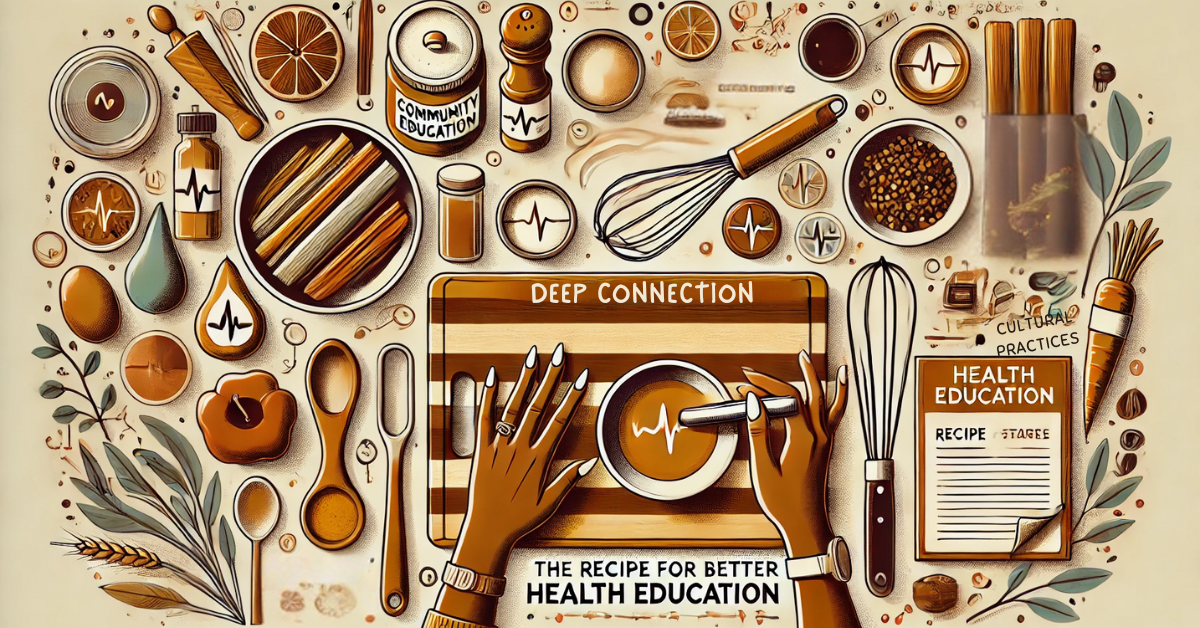
    Health education is like cooking – nobody learns just from reading recipes. You learn in the kitchen, usually from someone who knows what they’re doing, understands the ingredients, and most importantly – knows how to connect with YOU.

    That’s why your grandma’s cooking hits different – it’s made with understanding, history, and connection. And that’s exactly how we need to approach health education.

    Let me tell you something: In all my years of teaching health – from personal training to public health – I’ve learned that information alone doesn’t change behavior.

    You can have the perfect “recipe” for health, but if you’re not connecting with people where they are, understanding their “kitchen,” and respecting their existing “family recipes,” that information isn’t going to be transformative.

    It might not even be acted upon.

    Think about it – having a recipe tells you WHAT to do, but it doesn’t teach you HOW to do it. You might know you need to “sauté until golden,” but what does that actually look like? What’s the right heat? How do you know when to flip? That’s where connection and guidance come in.

    The gap between knowing WHAT to do and knowing HOW to do it? That’s where education happens. That’s where relationship matters. That’s where an experienced guide – whether it’s your grandma in the kitchen or a health educator in the community – helps turn information into understanding, and ultimately action.

    Know Your Kitchen: Understanding Your Learning Space

    Before you start cooking – or teaching – you need to understand your environment. Every kitchen has its own setup, its own tools, its own flow. Try cooking a feast in a kitchen where you don’t know where anything is, and you’ll spend more time searching for utensils than actually cooking.

    Health education works the same way. Before you can teach effectively, you need to understand:

    • What “tools” your learners have access to
    • What “ingredients” are available in their community
    • What “cooking methods” have worked for them before
    • What “kitchen setup” they’re working with daily

    Let me break this down with a real example: Imagine teaching someone about “healthy cooking at home” without knowing they’re working with:

    • A microwave and a hot plate instead of a full kitchen
    • Limited access to fresh ingredients
    • A schedule that barely allows time for meal prep
    • Food traditions that might clash with standard “healthy” recipes

    That’s like giving someone a recipe that requires an air fryer, specialty ingredients, and two hours of prep time when they’ve got 20 minutes and a microwave. The information might be correct, but it’s not connecting with reality.

    This is a major missed opportunity to connection.

    This is why effective health education starts with learning about your community’s “kitchen.” You need to understand:

    • What resources are actually available
    • What barriers exist
    • What cultural practices matter
    • What solutions are truly practical
    • What knowledge already exists

    And let me be crystal clear about something: it’s not on the community to bridge this gap.

    As health educators, the responsibility to learn these things falls on us.

    We need to show up, listen, and understand before we even think about teaching. Sometimes that means investing time and energy into building trust before anyone shows any interest in what we’re teaching.

    Invite them into your kitchen. Connect and share stories. Make them feel welcome. Earn their trust. That’s when the real teaching(and learning) can begin.

    Because here’s the thing – people aren’t blank recipes waiting to be written. They come with their own knowledge, their own methods, their own traditions. Effective health education isn’t about replacing their “cookbook” – it’s about enhancing it.

    Family Recipes: Honoring Cultural Knowledge

    Let’s talk about something that gets overlooked in health education way too often – the “family recipes” people already have. I’m talking about the knowledge, practices, and wisdom that already exist in communities.

    You know how every family has that one recipe that’s been passed down through generations? Maybe it’s not written down anywhere – it’s just known. The measurements aren’t exact (“a pinch of this, a handful of that”), but somehow, it works. That’s because there’s knowledge built into those inexact measurements – knowledge that comes from experience, from understanding, from culture.

    Communities have their own “health recipes” too. Their own ways of:

    • Maintaining wellness
    • Supporting mental health
    • Building community resilience
    • Passing down health knowledge
    • Caring for each other

    Instead, we need to:

    • Recognize existing health knowledge
    • Understand why certain practices exist
    • Learn from community wisdom
    • Build on what’s already working
    • Blend new information with trusted traditions

    Let me keep it real with you – coming in with that outsider, patriarchal “I know better than you” energy? That’s a surefire way to create discord, distrust, and disengage your community. Nobody’s trying to learn from someone who dismisses generations of knowledge and experience because it doesn’t come with a peer-reviewed stamp of approval.

    It’s like walking into someone’s kitchen, throwing out all their seasoned cast iron pans, and replacing them with the “latest and greatest” cookware. Sure, your new tools might work fine, but you’ve just disrespected something that’s been working for generations – and lost all credibility in the process.

    The goal isn’t to replace – it’s to enhance. Maybe there are new techniques that could complement those traditional practices. Maybe there’s research that explains why those family traditions were right all along. The key is building bridges, not burning them.

    Tasting As You Go: Making Learning Interactive

    You ever try to cook something without tasting it along the way? That’s a recipe for disaster (pun intended). Yet somehow, that’s exactly how some people try to do health education – just dump information out there and hope it comes out right in the end.

    Real cooking, like real education, is interactive. You taste, you adjust, you learn what works. Sometimes you need:

    • More heat (intensity)
    • Different seasoning (approach)
    • Longer cooking time (patience)
    • New ingredients (methods)
    • Another taste-tester’s opinion (feedback)

    In health education, “tasting as you go” means:

    • Checking for understanding
    • Adapting to feedback
    • Making space for questions
    • Adjusting your approach based on responses
    • Learning from your learners
    • Creating dialogue, not monologue

    Because here’s the truth: if you’re doing all the talking, you’re probably doing it wrong. Education isn’t about pouring information into empty vessels – it’s about cooking together, learning together, growing together.

    And let me tell you something about cooking together – every time I’m in someone else’s kitchen, I learn something new. Maybe it’s a different way to cut onions, a secret ingredient I never thought of, or a completely new dish. That’s exactly how health education should work.

    As educators, we need to throw out this idea that knowledge only flows one way. Your learners will teach you:

    • New perspectives you never considered
    • Solutions you didn’t think of
    • Cultural contexts you didn’t understand
    • Community wisdom you never knew
    • Barriers you hadn’t recognized

    Some of the most valuable lessons I’ve learned about health didn’t come from textbooks or research papers – they came from the communities I was supposed to be “teaching.” When we stay humble and remain open to learning, we become better educators. That’s a secret ingredient to real connection.

    Fusion Cooking: Blending Knowledge and Experience

    Let’s talk about fusion cooking – that beautiful thing that happens when different culinary traditions come together to create something new. Not by erasing what came before, but by building on it. That’s what effective health education looks like.

    It’s about finding those sweet spots where:

    • Traditional wisdom meets new research
    • Cultural practices align with current recommendations
    • Community knowledge enhances professional training
    • Local solutions inspire systemic changes
    • Different ways of knowing strengthen each other

    Think about how fusion cuisine works – it doesn’t just throw ingredients together randomly. It understands both traditions deeply. It respects the original contexts. It creates something that honors both while being uniquely its own.

    In health education, this means:

    • Understanding why traditional practices evolved
    • Recognizing what current research validates
    • Finding common ground between different approaches
    • Creating space for multiple truths
    • Building bridges between different ways of knowing
    • Developing solutions that work in real life

    Setting the Table: Making Health Education Matter

    At the end of the day, health education is a lot like preparing a meal that matters. It’s not just about having the right ingredients (information) or following a recipe (curriculum). It’s about:

    • Creating a welcoming space
    • Understanding who’s at the table
    • Respecting what they bring
    • Learning from each other
    • Building connections that last

    Remember: Nobody becomes a great cook by simply memorizing recipes, and nobody becomes a great health educator by just knowing the facts. It takes understanding your kitchen (community), respecting family recipes (cultural knowledge), tasting as you go (staying responsive), and being willing to create new fusion dishes (blending approaches) together.

    And just like the best meals aren’t just about the food – they’re about the connection, the conversation, the community – the best health education isn’t just about the information. It’s about creating spaces where people feel seen, heard, and valued. Where their knowledge matters. Where learning goes both ways.

    So next time you’re thinking about health education, ask yourself:

    Am I just handing out recipes, or am I inviting people into the kitchen?

    Am I making assumptions about what tools people have, or am I understanding their reality?

    Am I trying to replace family recipes, or am I helping create something new together?

    Am I just teaching, or am I also learning?

    Because at the end of the day, the measure of good health education isn’t just what people know – it’s how connected, empowered, and equipped they feel to use that knowledge in their own lives.