Category: Health Equity & Justice

  • The Community Kitchen: How Participatory Budgeting Flips the Power Script

    The Community Kitchen: How Participatory Budgeting Flips the Power Script

    A word about Participatory Budgeting…

    It’s not soley about budgets. It’s about who gets to decide what goes on the menu for our communities.

    So let’s get into it.

    Participatory budgeting (PB) is a democratic process where community members, folk who live and breath in their area(not just elected official) directly decide how to spend part of a public budget.

    Think of it as the difference between having a meal cooked for you versus being handed the ingredients and recipe book.

    In traditional budgeting, elected officials and bureaucrats decide your fiscal menu.

    With PB, communities collaborate to determine what gets funded, how resources get distributed, and what priorities matter most to the people actually living there. It’s collective descision making about public money.

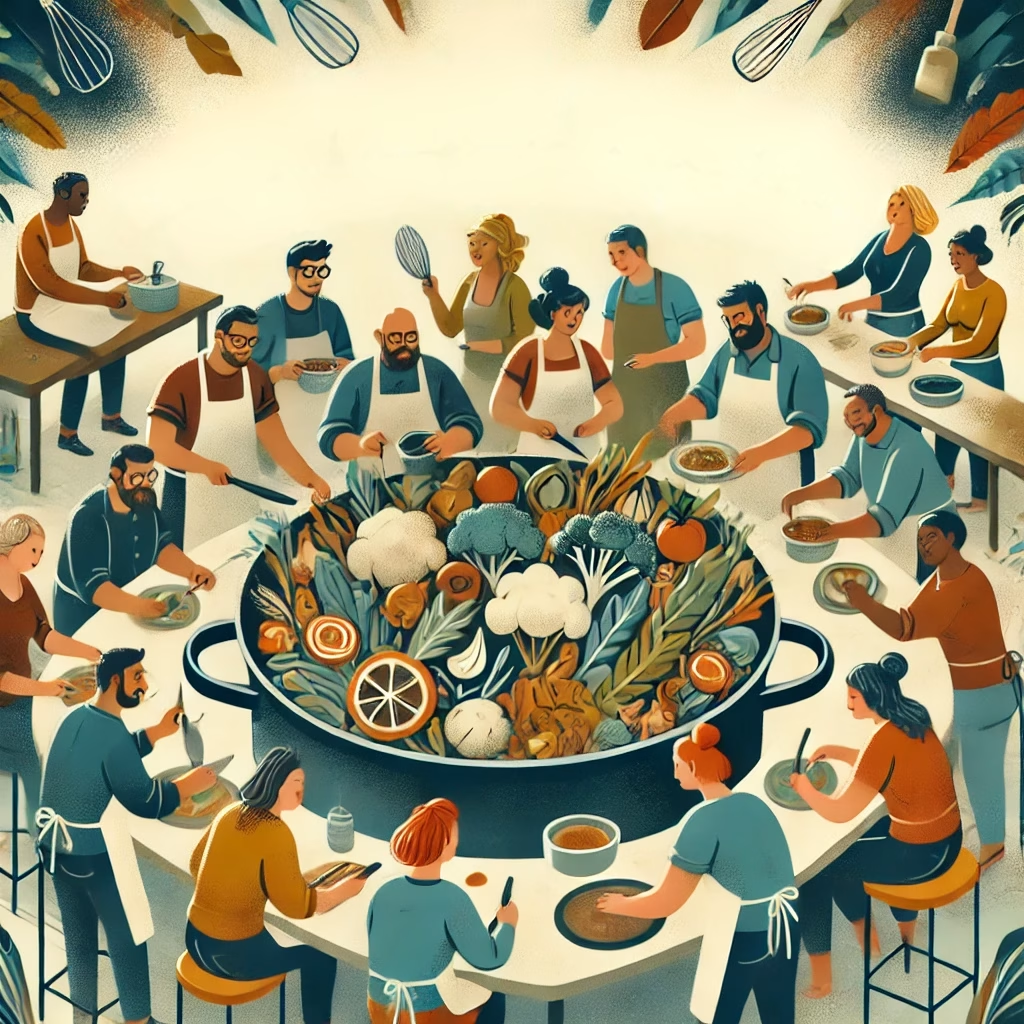
    PB chefs up a massive community meal, a poppin’ potluck if you will…

    Everyone contributes an ingredient—some bring fresh ideas, others bring experience, and some bring just a hunger for change.

    But instead of one chef deciding the menu, the whole community decides what to cook together.

    For generations, only a few hands have held the pantry key, deciding what gets served and who gets a plate. The same folks controlling the kitchen, controlling who eats, controlling who goes hungry.

    That’s not coincidence—that’s by design.

    But PB shifts that power—it unlocks the kitchen, redistributes the ingredients, and lets everyone take part in designing the meal.

    The result? A recipe that actually reflects the people eating it, nourishing the whole community instead of just those who’ve always had a seat at the table.

    Participatory Budgeting Power

    When communities control their own resources, they don’t just fund different projects—they rewrite the entire relationship between government and people.

    That check that used to flow one way? Now it’s a conversation.

    That decision that used to happen behind closed doors? Now it’s happening at community centers, churches, schools, and block parties.

    Because let’s be real:

    • When Black and Brown communities get control of budgets, they invest in education, healthcare access, and environmental justice.
    • When young people get a voice, they demand climate action, mental health services, and tech equity.
    • When formerly incarcerated individuals get to participate, they bring expertise and lived experience and perspective about what actually restorative practices and community building.

    The establishment didn’t give up the kitchen keys because they suddenly got generous.

    Communities had to organize, demand access, and sometimes straight-up pick the lock. And now that we’re in, we’re cooking different meals entirely.

    From Consumers to Creators: The PB Revolution

    Traditional budgeting treats communities like restaurant patrons who can only order from a pre-fixed menu: “Would you like your tax dollars spent on more policing or more prisons? More highways or more parking lots?”

    Participatory budgeting hands over the spatula and says, “What are we actually hungry for?”

    The results speak for themselves:

    • In Chicago’s 49th Ward, residents allocated funds to community gardens in food deserts
    • District 8 in New York, shows a new solar powered community garden for folks to increase jobs, education and nutrition opportunities
    • In Boston, young people directed resources to mental health services when officials were focused elsewhere

    And the beautiful part? These aren’t just “nice ideas” – they’ll be more effective.

    When communities cook their own meals, they waste less, nourish more people, and create recipes that last.

    All because they were involved in the process.

    The Recipe for Financial Justice

    PB isn’t just about food—it’s about financial justice, collective care, and rewriting who gets to decide how resources are shared. The more people join the kitchen, the better we eat.

    But this isn’t just about adding more cooks—it’s about changing who gets to write the recipe book in the first place. Because participatory budgeting doesn’t just redistribute money; it redistributes power.

    Traditional budgeting might ask: “How do we divide up what we have?” PB asks: “Why do we accept these limitations in the first place?”

    And that’s the revolutionary ingredient most people miss:

    Participatory budgeting doesn’t just change what we fund today; it transforms what we believe is possible tomorrow.

    Next time somebody tells you communities “don’t know enough” to make budget decisions, remind them: Nobody knows better what needs to be on the plate than the people who’ve been missing meals.

    The expertise has always been there, it’s just that nobody was passing the microphone to hear it.

    Because at the end of the day, budgets aren’t just numbers on spreadsheets, they’re moral documents that tell us who and what we value. And when we let communities write those documents together, we don’t just get better budgets, we get better, stronger, and healthier communities.

    That’s not just participatory democracy. That’s justice being served. Family-style.

  • Global Health Systems: How International Health Challenges Connect and Affect Everyone

    Global Health Systems: How International Health Challenges Connect and Affect Everyone

    Oh, you a frequent traveller? Here’s a word about about global health that’ll change how you think about your next flight delay.

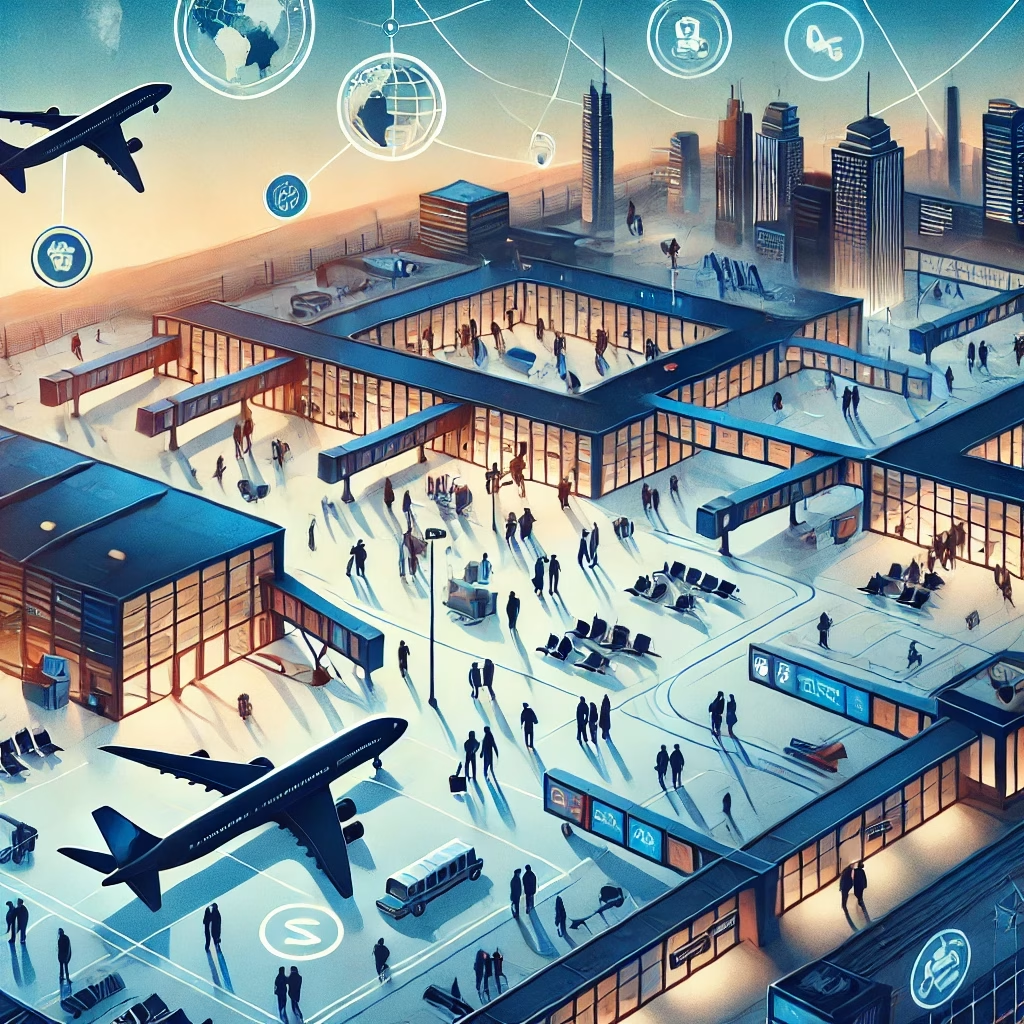
    You know how one cancelled flight in Chicago can mess up somebody’s travel plans in Miami?

    That’s not just an airline problem – that’s a perfect picture of how global health works.

    Except instead of missed connections, we’re talking about missed opportunities to save lives.

    Before we even step into this airport, let’s get something straight: Global health ain’t just international health with a fancy new name. It evolved from public health and tropical medicine like how airports evolved from simple airfields – adding layers of complexity, connection, and purpose along the way.

    The “global” in global health? It’s about the scope of the problems, not just where they happen. Think of it like how an airport handles both domestic and international flights – the principles are the same, but the scale and complexity level up.

    Global health ain’t just about treating sick people – it’s about preventing illness, promoting health equity, and recognizing that good ideas can take off from any terminal.

    It’s like running an airport where every gate contributes to keeping the whole system flowing, not just the premium terminals.

    The Terminal Reality: Where Your Gate Determines Your Fate

    Global health is like running an international airport – but this ain’t just about which terminals got the fanciest lounges.

    This is about running a whole system that’s built on understanding how everything connects: the weather patterns affecting flight paths (ecological factors), the history of who built which runways and why (historical context), the different ways passengers navigate the space (cultural practices), and the complex politics of who controls the airways (political-economic dynamics).

    Think about it like this: When a flight gets delayed, it ain’t just about the weather. It’s about:

    • Historical decisions about where to build airports
    • Cultural patterns in how different communities travel
    • Economic powers controlling the routes
    • Political forces determining who gets priority landing
    • Ecological factors shaping what’s possible where

    Some terminals got cutting-edge everything while others can’t keep the lights on. And just like how a power outage in one terminal affects the whole airport’s operations, health challenges in one part of the world ripple through the entire system.

    This ain’t just about moving people from point A to point B – it’s about understanding how every factor, from the ground up, shapes who gets to make the journey.

    Think about it: When COVID-19 hit, some terminals had state-of-the-art everything – ventilation systems, screening protocols, emergency response teams.

    Others?

    They were running on backup generators and hope. But that virus didn’t care which terminal you started in. It booked flights everywhere.

    The Connecting Flights: Disease Doesn’t Need a Passport

    While we’re out here acting like each country’s health system is its own separate terminal, diseases are booking international flights without even checking in. But the way these health challenges play out?

    That’s shaped by everything from local weather patterns to centuries of colonial history.

    Take tuberculosis – a disease we’ve known how to cure for decades.

    In some terminals, TB is basically extinct. In others? It’s still filling up gates like it’s peak travel season. And you know why?

    It ain’t just about the bacteria. It’s about:

    • Historical patterns of who got resources and who got exploited
    • Cultural factors affecting how people seek and receive care
    • Ecological conditions that make some communities more vulnerable
    • Political-economic decisions about which diseases get priority
    • Social structures determining who gets access to treatment

    Partners in Health figured this out years ago.

    They looked at TB in places like Haiti and Peru and said, “Hold up – this ain’t just about the disease being hard to treat. This is about understanding how everything from colonial history to local food systems shapes who gets sick and who gets better.”

    They showed us that solving health challenges means dealing with all the factors that create them in the first place.

    The Vaccine Gap: First Class vs. Economy Class Healthcare

    And don’t get me started on the vaccine gap. It’s like having a safety protocol that only applies to certain gates:

    • Some terminals got vaccines stacked to the ceiling
    • Others can’t even keep their basic meds refrigerated
    • We’re letting doses expire in rich countries while other nations can’t get their first shipments
    • And then acting surprised when new variants develop in unprotected populations

    Remember that smallpox story?

    That was a rare moment when the whole airport worked together.

    They didn’t just throw resources at premium terminals – they redesigned the whole system.

    Created a vaccine that could handle the heat when terminals didn’t have fancy cooling systems. Built distribution networks that reached every gate.

    Beyond the Premium Lounge: Rethinking Global Health Solutions

    Here’s the thing about global health that most folks don’t get: It ain’t about rich countries “helping” poor ones.

    It’s about creating a system where every society contributes its knowledge, resources, and experience. It’s about recognizing that in this airport, we’re all connecting flights.

    Think about it like this: Global health is like an airport where every terminal is both teaching and learning.

    It’s interdisciplinary – meaning we got people from all kinds of backgrounds working together, from medical scientists to community organizers, from policy makers to local healers.

    This ain’t just doctors and nurses running the show – it’s epidemiologists tracking disease patterns like air traffic controllers track flights, environmental health specialists maintaining our atmosphere like airport maintenance crews, and community health workers connecting with people like ground staff helping passengers find their way.

    Take Uganda’s HIV response in the ’90s.

    While premium terminals were throwing billions at pharmaceutical solutions, Uganda developed the ABC approach that dramatically dropped infection rates.

    When this approach started showing results, instead of learning from it, some power players in premium terminals tried to hijack the message.

    The U.S. conservatives looked at ABC like it was a buffet – taking what matched their agenda and leaving the rest. They turned “Abstain, Be faithful, use Condoms” into “Abstinence-only, Because we said so, Can’t talk about condoms.”

    That’s like seeing a successful three-engine plane and deciding only one engine matters because it matches your politics.

    But here’s the real lesson: Solutions can take off from any terminal.

    Yeah, ABC had its limitations – focusing on individual behavior when we know systemic factors drive epidemics. And pushing abstinence-only messaging?

    That’s like telling people not to fly instead of making air travel safer.

    But the rates dropped.

    The approach worked in its context.

    And instead of learning from that success – understanding how it worked, why it worked, what elements could be adapted – some folks were more concerned about controlling the narrative than controlling the epidemic.

    This is exactly what I’m talking about when I say good ideas don’t need a first-class ticket to work.

    But we gotta be real about how power and politics can turn effective local solutions into ideological weapons.

    Sometimes the biggest barrier to global health ain’t the diseases – it’s the folks who think wisdom only flows one way.

    Building Better Terminals: Infrastructure for Health Equity

    Take the TransAfrican Highway – it ain’t just about roads. It’s about:

    • Getting medicine to clinics faster
    • Connecting people to better healthcare
    • Building networks that strengthen entire health systems
    • Creating infrastructure that supports community health

    Now South Africa and Ghana are building vaccine factories.

    That’s not just about production – it’s about power.

    About terminals controlling their own health destiny instead of waiting for premium gates to share their supplies.

    The Future Flight Path: Where Do We Go From Here?

    We need to stop treating global health like it’s about charity and start seeing it for what it is – a connected system where every terminal matters. That means:

    1. Building capacity in every terminal, not just the premium ones
    2. Supporting local solutions instead of just exporting “premium” approaches
    3. Creating infrastructure that connects and strengthens entire regions
    4. Recognizing that health innovations can take off from any terminal

    We’re All on This Flight Together

    Next time somebody talks about global health like it’s just rich countries “saving” poor ones, remind them: In this airport, we’re all connected flights.

    And maybe the solution we need is sitting in a terminal we’ve been ignoring.

    Global health ain’t just about studying problems or treating diseases – it’s about understanding how everything connects. It’s about recognizing that:

    • Health challenges emerge from complex historical contexts
    • Solutions must respect and work within cultural frameworks
    • Ecological factors shape both problems and possibilities
    • Political-economic forces determine who gets what care
    • Every community’s knowledge and experience matters

    It’s like trying to run an airport where you gotta consider:

    • The historical reasons why some routes exist and others don’t
    • The cultural practices that shape how people use the space
    • The ecological factors affecting where and how we can build
    • The political decisions about who controls what
    • The economic forces determining who can access services

    That’s why real solutions can’t just be copied and pasted from one terminal to another.

    They gotta be built from the ground up, considering all these factors, working with local knowledge, and understanding how everything connects.

    It’s about building a system where health equity isn’t just a destination – it’s the whole damn flight plan.

    Because in this airport?

    We’re all trying to reach the same destination: a healthier world for everybody, no matter which terminal they call home.

    But getting there means understanding that every flight path is shaped by history, culture, ecology, and power – and our solutions need to account for all of it.

    Because here’s the truth: Your health is only as secure as the most neglected terminal in our global airport.

    We can keep building luxury lounges in the same old spots, or we can create an airport where every terminal works for everybody.

    Where a health crisis in any terminal gets the same rapid response.

    Where good ideas can take off no matter where they originate.

    That’s not just better global health – that’s better health for everyone.

    And in this airport?

    We’re all just trying to reach the same destination: a healthier world for everybody, no matter which terminal they call home.

  • Racism as a Public Health Crisis: A Cracked Foundations Costs

    Racism as a Public Health Crisis: A Cracked Foundations Costs

    A note about foundations. Not the makeup kind – I’m talking about the literal concrete and steel that holds up buildings.

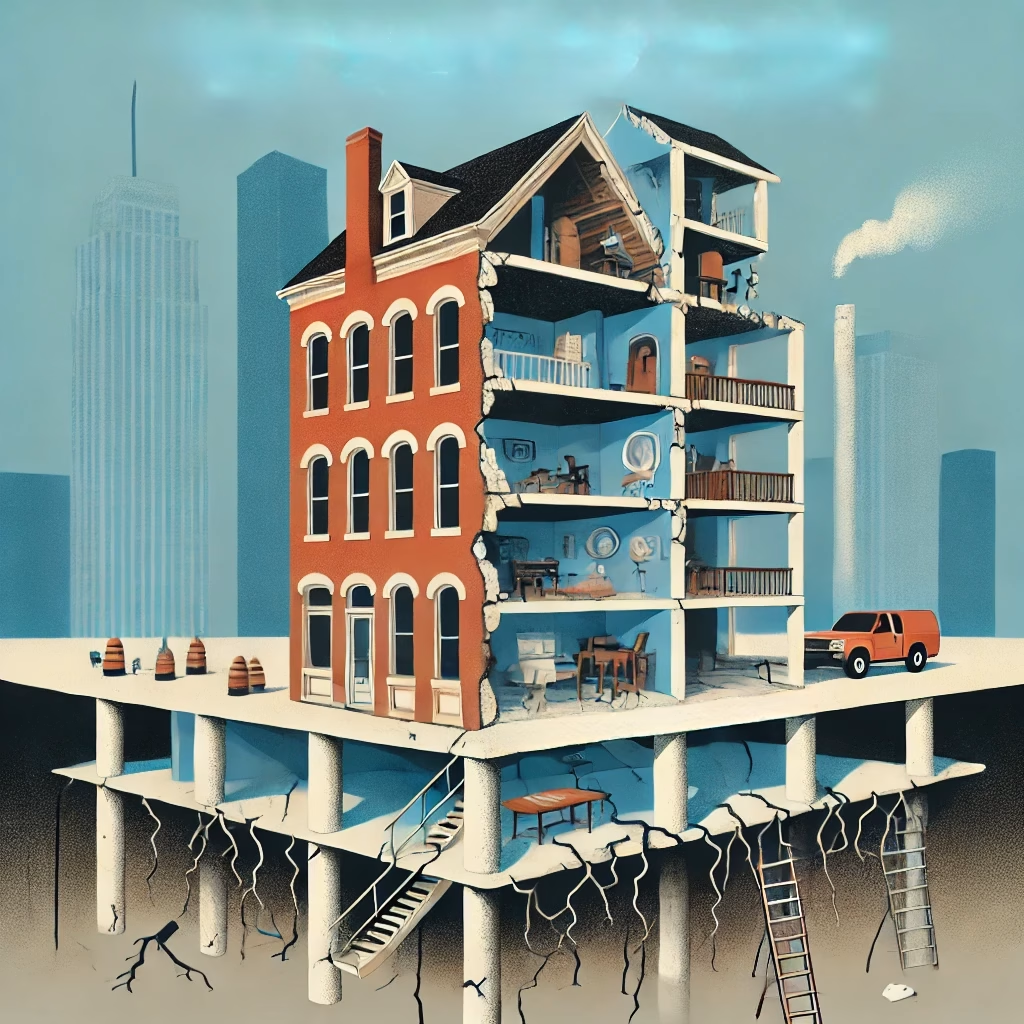
    Because when we talk about racism as a public health crisis, we’re dealing with some seriously cracked foundations that everybody keeps trying to cover up with fresh paint and fancy furniture.

    When you build a system designed to exclude, to discriminate, to deny care based on race – you don’t get stability.

    You get cracks.

    Deep, spreading, structural cracks that no amount of “diversity initiatives” or cultural competency training can patch over.

    And those cracks?

    They keep spreading through every level we try to build on top.

    America’s healthcare system wasn’t just built separate and unequal – it was designed to maintain power over who gets care, who gets denied, and who gets to make those decisions.

    We’re not talking about accidental oversights or unfortunate mistakes. We’re talking about intentional, systematic exclusion that created deep structural instability.

    And baby, we got the receipts.

    The Power of Legal Permission: How They Built Inequality By Design

    If you think about power, it can be infinitely more destructive when it’s got legal backing.

    When somebody can point to a law and say “see, we’re allowed to do this to you.” That’s not just discrimination; that’s state-sanctioned oppression. And in American healthcare? That power got baked into every level of the system.

    The year is 1947:

    A Black person could be actively dying outside a white hospital, and that hospital could legally say “not our problem.”

    Think about that power dynamic. It extends deeper than individual racism, it was emboldened by Jim Crow laws and hospital segregation policies that made it legal to deny care. They had the law protecting their right to watch somebody die based on race.

    Even the Hill-Burton Act, which funded hospital construction, allowed separate but equal facilities.

    That’s not just cruelty; that’s systematic dehumanization with a legal stamp of approval.

    When people talk about “medical mistrust” in Black communities like it’s some irrational fear, remind them: That mistrust was earned through generations of legally-protected abuse.

    No trust was built in the first place.

    When your grandma tells you stories about family members being turned away from hospitals, that’s not ancient history – that’s lived experience being passed down as survival knowledge.

    These weren’t just individual choices made by racist doctors. This was systematic, institutionalized power over Black and brown bodies, written into law, built into hospital designs, and woven into medical education.

    The whole system was architected to maintain control over:

    • Who gets care
    • Who gives care
    • Who can access medical education
    • Who has power over medical decisions
    • And most importantly – who gets to make all these rules

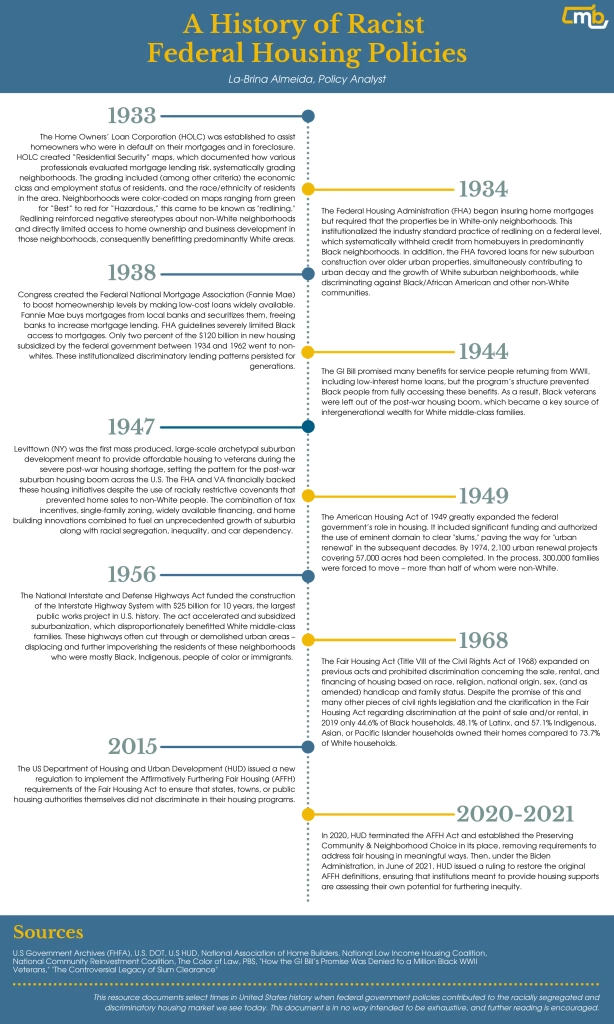
    When we talk about the GI Bill, we’re not just talking about denied benefits—we’re talking about denied generational wealth that could’ve changed health outcomes for entire family lines.

    On paper, Black veterans were eligible for the same GI Bill benefits as White veterans.

    In reality?

    White veterans were able to use and enjoy those benefits for homeownership and education, allowing them to flourish in suburia after the war.

    But for Black vets?

    Racist banks and local VA offices blocked Black vets from securing home loans and accessing education, forcing many into underfunded schools and redlined neighborhoods, where hospitals were scarce or nonexistent.

    That redlining wasn’t just about housing – it was about systematically controlling where people could:

    • Live
    • Work
    • Learn
    • Receive medical care
    • Build community resources
    • Create generational wealth
    La-Brina Almeida, Policy Analyst
    https://massbudget.org/2021/08/06/a-history-of-racist-federal-housing-policies/

    And here’s the part that really makes this system diabolical: They didn’t just deny resources – they blamed communities for not having them.

    Like pushing somebody into the deep end and then criticizing their swimming technique.

    These weren’t random acts of racism. This was calculated, systematic engineering of health inequality.

    They didn’t need to put cracks in the foundation – the very act of building a system on exclusion and control guaranteed those cracks would form and spread.

    Modern Symptoms of Historical Disease: How Past Power Creates Present Pain

    The Tuskegee Syphilis Study wasn’t just about watching Black men die from untreated syphilis – it was about a system that saw Black bodies as expendable test subjects rather than human beings deserving of care.

    And that mindset? It didn’t end with Tuskegee.

    Look at Henrietta Lacks.

    They took her cells without consent, built a multi-billion dollar research empire off them, and her family couldn’t even afford the treatments developed from her own genetic material.

    That’s not just medical ethics – that’s medical exploitation wearing a lab coat.

    These weren’t just isolated incidents of unethical research. They were symptoms of a system that saw – and still sees – Black and brown bodies as resources to be used rather than people to be healed.

    Fast forward to today, and watch how those historical power dynamics show up in modern health outcomes:

    • Black mothers dying at 3-4 times the rate of white mothers
    • COVID-19 hitting communities of color harder while resources flowed to whiter, wealthier areas
    • Life expectancy gaps of 10+ years between neighborhoods that were redlined and those that weren’t
    • Indigenous communities facing life expectancies 5.5 years shorter than the national average

    This ain’t coincidence – it’s compound interest on historical oppression.

    The Residual Damage: How Historical Design Creates Modern Health Disasters

    The concept of toxic inheritance…

    When you design cities to concentrate pollution, poverty, and stress in specific neighborhoods, you’re not just affecting one generation – you’re programming health disasters that echo through decades.

    Bodies Under Siege: The Physical Toll

    Walk through any formerly redlined neighborhood and you’ll find a perfect storm of health hazards:

    • Lead paint peeling off walls because nobody funded replacements
    • Asthma rates through the roof from industrial pollution
    • Food deserts where getting fresh vegetables is harder than finding designer drugs
    • Medical facilities that disappeared faster than Blockbuster stores

    When nearly 12% of children in former redlined areas show elevated lead levels, that’s not just about old paint – it’s about how systematic disinvestment turns neighborhoods into health hazard zones. Your ZIP code shouldn’t determine whether your child’s brain develops properly, but here we are.

    Look at diabetes rates in Latinx communities – 66% higher than white Americans. The system wants to blame this on “genetics” or “lifestyle choices,” but let’s be real:

    • How you gonna eat healthy in a food desert?
    • Where you gonna exercise when your neighborhood ain’t got no green spaces?
    • Who’s got time for preventive care when you’re working three jobs with no health insurance?

    Minds Under Pressure: The Mental Health Massacre

    Dr. Arline Geronimus calls it “weathering” – and in her groundbreaking work, she shows how the constant stress of racism literally ages Black bodies faster.

    Like a house facing endless storms, the constant battering of systematic racism creates premature wear and tear on both body and mind.

    This weathering effect isn’t just metaphorical. Dr. Geronimus’s research shows it’s literally programming early death into Black bodies through:

    • Accelerated aging at the cellular level
    • Higher blood pressure
    • Increased heart disease risk
    • Compromised immune systems
    • Heightened risk of premature death

    When we talk about policing and health, for example, we need to understand something about institutional evolution.

    Systems don’t just appear – they grow from existing power structures.

    Modern policing emerged from various 18th and 19th-century institutions focused on “maintaining social order and property interests.”

    Modern policing doesn’t just harm communities—it erodes public health.

    From the stress of over-policing increasing Black Americans’ risk for heart disease to the trauma of police violence shortening life expectancy, the connection is clear: you can’t be healthy when you’re constantly under siege.

    When COVID Hit: The Pandemic Exposed Every Crack in the Foundation

    When engineers want to find structural weaknesses in a building, they apply pressure and watch what breaks first. This is called a pressure test.

    COVID-19?

    That was America’s biggest public health pressure test in recent memory, and baby, did it expose every single crack in our foundation.

    Remember how I said you can’t paint over structural damage?

    When the pandemic hit, all that fresh paint got washed away real quick, showing exactly how deep those historical cracks run:

    Black and brown communities weren’t just getting hit harder – they were getting demolished while the system acted surprised. But there was nothing surprising about:

    • Essential workers (disproportionately people of color) being forced to choose between their health and their rent
    • Multi-generational households in historically redlined neighborhoods becoming virus hotspots
    • Communities with pre-existing conditions (thanks to environmental racism) facing higher death rates
    • Healthcare deserts suddenly becoming COVID deserts

    When they started tracking COVID outcomes by race, they acted shocked at the disparities. Like they couldn’t connect the dots between:

    • Communities forced into crowded housing by historical redlining
    • Neighborhoods with higher rates of respiratory issues from industrial pollution
    • People working frontline jobs without the luxury of “working from home”
    • Areas with limited healthcare access suddenly struggling to get testing

    Black and Indigenous Americans were dying at nearly twice the rate of white Americans. Latino communities saw hospitalization rates three times higher than white Americans.

    And when vaccines rolled out? Wealthy, whiter zip codes got first dibs, while Black and brown communities had to fight for access.

    The virus might have been new, but the pattern? That script was written generations ago.

    Breaking Ground on Better Systems: Beyond Band-Aid Solutions

    Think about renovations…

    At some point, you gotta stop patching walls and admit you need a whole new building.

    Because when your foundation’s this cracked, no amount of “diversity initiatives” or cultural competency training is gonna fix the structural damage.

    System-Level Reconstruction

    Redesigning Medical Education from the Ground Up

    Not just adding cultural competency modules, but completely reimagining how we train healers. We need medical education that:

    • Centers community health experiences and knowledge
    • Teaches the history of medical racism and its modern impacts
    • Requires rotations in underserved communities
    • Values cultural wisdom alongside clinical skills

    So that we produce healthcare providers who understand health in context, not just bodies in isolation.

    Rebuilding Funding Models

    Instead of punishing hospitals for serving poor communities, create funding structures that:

    • Reward preventive care and community health improvements
    • Provide extra resources to historically underfunded areas
    • Support community health workers and cultural healers
    • Invest in local health infrastructure

    So that a community’s health resources reflect their needs, not their property values.

    Power Redistribution

    Fixing these cracks isn’t about tweaking the same broken system—it’s about shifting power. Because for too long, healthcare decisions have been made about communities without being made by them.

    If we want real change, power has to flow back to the people most impacted. That means moving from community ‘input’ to community control—where people don’t just have a seat at the table, but the ability to build the damn table themselves.

    From Community Input to Community Control

    Stop asking communities to advise on decisions already made. Instead:

    • Put budget power in community hands
    • Create community-led health boards with real authority
    • Fund community organizations directly
    • Support indigenous healing practices

    So that communities can build health systems that actually serve their needs, not just fulfill grant requirements.

    Cultural Authority, Not Just Competency

    Move beyond teaching providers about culture to:

    • Hiring healers from the community
    • Supporting traditional healing practices
    • Funding community health knowledge creation
    • Validating multiple approaches to wellness

    So that communities can access care that aligns with their values, not just tolerates their presence.

    The Foundation We Need: Moving from Survival to Justice

    Every crack we see in public health today started with a choice.

    A choice to build systems that protected some lives while treating others as expendable.

    A choice to concentrate power in institutions that were never meant to heal everyone equally.

    A choice to keep painting over problems instead of fixing their roots.

    Here’s what hits different: We’re not just fighting against a broken system – we’re fighting for the right to build something entirely new.

    Something that doesn’t just patch holes but fills every community with the resources they need to thrive.

    Because let’s be real – we’re not asking for equality anymore.

    We’re demanding transformation.

    We’re not interested in getting a slightly better seat at a broken table. We’re here to build a whole new house.

    Think about what becomes possible when we stop accepting crumbs of progress and start demanding whole loaves of justice:

    • Communities controlling their own health resources
    • Healing practices that honor cultural wisdom
    • Health systems that prevent harm instead of just responding to it
    • Power flowing to those who’ve been historically denied it

    Next time somebody suggests we can’t afford to rebuild our health systems, remind them:

    We can’t afford not to.

    Because every dollar we spend maintaining broken systems is a dollar stolen from our children’s futures.

    Every band-aid solution we accept is another crack we’re passing down to the next generation.

    So yes, we need to look at racism as a public health crisis.

    We’re not just fighting against racism in public health – we’re fighting for a future where your ZIP code doesn’t determine your life expectancy.

    Where your skin color doesn’t predict your maternal mortality risk.

    Where seeking healthcare doesn’t require proving you deserve to live.

    The foundation is cracked, fam.

    But we’re not here to patch it anymore. We’re here to break ground on something stronger, something built for everyone’s survival, something worthy of our communities’ power.

    Because at the end of the day, this isn’t just about health – it’s about justice.

    And justice? That’s not something you request. It’s something you build.

    Block by block. Community by community. Until the whole damn system is transformed.

  • The Hidden Systems Behind Heart Disease: Why America’s #1 Killer Isn’t Just About Individual Choices

    The Hidden Systems Behind Heart Disease: Why America’s #1 Killer Isn’t Just About Individual Choices

    Heart disease, America’s #1 killer is a lot like soil erosion – it happens so gradually that you don’t notice until there’s a landslide.

    And just like erosion, it ain’t just about what’s happening on the surface.

    941,652 lives. Nearly a million Americans. That’s how many people cardiovascular disease claimed in 2022 alone – up by over 10,000 from the year before.

    And we keep acting like this is just about people making “bad choices” – as if some communities aren’t dealing with stripped land while others got premium soil with perfect drainage.

    When your death toll is pushing seven figures and still climbing? That’s not individual failure – that’s systemic erosion by design.

    The Invisible Process

    Think about erosion for a minute. You don’t see it happening day by day. Each raindrop, each gust of wind takes away a little bit more topsoil.

    By the time you notice, your foundation’s already compromised. Heart disease works the same way – silent, persistent, and devastatingly effective.

    Nearly half of U.S. adults are living with some form of cardiovascular disease right now.

    Most don’t even know it. Just like you can’t see soil washing away grain by grain, you might not notice your arteries narrowing until that heart attack hits.

    And here’s where it gets real: Just like different types of land face different erosion risks, heart disease ain’t hitting everyone the same way. Every fast food desert is another layer of topsoil washing away. Each stressful job is another crack in the foundation. Every underfunded neighborhood loses its protective layers.

    And some communities’ soil has been eroding for generations.

    The Gender Gap: When Medical Research Builds on Shifting Sand

    Now, let me tell you about medicine’s dirty little secret: For decades, we’ve been studying heart disease like it’s a man’s problem in a man’s world. But here’s what hits different: Women’s hearts have been historically neglected.

    When it comes to women and heart disease, they are undertreated and underrecognized. Women haven’t been centered in clinical trials of heart-related conditions, and the confusion is a result.

    • Nausea and vomiting
    • Fatigue
    • Breathlessness

    The numbers tell the story: Between 1995 and 2014, the proportion of heart attacks among women aged 35 to 54 increased from 21% to 31%, while for men in the same age group, it rose from 30% to 33%. This indicates a more pronounced increase among younger women, highlighting a concerning trend.

    That’s not just a gap – that’s a canyon of medical bias.

    It’s like we’ve been using the wrong soil testing equipment all along, then wondering why some gardens ain’t thriving.

    Women are more likely to have high blood pressure or diabetes – conditions that can turn that soil erosion into a landslide – but less likely to get screened or treated for heart disease, even with these risk factors staring doctors in the face.

    The Systems Behind the Symptoms

    Let’s break down how this erosion really works, because these aren’t just differences – they’re designed disparities that shape who lives and who dies.

    In Some Neighborhoods:

    Fresh produce costs more than fast food

    When a bag of apples costs more than three combo meals, that’s not about choice – that’s about survival.

    Families ain’t choosing fast food because they don’t know better; they’re choosing it because when you’re stretching dollars, you buy what fills stomachs. Every time someone picks up that $5 combo meal instead of $8 worth of vegetables, their cardiovascular system takes another hit.

    And it doesn’t have to be this way.

    Parks and safe walking spaces are rare luxuries

    Try telling somebody to “just take a walk” when their neighborhood hasn’t seen a working streetlight in years.

    When every park is a 30-minute bus ride away, when sidewalks are broken or non-existent, when safety concerns keep people indoors – that’s not about motivation, that’s about infrastructure designed to keep people inactive.

    Also, does not have to be this way.

    Healthcare facilities are few and far between

    Assuming there is even a cardiac specialist in a community, that waitlist likely won’t be when it’s conveieint the nearest cardiac specialist is two bus transfers away, that follow-up appointment might as well be on

    People aren’t skipping preventive care because they don’t care – they’re skipping it because accessing care means losing a day’s pay, finding childcare, and navigating a transit system that wasn’t designed for them.

    Once again, assuming the mechanisms are in place to see a cardiac specialist.

    CENTRAL ILLUSTRATION. Supply and Demand of the Cardiovascular Workforce.

    Environmental pollution is just part of daily life

    Some communities are breathing in cardiovascular risk with every breath.

    When your neighborhood sits next to the highway, the factory, or the waste treatment plant, your heart’s working overtime just to handle the daily toxic load.

    Your body’s fighting a battle it never signed up for.

    And highways and factors don’t just show up, they were a choice.

    Stress isn’t just a feeling – it’s a constant companion

    When you’re living paycheck to paycheck, when sirens are your nighttime soundtrack, when every interaction with authority carries risk – your stress response system never gets to rest.

    That constant cortisol cascade? It’s eroding your cardiovascular system like acid rain on limestone.

    While some communities struggle with food deserts, healthcare shortages, and environmental hazards, others enjoy a built environment designed to protect heart health from every angle.

    These differences aren’t incidental—they’re engineered by decades of policy choices.

    In Others:

    Grocery stores compete for your business

    Some neighborhoods got so many organic markets they’re tripping over kale.

    Think about what happens when there are options for healthy produce and foods. It becomes the easy choice, and heart health improves just by proximity to possibility.

    Green spaces invite physical activity

    Well-maintained parks, safe jogging trails, bike lanes that actually go somewhere – movement becomes natural when your environment encourages it.

    These aren’t just amenities; they’re cardiovascular health infrastructure, and built environment cannot be understated for how deeply it influences health.

    Medical centers occupy prime real estate

    When you can see three different cardiac specialists from your front porch, prevention becomes convenient.

    Regular screenings, immediate care for concerns, relationships with providers – all of it’s just part of the neighborhood package.

    Air quality is protected

    Some communities got politicians fighting to keep their air clean, pushing out polluting industries, monitoring quality daily. Their hearts ain’t fighting just to handle the basic act of breathing.

    “Wellness” is a lifestyle brand

    When your biggest stress is choosing between hot yoga studios, when “self-care” is built into your work benefits, when health optimization is your hobby – your heart’s getting every advantage money can buy.

    This ain’t random. When you map out heart disease rates across cities, they follow the same lines as:

    • Historical redlining boundaries that determined where people could live
    • Environmental pollution zones that were intentionally placed in certain communities
    • Food desert locations that reflect decades of corporate disinvestment
    • Healthcare facility distribution that mirrors wealth concentration
    • Income inequality patterns that determine who can afford prevention

    That’s not coincidence – that’s design.

    Every one of these factors was shaped by policy decisions, corporate choices, and systemic biases.

    We’ve literally built a world where your ZIP code can be a better predictor of heart health than your genetic code.

    The True Cost of Stripped Soil

    Behind those 941,652 annual deaths, there’s:

    • Families losing economic contributors(which, can perpetuate health inequities),
    • Communities losing leaders,
    • Children losing parents,
    • Knowledge being buried,
    • Futures getting erased,
    • Generational wealth evaporating

    And the wildest part? We know how to prevent most of this.

    We’ve got the science. We’ve got the solutions.

    What we don’t have is the system design to make those solutions accessible to everyone.

    Beyond “Just Eat Better”

    Every time someone suggests heart disease is just about diet and exercise, I want them to explain:

    • How you’re supposed to “eat fresh” in a food desert
    • How to “get active” in neighborhoods without safe spaces
    • How to “manage stress” while working three jobs
    • How to “see your doctor regularly” without health insurance
    • How to “prioritize health” when you’re just trying to survive

    That heart attack at 50? That wasn’t just about someone’s choices last week. That landslide started decades ago – when certain communities got stripped of their resources while others kept their ground fertile and protected.

    Building Better Soil: Learning from the Land

    We can learn a great deal from farmers who actually know how to prevent soil erosion.

    They don’t just wait for the landslide – they use proven methods that have worked for generations:

    • Crop rotation keeps the soil rich and balanced
    • Conservation tillage protects the ground’s structure
    • Contour farming follows the land’s natural shape
    • Strip farming creates protective barriers
    • Terrace farming prevents rapid runoff
    • Grass waterways guide excess flow safely
    • Diversion structures redirect harmful forces
    • Strategic tree planting holds everything together

    So what can these teach about heart disease?

    Just like crop rotation keeps soil healthy, we need to rotate our community resources – not just focusing on one solution but creating diverse, sustainable health programs that work together.

    Like conservation tillage protects soil structure, we need to preserve and strengthen existing community health networks.

    When farmers use contour farming to work with the land’s natural shape, that’s like tailoring health interventions to fit community cultures and patterns instead of forcing one-size-fits-all solutions.

    Strip farming creates protective barriers against erosion? That’s exactly what we need in healthcare – multiple layers of protection, from primary care to community support to emergency services.

    And just like terrace farming prevents rapid runoff, we need systems that catch health problems early, creating multiple levels of intervention before crisis hits.

    Building Better Systems: Real Solutions for Real Change

    Want to actually address heart disease? Here’s what works:

    Community-Level Solutions:

    • Bringing fresh food markets to underserved areas
    • Creating safe spaces for physical activity
    • Establishing local healthcare facilities
    • Building trust through community health workers
    • Supporting economic development that promotes health

    Policy Changes:

    • Investing in public transportation
    • Implementing strict environmental protections
    • Requiring paid sick leave and mental health days
    • Expanding healthcare access
    • Funding community health initiatives

    Healthcare System Redesign:

    • Training providers in gender-specific symptoms
    • Addressing racial and ethnic health disparities
    • Creating culturally competent care models
    • Focusing on prevention over crisis management
    • Building community-based health networks

    The Path Forward

    Real change means:

    1. Acknowledging the systemic nature of heart disease
    2. Investing in community-level solutions
    3. Addressing social determinants of health
    4. Creating policies that protect everyone’s heart health
    5. Building systems that prevent erosion instead of just responding to landslides

    Because at the end of the day, your heart health shouldn’t depend on your ZIP code, your bank account, your gender, or the color of your skin.

    And until we address these root causes, we’ll keep losing nearly a million Americans every year to a disease that’s preventable – a number that keeps climbing while we keep pretending it’s just about personal choice.

    Next time somebody talks about heart disease like it’s just about personal choice, ask them: How you gonna blame somebody’s garden when their soil’s been washing away for generations?

    It’s time to stop treating the symptoms and start rebuilding the soil. Just like farmers know you need multiple methods working together to prevent erosion, we need comprehensive, interconnected solutions to protect heart health.

    Because you can’t grow healthy hearts in stripped earth – and some communities have been watching their ground wash away for far too long.

    Remember: Every farmer knows it’s easier to prevent erosion than to rebuild destroyed land. The same is true for heart health.

    The question isn’t whether we know how to prevent these problems – it’s whether we’re willing to invest in the solutions we already know work.

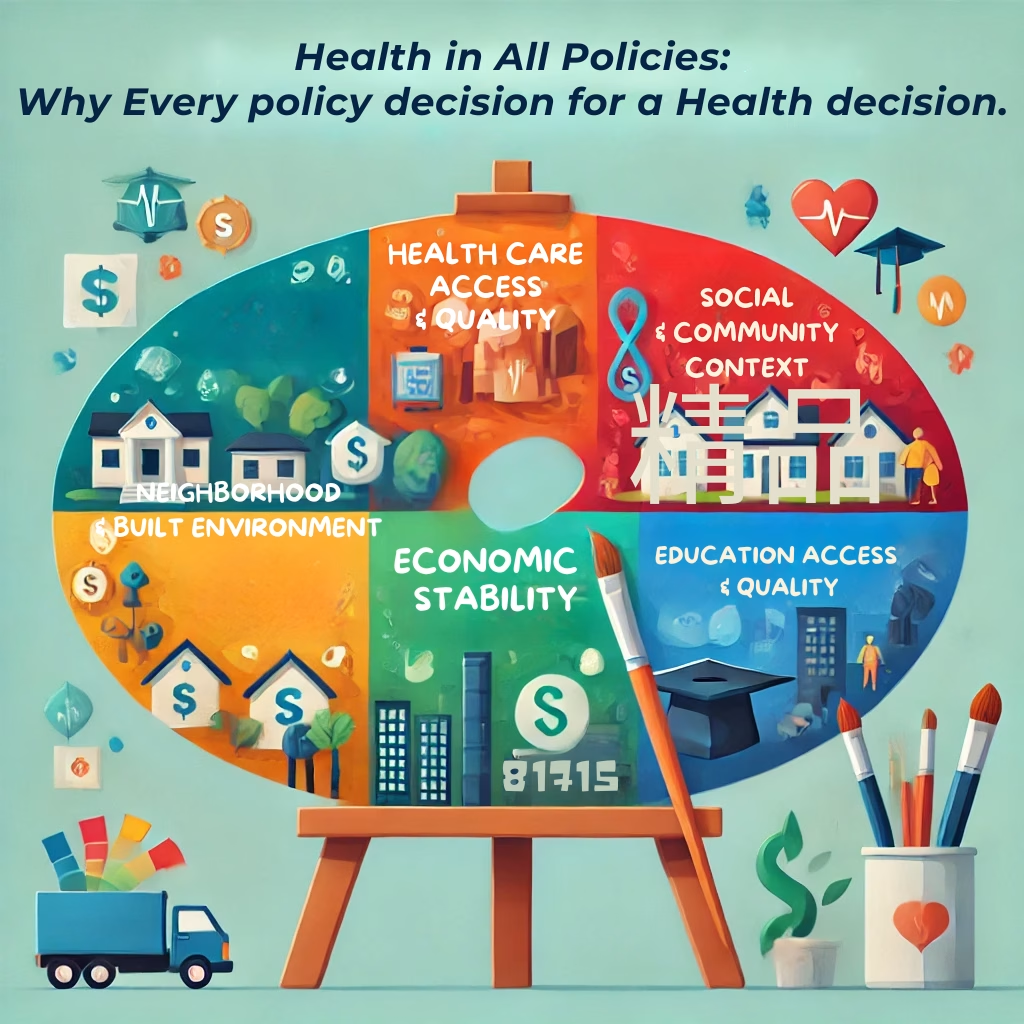
  • Health in All Policies: Why Every Policy Decision Is a Health Decision

    Health in All Policies: Why Every Policy Decision Is a Health Decision

    Policy decisions are like colors on a canvas, and right now, we’re letting some communities get painted in grayscale while others get the full spectrum. 

    Some neighborhoods glow with grocery stores, parks, and safe streets. 

    Others? 

    They’re stuck in grayscale—where fresh food, reliable transit, and even clean air are just out of reach. 

    The thing is, these paintings are being intentionally crafted this way.

    Some folks think they can just splash a little “healthy” paint on a policy after the fact and call it a masterpiece.

    Like, “Let’s add a bike lane to a neighborhood with no grocery stores and call it ‘promoting healthy lifestyles.’”

    It’s not an afterthought, it needs to be top of mind and intentional from the jump.

    Why We Need Health in All Policies (The Reality Check)

    When policies get made in isolation, they create health inequities at the same devastating speed we’re seeing executive orders targeting vulnerable communities. 

    And these aren’t just numbers on a chart – these are real lives being shaped by every stroke of the policy brush.

    Take anti-trans policies.

     Data shows suicide attempts among transgender and nonbinary youth increase by as much as 72% when discriminatory policies are enacted. 

    That ain’t a side effect – that’s policy violence painted in broad strokes across entire communities.

    These policies aren’t random marks on a canvas. 

    They’re intentional designs creating predictable outcomes. 

    When you invalidate someone’s existence through policy, you’re not just writing laws – you’re writing trauma into people’s lives, and normalizing a culture that increases the threat response of the target.

    Housing policies that redline neighborhoods don’t just isolate communities geographically. They cut off access to generational wealth and health. 

    Environmental policies that allow toxic waste sites in low-income areas don’t just create dirty neighborhoods – they design chronic illnesses for generations.

    This isn’t just about one policy or one community—it’s about how every decision layers onto the next, shaping the bigger picture of public health.

    So, what makes a truly healthy policy?

    The Five Elements of Health in All Policies (Your Essential Paint Colors)

    Creating healthy communities through policy is like painting a masterpiece. To get it right, here are the essential tools:

    The Right Colors (Health, Equity & Sustainability)

    Think about Zambia’s fight against malaria. 

    They didn’t just throw medicine at the problem. 

    They mixed their colors right: tax policy, transportation access, and community engagement. That’s how they cut malaria deaths by 66%. They understood something we keep forgetting: every policy decision is a health decision.

    Closer to home, look at cities that implemented soda taxes. They didn’t just reduce sugary drink consumption; they reinvested those funds into health education and fresh food programs. 

    That’s layering equity into policy design.

    Multiple Brushes (Intersectoral Collaboration)

    Y’all can’t paint a masterpiece with just one brush. 

    When the Department of Transportation, EPA, and Housing work together, communities thrive.

    But when they work in isolation?

    That’s how you get highways cutting through Black neighborhoods and calling it “urban renewal.”

    Let’s talk about public transit. Without collaboration across sectors, a city might prioritize building highways for commuters but forget to connect bus routes to job centers. 

    Collaboration ensures the picture makes sense.

    A Clear Vision (Benefits for Everyone)

    Good policy is like good art – it works on multiple levels. 

    Take transportation policy done right: 

    it doesn’t just move bodies from A to B. It reduces air pollution, creates job access, builds community connections, and makes healthcare accessible—all with one policy.

    For example, Complete Streets policies ensure roads are safe for all users—drivers, cyclists, pedestrians, and public transit riders. 

    These policies reduce traffic injuries, promote physical activity, and improve air quality, all while strengthening local economies.

    The Right Perspective (Community Engagement)

    You can’t paint someone’s portrait without looking at them. The same goes for policy. 

    When communities aren’t in the room, policies might look good on paper but create chaos in real life.

    Consider disaster recovery policies. 

    Communities hit hardest by hurricanes or wildfires are often left out of the planning process. The result? 

    Policies that rebuild homes but ignore mental health services or employment opportunities.

    Proper Technique (Structural Change)

    This ain’t about quick fixes. You can’t finger-paint your way to health equity. 

    We need systemic changes that stick like oil paint – deep, lasting, and intentional.

    Think about how structural racism is baked into zoning laws, school funding, and healthcare access. 

    Fixing it requires more than surface-level changes; it demands a complete reimagining of systems.

    The Layers of a Health in All Policies Community (Building Your Masterpiece)

    Every healthy community needs multiple layers, just like a painting. Let’s break it down:

    Base Layer: Basic Needs

    • Healthy Housing: No black mold, no lead paint, no overcrowding. Healthy housing reduces respiratory illnesses, improves mental health, and strengthens family stability.
    • Transportation That Works: Reliable transit gets people to doctors, fresh food, and jobs without draining their time or wallets. When transportation works, social isolation decreases, and emergency services reach people faster.
    • Real Food Access: Communities can’t thrive on convenience stores. Food deserts skyrocket diabetes and heart disease rates while erasing cultural food traditions. Real access lowers chronic disease and boosts mental health.

    Middle Layer: Environmental Quality

    • Clean Air: Reduces asthma attacks, improves outdoor activity levels, and lowers stress on family caregivers.
    • Green Spaces: Parks are a necessity, not a luxury. They reduce depression, strengthen community connections, and improve stormwater management.
    • Safe Water: Clean water changes everything: cognitive development improves, chronic diseases drop, and generational health trajectories shift.

    Top Layer: Economic & Social Justice

    • Livable Wages: When jobs pay enough to live, stress levels drop, preventive care becomes accessible, and communities build generational wealth.
    • Educational Equity: Schools that educate rather than incarcerate improve health literacy, expand career opportunities, and break cycles of poverty.
    • Resource-Based Safety: Communities where safety comes from resources, not over-policing, see trauma rates decrease and trust build.

    A Layer We Overlook: Mental Health

    Mental health is often treated as a luxury when it’s foundational. Policies that integrate mental health care into schools, workplaces, and community programs transform lives. 

    They reduce stigma, increase productivity, and save lives.

    When Policies Harm (The Dark Strokes)

    Let’s be real: some policies are precision tools for harm. Look at trans youth being pushed out of healthcare, immigration policies that separate families, and environmental protections stripped from vulnerable neighborhoods. 

    These aren’t accidents – they’re deliberate strokes erasing communities from the canvas of equity.

    Just like once you mix colors on a canvas, you can’t separate them, you can’t untangle these policies from their health impacts. 

    They’re designed to harm, and the speed at which they’re enacted tells the story of their intent.

    Think about voter suppression laws targeting marginalized communities. These policies don’t just affect elections; they ripple into health outcomes by limiting political power and representation. 

    That’s policy violence with long-term consequences.

    Building Better Policy Masterpieces (The Way Forward)

    So, what does Health in All Policies look like? Here’s how we start painting better:

    1. Intentional Design: Start every policy decision with the question, “How will this affect community health?” Health impact assessments need to be as common as environmental ones.
    2. Integrated Approaches: Follow Seattle’s lead—layer climate policy with transportation equity, housing affordability, and job access.
    3. Accountability & Adaptation: Regularly check in with affected communities, measure real impacts, and adapt when something’s not working.
    4. Community-Driven Innovation: Policies co-designed with communities often address root causes more effectively. For example, participatory budgeting lets residents decide how funds are spent.

    Why Health in All Policies Matters Now

    While we’re debating whether health should be considered in all policies, some communities are dealing with schools where the water isn’t safe to drink, neighborhoods where the air triggers asthma attacks, and food deserts that fuel chronic disease.

    This isn’t about better individual policies. It’s about understanding that every policy decision ripples through community health like paint spreading across a canvas.

    Your Part in the Masterpiece

    Here’s the truth: every policymaker is an artist. The only question is whether they’re creating art that serves everyone or letting some communities get painted out of the picture. 

    What we need now is:

    • Policymakers who see themselves as health artists.
    • Communities demanding their right to be part of the creative process.
    • Public health professionals ready to collaborate across sectors.

    Because when we talk about Health in All Policies, we’re talking about justice in all policies. 

    We’re talking about creating a masterpiece where every community gets to thrive. 

    Next time somebody suggests health is just about healthcare, remind them: every policy stroke affects someone’s health canvas.

    We can’t afford to keep finger-painting solutions to oil-painting problems. Our communities deserve masterpieces, not a mess.

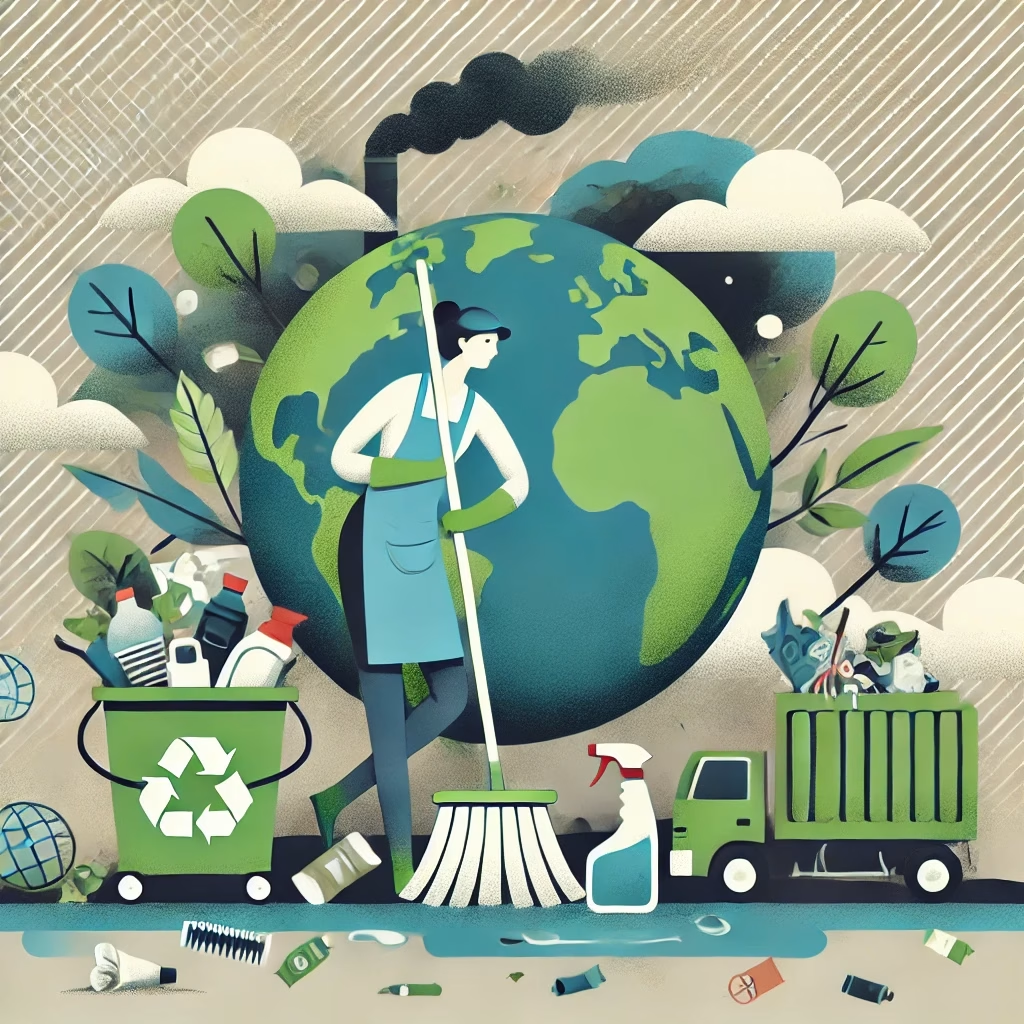
  • Environmental Health Crisis: How Earth’s Breaking Point Threatens Public Health

    Environmental Health Crisis: How Earth’s Breaking Point Threatens Public Health

    Like the Wu Tang Clan, environmental health ain’t nun to fuck with.

    via GIPHY

    The Earth’s been our janitor since day one, cleaning our air, filtering our water, and absorbing our mess. But we’re acting like entitled tenants who think cleanup is just “part of the job.”

    And let me tell you – this ain’t working out like we thought it would.

    The Original Cleanup Crew

    Back in the early 1900s, Americans were living rough. Drinking dirty water, eating contaminated food, sharing space with disease-carrying critters – and dying from it.

    No antibiotics, no vaccines, just pure environmental chaos.

    When you got a mess in your building, you generally got two choices:

    • Clean it up,
    • Let it pile up until everybody gets sick

    Our ancestors figured this out the hard way.

    By 1940, they’d dropped infectious disease deaths by 75% – not with medicine, but by improve their environmental condition.

    • Building water systems that actually worked
    • Getting the rats out before the plague got in
    • Making sure food wasn’t trying to take you out

    That was the birth of environmental health – when we finally realized we needed better building maintenance.

    The Laws of the Building (Barry Commoner’s Truth)

    In the 1970s, this homie named Barry Commoner came through and laid down four laws about how our building actually works. An environmental health manual if you will:

    1. Everything Is Connected to Everything Else
      • You can’t just mess up one room and think it won’t affect the whole building.
      • That smoke you’re pumping into the air? It’s coming back in your water.
      • Those chemicals you’re dumping? They’re showing up in your food.
    2. Everything Must Go Somewhere
      • There is no “away” when you throw something away.
      • That plastic you tossed? It’s breaking down into your blood now.
      • Those emissions you released? They’re coming back as climate change.
    3. Nature Knows Best
      • Every time we try to outsmart our janitor, we make things worse.
      • Synthetic chemicals? Nature don’t know how to break those down.
      • Artificial systems? They’re breaking down while natural ones been working for millions of years.
    4. There’s No Such Thing as a Free Lunch
      • Every “shortcut” we take comes with a price.
      • That cheap production? Somebody’s paying with their health.
      • Those quick profits? Earth’s billing us with interest.

    The Corporate Takeover (When Capitalism Hijacked the Building)

    Now here’s where things get wild.

    Capitalism looked at our building’s maintenance needs and said, “Let’s make this profitable.”

    Suddenly, our relationship with the environment wasn’t about sustainability – it was about quarterly earnings.

    Think about what that means:

    • Industries dumping waste because proper disposal cuts into profits
    • Companies fighting environmental regulations to protect their bottom line
    • Corporations privatizing natural resources while socializing the cleanup costs
    • Poor communities becoming sacrifice zones for industrial convenience

    This ain’t just business – it’s environmental violence.

    We’re letting profit motives override our janitor’s maintenance schedule, and the building’s starting to show serious wear and tear.

    Here’s What Hits Different: The Environmental Justice Revolution

    Enter Dr. Robert Bullard, the father of environmental justice, who came through in the 1980s and said, “Hold up – notice how some floors of this building are getting trashed while others stay clean?”

    He exposed how:

    • Toxic facilities “mysteriously” end up in Black and Brown neighborhoods
    • Waste sites “somehow” get placed near low-income communities
    • Indigenous lands become dumping grounds for the nation’s poison
    • Communities of color face the worst environmental health impacts

    The numbers tell the story:

    But Bullard didn’t just expose the problem – he sparked a movement. Environmental justice became about:

    • Communities demanding a say in environmental decisions
    • Connecting local struggles to systemic racism
    • Fighting for equal protection from environmental hazards
    • Building power to challenge corporate polluters
    • Transforming “Not In My Backyard” to “Not In Anybody’s Backyard”

    The Breaking Point

    And just like any overworked, underappreciated worker, Earth’s showing signs of burnout:

    • Ecosystems collapsing faster than streaming services can make new shows
    • Species checking out without leaving a forwarding address
    • Weather patterns acting like they never read the manual
    • Natural filtration systems calling in sick permanently

    We’re treating Earth like that janitor who’s supposed to handle everything – clean up our spills, fix our breaks, absorb our abuse.

    But when janitors finally say “I’m done,” things immediately start to collapse.

    Systems break down. Mess piles up. Everything falls apart.

    Building Better: Real Solutions for Environmental Health x Environmental Justice

    Community Power: From Voices to Votes to Victory

    Let me tell you something about “community input” – it’s usually set up like a suggestion box that leads straight to the trash.

    But real community power? That’s about holding the pen that writes the rules.

    Think about what actual community control looks like:

    • Instead of suits from downtown deciding where to put that new highway, you got neighborhood councils with real veto power
    • Rather than researchers treating communities like lab rats, you got local folks designing the studies, asking the questions that matter to them
    • Not just “consulting” Indigenous leaders after the plans are made, but following their lead on land management practices that worked for thousands of years
    • Grassroots organizing that turns individual complaints into collective action with teeth

    When communities control their environmental decisions, they don’t just prevent harm – they create solutions nobody else could see.

    Like the grandmother who noticed the asthma patterns in her neighborhood and sparked a whole movement against air pollution.

    Or the youth group that turned an abandoned lot into a community garden and food justice hub.

    We’re talking about:

    • Environmental review boards with actual community majority
    • Local health monitoring systems run by the people breathing the air
    • Indigenous fire management practices preventing California wildfires
    • Community land trusts protecting neighborhoods from toxic development

    Because nobody knows what a neighborhood needs like the people living there.

    And when communities get real power?

    They don’t just fight against environmental threats – they build environmental solutions that work for everybody.

    System Overhaul: Putting Teeth in Environmental Protection

    We’ve been playing environmental protection like it’s a friendly game of suggestions, when we need to be treating it like law enforcement – except this time, we’re policing the actual criminals.

    What does environmental law with real teeth look like?

    • Fines big enough to make corporations feel it in their profit margins, not just their petty cash drawer
    • Criminal penalties for executives who knowingly poison communities
    • Whistleblower protections strong enough that people can expose violations without losing their lives
    • Regulatory agencies funded like we actually care about keeping our air breathable and our water drinkable

    Imagine environmental regulations that:

    • Don’t just set limits on pollution but require industry to prove their safety before they operate
    • Make corporate boards personally liable for environmental crimes
    • Tie executive compensation to environmental performance
    • Fund environmental protection like we fund the military – because what’s national defense if we can’t defend our air and water?

    The clean energy transition can’t be optional anymore. We need:

    • Investment in renewable infrastructure like our lives depend on it (because they do)
    • Job training programs that turn fossil fuel workers into clean energy leaders
    • Grid modernization that prioritizes communities historically left in the dark
    • Energy democracy where communities own their power – literally

    Just Transition: Building the Future We Deserve

    A just transition isn’t just about switching from dirty energy to clean energy – it’s about making sure we don’t recreate the same old power dynamics with new technology.

    What does that actually look like on the ground?

    • Solar panel factories in former coal towns, owned by worker cooperatives
    • Transit systems designed by the people who actually ride them
    • Urban farming programs that turn food deserts into food forests
    • Green building programs that create jobs while cutting energy bills

    We’re talking about:

    • Training programs that don’t just offer jobs but career paths with living wages
    • Clean energy projects owned by the communities they serve
    • Transportation systems that connect people to opportunities, not just routes
    • Agriculture that heals the land while feeding the people

    Because a just transition means:

    • The people who bore the costs of pollution get first dibs on clean energy benefits
    • Communities design their own transportation solutions instead of having highways forced through their neighborhoods
    • Urban farms run by the communities that need them most
    • Green jobs that come with union cards and living wages

    Reparative Justice: Making Things Right

    Let’s be real about something: You can’t poison communities for generations and then act like “sorry” fixes it. Reparative environmental justice means actually repairing the harm done.

    That looks like:

    • Full cleanup of toxic sites, not just covering them with pretty grass
    • Healthcare systems specifically designed to address environmental illness
    • Restoration projects that rebuild ecosystems while creating local jobs
    • Direct compensation to communities that have been environmental sacrifice zones

    We need:

    • Health monitoring and care for generations exposed to toxins
    • Trust funds for future medical needs from environmental exposure
    • Ecosystem restoration that creates jobs for impacted communities
    • Real compensation for lost land, health, and opportunities

    Because reparative justice isn’t charity – it’s accountability. It means:

    • Companies that profited from pollution paying for community healthcare
    • Governments acknowledging past harm and funding real solutions
    • Toxic site cleanup that creates local jobs and training
    • Restoration projects that rebuild both nature and community

    Think about it like this: If somebody trashed your house for 100 years, would you accept them just stopping the damage, or would you expect them to fix what they broke? That’s what reparative environmental justice means – actually fixing what’s been broken, not just promising to do better next time.

    The Bottom Line

    These aren’t just nice ideas – they’re survival strategies. Because let’s be real: The same old environmental protection isn’t cutting it. We need solutions as deep as the damage, as comprehensive as the crisis, and as powerful as the problems we’re facing.

    When we talk about environmental solutions, we’re really talking about power – who has it, who needs it, and how we’re going to redistribute it to save ourselves. Because at the end of the day, environmental justice isn’t just about cleaning up pollution – it’s about cleaning up the whole system that made the mess in the first place.

    The Final Notice

    Because let’s be real: Nature’s been recycling our waste for millennia, forests been scrubbing our air without recognition, oceans been absorbing our heat while we crank up the AC – and we act like this free cleanup service is our birthright.

    Next time somebody suggests Earth will always bounce back, remind them: Even the most patient janitor has a breaking point. And when this one puts down the mop? Game over – because there ain’t no other building to move to.

    The question isn’t whether Earth will survive – it’s whether it’ll keep providing the cleanup services we need to survive. And right now? That janitor’s giving us notice.

    Environmental justice isn’t just a movement – it’s our last chance to fix this building before the whole maintenance system collapses. Because when that happens, ain’t no amount of profit gonna matter if we can’t breathe the air or drink the water.

    Time to decide: Are we gonna keep treating Earth like a disposable worker, or are we finally gonna show some respect to the only janitor we’ve got?

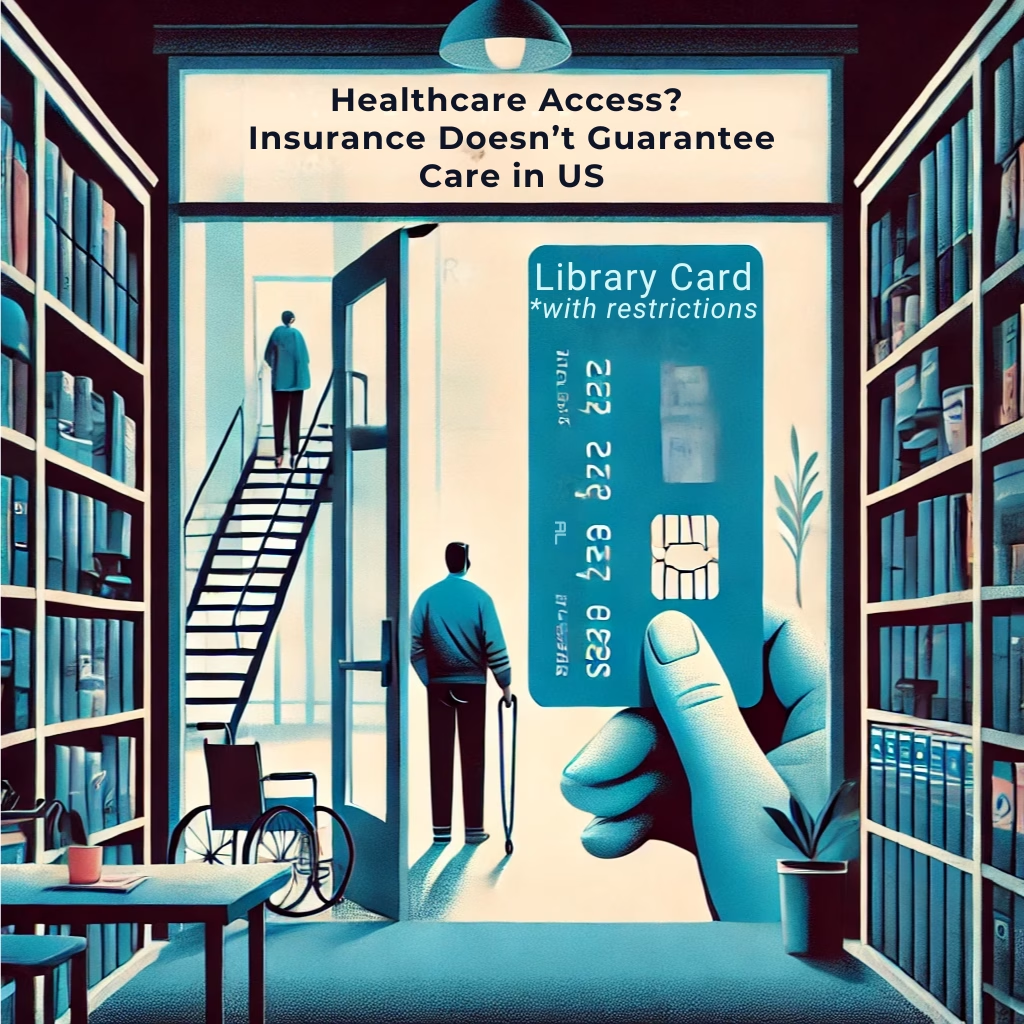
  • Healthcare Access? Insurance Doesn’t Guarantee Care in US

    Healthcare Access? Insurance Doesn’t Guarantee Care in US

    Healthcare Access in America is like having a library card for a system designed to make reading damn near impossible.

    And trust me, that ain’t by accident.

    Picture this: You finally get that shiny insurance card after jumping through all the hoops.

    Maybe your job provides it, maybe you navigated the marketplace, maybe you qualified for Medicaid. But when you try to use it?

    The library’s closed, the books are in a language you don’t understand, and the elevator’s broken. Meanwhile, other folks stroll right in like they own the place.

    According to fresh CDC data, 21.7% of adults — that’s more than 1 in 5 people — couldn’t access healthcare in 2022 despite being insured. And the reasons? They’ll make your blood boil.

    American Healthcare Access aka the Dysfunctional Library

    We’re spending 17% of our GDP on healthcare — nearly $4.5 trillion in 2022 alone.

    That’s double what other rich countries spend. We’re building the fanciest medical libraries in the world, buying the most expensive equipment, paying the highest salaries… and somehow still running a system where basic care feels like trying to check out a book from a dungeon.

    Imagine a library where:

    • The building’s only open during hours most working folks can’t make it
    • Most books are written in languages the community doesn’t speak
    • The elevator’s broken, making access impossible for some
    • And half the librarians won’t even accept your “approved” library card
    • Every floor requires different membership levels
    • And the late fees can bankrupt your whole family

    Sound ridiculous? Welcome to American healthcare, where having insurance is just your ticket to a whole new maze of obstacles.

    The Price Tag of Dysfunction: Breaking Down America’s Healthcare Numbers

    Let’s talk about what we’re actually buying with all this money, because these numbers will have you questioning everything:

    Administrative Waste: The Hidden Tax

    • We spend about $1,055 per person just on administrative costs
    • That’s four times what Canada spends for their entire system’s administration
    • We’re literally spending more on paperwork than some countries spend on actual healthcare

    The Network Shell Game

    • 26 million Americans still don’t have coverage
    • A quarter of working Americans are “underinsured”
    • Even with insurance, 4.4% couldn’t find providers accepting their plans
    • Networks change more often than some people change their oil

    The Global Embarrassment

    The Commonwealth Fund’s Mirror, Mirror 2024 report just dropped the receipts:

    • We rank dead last among 10 high-income countries for healthcare performance
    • We’re spending way more for way less
    • Countries like Australia and the Netherlands are getting better results while spending half what we do

    This isn't about not having enough money.

    We're spending more than enough — we're just spending it wrong. We built a system that's great at making profit but terrible at providing care.

    The Barriers Behind the Card: Why Healthcare Access Isn't Just About Insurance

    The Time Poverty Trap

    Remember that 12.5% who couldn't get care because they were "too busy"?

    • 14% of women vs. 10.9% of men faced this issue
    • For working-age adults (18-34), it jumps to 18.4%
    • Nearly 20% of low-wage workers report skipping care due to work conflicts

    When you're working two jobs just to keep the lights on, "just take time off" isn't just unhelpful advice — it's a slap in the face.

    And for hourly workers? Taking time off for healthcare means choosing between your health and your rent.

    The Language of Exclusion

    Imagine finally getting into that library just to find out none of the books are in your language. Now imagine it's your health on the line:

    • Limited English proficiency affects over 25 million Americans
    • Cultural competency remains an afterthought in medical education
    • Studies show non-English speakers receive lower quality care
    • Medical terminology is its own language barrier, even for native speakers

    The Geographic Games

    That 4.6% who couldn't physically get to a provider? That's just the tip of the iceberg:

    • Rural hospital closures have created healthcare deserts across America
    • Over 80% of rural counties lack adequate OB-GYN care
    • Some communities face 3+ hour drives for specialty care
    • Public transportation to medical facilities is often nonexistent

    The Network Trap

    Let's talk about that 4.4% who couldn't find providers accepting their insurance:

    • Provider directories are often outdated
    • Networks change without notice
    • Specialists are particularly hard to access
    • Emergency care often leads to surprise billing despite network status

    The Real Cost of Restricted Healthcare Access: Beyond the Numbers

    When we talk about healthcare access, we're not just talking about convenience — we're talking about life and death. Let's break down what these barriers actually cost us:

    Individual Impact: When Care Delayed Becomes Care Denied

    Community Cost: The Ripple Effect

    This ain't just about individual tragedies — it's about community devastation:

    • Health disparities that follow zip codes
    • Economic ripple effects when breadwinners can't work
    • Communities losing hospitals and never getting them back
    • Generational trauma from a system that treats some lives as more valuable than others
    • Loss of community wealth through medical debt

    The Equity Crisis

    The Commonwealth Fund's report exposed some ugly truths:

    • The U.S. ranks last on equity among peer nations
    • Income-related health disparities are highest in America
    • Racial and ethnic minorities face compounded barriers
    • Even with similar education and income, disparities persist

    So I repeat, how exactly is this healthcare access?

    Global Receipts: How Other Countries Make It Work

    Other libraries are ran, like well, accessible libraries, where members and even non members can benefit from services and offerings.

    The Netherlands Model

    • Universal coverage without the maze
    • Primary care that's actually accessible
    • After-hours care as a standard
    • Administrative simplicity

    Australia's Approach

    • Mixed public-private system that actually works
    • Better outcomes across the board
    • Half our spending per capita
    • Focus on prevention

    Japan's Success Story

    • Highest life expectancy
    • Universal coverage that works
    • Cultural adaptation of care
    • Cost control without compromise

    These countries aren't doing anything magical. They just decided healthcare shouldn't be a luxury brand.

    They built systems where:

    • Administrative costs don't eat half the budget
    • Prevention doesn't require premium access
    • Universal coverage means actually being able to use services
    • And profit isn't prioritized over people

    The Solution: Beyond Just Handing Out Library Cards

    We need more than just insurance cards — we need a complete system redesign:

    Building a Better System: Beyond Band-Aid Solutions

    Real solutions ain't about slapping new paint on a crumbling building. When your library's fundamentally broken, you don't just extend the hours – you rebuild the whole damn thing from the ground up.

    Structural Solutions: Redesigning the Whole Building

    Healthcare Access Redesign: Making the Library Actually Usable

    Look at the Netherlands – they didn't just build prettier buildings, they redesigned the whole concept of access:

    • Extended hours that match real life, not banker's hours
    • Evening and weekend care as standard, not luxury
    • Mobile clinics bringing care to communities
    • Virtual care options that actually work
    • Walk-in services for basic needs
    • Care coordination that doesn't require a PhD to navigate

    You know what hits different about their system? They designed it for users, not profits. Wild concept, right?

    Administrative Overhaul: Stopping the Paper Chase

    We're spending $1,055 per person just on pushing paper – that's four times what Canada spends on their entire administrative system. Here's how we fix that mess:

    • One standardized billing system (like every other developed nation)
    • Universal forms that actually make sense
    • Automated eligibility verification
    • Real-time cost transparency
    • Simplified authorization processes
    • Digital health records that actually talk to each other

    The wildest part? These aren't radical ideas – they're standard practice everywhere else in the developed world.

    Provider Support: Giving Healthcare Workers What They Need

    Australia's killing it here. They've figured out that supporting providers means better care for everyone:

    • Fair distribution of medical resources based on community needs
    • Robust community health worker programs
    • Real incentives for serving underserved areas
    • Mandatory cultural competency training
    • Work-life balance that prevents burnout
    • Education support that doesn't create lifetime debt

    When providers aren't drowning in paperwork and debt, they can actually focus on what matters – patient care.

    Policy Prescriptions: Changing the Rules of the Game

    Let's talk about what real policy change looks like – because "thoughts and prayers" don't fix broken systems.

    Immediate Actions: Stop the Bleeding

    We need immediate interventions that can start saving lives today:

    Administrative Simplification:

    • Standardized billing codes across all providers
    • Universal prior authorization processes
    • Simplified enrollment systems
    • Automated eligibility verification
    • Real-time benefits checking

    Network Adequacy Requirements:

    • Minimum provider-to-patient ratios by specialty
    • Maximum wait times for appointments
    • Geographic distribution requirements
    • After-hours care mandates
    • Specialist availability guarantees

    Transportation and Access:

    • Covered medical transportation
    • Mobile health services
    • Telehealth integration
    • Community-based care centers
    • Home care options

    Language and Cultural Access:

    • Mandatory interpreter services
    • Translated materials requirements
    • Cultural competency standards
    • Community health worker integration
    • Diverse provider recruitment

    Long-term Changes: Building for the Future

    Here's what hits different about long-term change – it ain't just about fixing what's broken, it's about building what should have been there all along:

    Universal Healthcare Access Framework:

    • Coverage that follows people, not jobs
    • Standardized benefit packages
    • Elimination of network restrictions
    • Simplified enrollment processes
    • Automatic coverage at birth

    Provider Incentive Reform:

    • Value-based care that actually values care
    • Support for primary care providers
    • Rural practice incentives
    • Education debt relief
    • Work-life balance protection

    Community Health Investment:

    • Local health center funding
    • Public health infrastructure
    • Community health worker programs
    • Prevention programs
    • Social determinants addressing

    Prevention-Focused Funding:

    • Early intervention programs
    • Health education initiatives
    • Screening program support
    • Environmental health investment
    • Social support integration

    Here's the truth about these changes: They ain't radical – they're rational.

    Every other developed nation has figured this out. The only thing stopping us is the profit machine that's been built on our broken system.

    If everyone's doing something different and we're the only ones with that big of a problem, it seems like we should probably reflect on our operations, no?

    Like in what world can we keep deflecting and projecting, saying we number one and the best when we spend the most on healthcare but get the least, while having the lowest stats?

    Remember: The Netherlands didn't just decide one day to have better healthcare – they built it, step by step, policy by policy.

    Australia didn't magically get better outcomes – they designed a system that actually serves people.

    And Japan? They didn't achieve the world's highest life expectancy by accident – they prioritized access over profit.

    Oh, and there was a point where American life expectancy was leaps and bounds above Japans', so, impactful chnges have been made there.

    The solutions are right there. The evidence is clear. The only question is: Are we ready to admit that our current system is designed to fail most people while profiting a few?

    And even past admitting, will we confront this and reform?

    The Bottom Line: Time to Build a Better System

    Let me be clear: Healthcare access isn't about not having enough money.

    We're spending more than enough — we're just spending it wrong. We built a system that's great at making profit but terrible at providing care.

    The solution isn't just giving everyone a library card — it's about:

    • Building healthcare facilities where people actually live
    • Providing care that speaks the community's language
    • Designing systems that work for everyone, not just the privileged
    • And finally admitting that access without usability isn't access at all

    Next time somebody says "just get insurance," remind them: A library card doesn't mean much if you can't actually use the library.

    And right now? America's running the world's most expensive library system that a majority of its community members can't actually use.

    It's time to stop pretending this is about individual choice and start admitting it's about systemic design. Because until we fix the system, we're just handing out cards to locked buildings and calling it healthcare access.

    The cost of getting this wrong isn't just measured in dollars — it's measured in lives. And that's a price none of us should be willing to pay anymore.

  • The Burden of Chronic Disease: America’s Deadly Design

    The Burden of Chronic Disease: America’s Deadly Design

    Your great-grandparents were more likely to die from a bad cough than a bad diet.

    In just three generations, we completely rewrote what takes us out. But here’s the thing about progress: sometimes solving one problem creates another unforeseen one.

    Think about managing chronic diseases like trying to keep multiple plates spinning on poles. Except instead of a circus act, this is people’s daily reality.

    One plate is your blood pressure.

    Another’s your blood sugar.

    A third’s your medications.

    And for too many folks, the plates keep coming while the system keeps saying “just spin better.”

    A word about chronic diseases in America – they’re complex by design, not by accident. In 1900, if you walked into your local grocery store, one out of every 125 people you saw wouldn’t make it through the year because of infectious disease.

    Public health transformed that reality with clean water systems, food safety regulations, worker protections, and vaccination programs.

    For the first time in human history, we weren’t just accepting early death as inevitable – we were building systems to prevent it.

    By 1980, you’d need to visit 24 different stores to find one person who’d die from infection that year. We didn’t just improve survival rates – we fundamentally changed humanity’s relationship with death itself.

    But that victory came with a plot twist nobody saw coming: Once we stopped dying young from infections, we started living long enough to develop a whole new set of killers.

    Now instead of fighting off smallpox, we’re juggling:

    • Heart disease that runs in families but hits some communities harder than others
    • Diabetes that’s as much about food deserts as food choices
    • High blood pressure that’s tied to stress that some neighborhoods are designed to create
    • Mental health conditions that compound everything else

    And while your great-grandparents might have feared a bad winter could take them out, you’re out here trying to manage multiple chronic conditions in a system that:

    • Treats each condition in isolation like the plates aren’t all connected
    • Blames individuals for systemic failures
    • Makes prevention harder than treatment
    • Turns basic health management into a full-time job

    This ain’t just about personal health – it’s about how we’ve built a system that makes managing chronic diseases feel like trying to spin plates in a front of a big ass fan

    via GIPHY

    Some folks start with heavier plates, shorter poles, and windier conditions.

    Others get handed plate after plate before they even learn the basics of spinning.

    And when plates inevitably fall, we blame the spinner instead of questioning why we built this circus in the first place.

    Let’s break down how we got here, why it matters, and most importantly – what we can do about it. Because understanding chronic diseases isn’t just about managing conditions – it’s about recognizing how our health system takes universal human experiences and turns them into sources of profit and inequality.

    Welcome to the complex world of chronic disease management, where your genetic code meets your ZIP code, and both determine how many plates you’ll have to keep spinning just to stay alive.

    Chronic Disease defined

    So, in good ol’ USA, we’ve got this backwards idea that all health problems should act like a bad cold: show up, cause trouble, then leave.

    But chronic diseases? They move in like that relative who claims they’re “just staying for a week” and then never leaves.

    Think about infectious diseases like uninvited guests – they show up suddenly, make a mess, and either get kicked out by your immune system or taken down by medications.

    That’s what our healthcare system was built to handle.

    But chronic diseases? They’re more like permanent roommates. They:

    • Set up shop in your body for the long haul
    • Change how you live your daily life
    • Require constant management and attention
    • Often invite their friends to stay too

    And something about these long-term “guests” – they don’t just affect one room in the house. When diabetes moves in, it doesn’t just mess with your blood sugar.

    It starts rearranging your cardiovascular furniture, remodeling your kidney function, and rewiring your nerve endings.

    Each condition multiplies the complexity of managing the others.

    The genetic factor hits like a pre-approved rental application – some folks are born more likely to host these unwanted tenants.

    And in America? Some communities are living in constant crossfire.

    We’re running a healthcare system designed for quick evictions in a world where most health problems are permanent residents.

    Doctors trained to write prescriptions for temporary visitors are now trying to manage long-term lease agreements.

    And insurance companies? They’re acting like landlords who want proof of illness every month before they’ll approve basic maintenance.

    Let’s break down what makes a disease “chronic”:

    • It sticks around for the long haul (usually 3+ months)
    • It requires constant management
    • It often can’t be completely cured
    • It impacts multiple aspects of your life
    • It frequently brings friends (comorbidities)
    • It gets more complicated over time

    But that’s just the medical definition. The reality of chronic disease is more complex:

    • It’s the daily calculation of what medications you can afford
    • It’s the mental load of tracking multiple conditions
    • It’s the way it reshapes your relationship with your body
    • It’s how it forces you to navigate a healthcare system that wasn’t built for long-term management

    And here’s the part nobody talks about: chronic diseases aren’t equal opportunity tenants. Your likelihood of hosting these unwanted guests depends on:

    • The genetic cards you were dealt
    • The neighborhood you live in
    • The stress levels you carry
    • The healthcare access you have
    • The support systems around you

    This ain’t just about biology – it’s about how society turns manageable conditions into lifelong struggles. Because when we talk about chronic diseases, we’re really talking about:

    • How poverty makes management harder
    • How racism affects treatment access
    • How education influences outcomes
    • How work affects your ability to care for yourself

    Understanding chronic disease means understanding that these conditions don’t exist in isolation. They’re part of a larger system that determines who gets sick, who gets care, and who gets blamed for both.

    The System Behind the Struggle

    Remember those spinning plates?

    Think about how our healthcare system approaches chronic disease management:

    • Each specialist focuses on their own plate, rarely checking how their adjustments affect the others
    • Insurance companies change the rules mid-performance, swapping out poles or plates without warning
    • Medication costs rise like they’re adding weights to plates already spinning
    • Appointments get scheduled like they assume you don’t have a job, family, or life beyond plate-spinning
    • And somehow, when plates fall, it’s never about the system – it’s always about your “spinning technique”

    Here’s what hits different: The same system that complicates your care is profiting from that complexity. Every plate you’re spinning represents revenue streams for multiple industries:

    • Pharmaceutical companies setting prices like they’re selling luxury goods instead of survival necessities
    • Insurance companies treating basic care like premium add-ons
    • Health systems building empires while communities lack basic services
    • Tech companies creating apps to “help you manage” problems the system itself creates

    The healthcare industrial complex ain’t just watching you spin plates – they’re selling tickets to the show.

    Look at how the system fragments care:

    • Primary care physicians trying to coordinate with specialists who never talk to each other
    • Mental health treated as separate from physical health, like your brain lives in a different body
    • Social workers and community health resources isolated from medical care
    • Prevention treated as a luxury rather than a necessity

    Meanwhile, patients are expected to:

    • Navigate multiple health systems
    • Coordinate their own care
    • Track their own medications
    • Manage their own appointments
    • Battle insurance denials
    • Monitor multiple conditions
    • All while maintaining a “normal” life

    The system turns basic health management into a full-time job you never applied for, didn’t train for, and don’t get paid for. But missing a day of work? That could cost you everything.

    And let’s be clear about who this system works for:

    • Not the patients juggling multiple conditions
    • Not the providers trying to deliver comprehensive care
    • Not the communities facing multiple health challenges
    • Not the families supporting loved ones through chronic illness

    It works for:

    • Companies profiting from complexity
    • Industries benefiting from fragmented care
    • Systems that turn health into a commodity
    • Those who can afford to buy their way around barriers

    The tragedy isn’t just that managing chronic diseases is hard – it’s that we’ve built a system that actively makes it harder. A system that:

    • Prioritizes profits over prevention
    • Fragments care that should be coordinated
    • Creates barriers instead of bridges
    • Blames individuals for structural failures

    When we talk about “managing” chronic diseases, we’re really talking about managing a system that wasn’t built for management at all.

    It was built for profit, designed for acute care, and maintained by industries that benefit from its complexity.

    The Big Four(and their role in Chronic Disease)

    Research showed that 38% of deaths in the United States traced back to four systemic health outcomes: smoking, unhealthy diet, physical inactivity, and excessive alcohol.

    And that was back in 2004.

    Two decades later?

    These same factors are still driving preventable deaths, but now they’re operating in an environment where inequality has only deepened, stress has intensified, and healthy choices have become even more inaccessible for many communities.

    When stress relief is a luxury but cigarettes are available on every corner,

    when fresh food costs more than fast food,

    when your neighborhood ain’t safe for walking, and

    when alcohol is marketed as the only acceptable escape… we’re not just talking about individual behaviors anymore. We’re talking about systemic outcomes that reflect deeper inequities.

    Here’s what hits different: The same system blaming people for their coping mechanisms is the one that created the conditions requiring that cope in the first place.

    Just like how they blame folks for dropping plates while making the plates heavier and the poles shorter, they’re out here creating impossible conditions then acting shocked when people turn to whatever relief they can find.

    We’re watching communities get stripped of resources, hammered with stress, targeted by predatory marketing, then blamed for their survival strategies.

    Let’s break down these “behaviors” and what’s really behind them:

    Smoking

    • Tobacco companies engineering cigarettes to be more addictive with chemical additives
    • Menthol cigarettes specifically targeted at Black communities, knowing they’re even more harmful
    • Corner stores stocked with cigarettes in stressed communities
    • Higher stress levels increasing addiction vulnerability
    • Limited access to cessation resources
    • An industry that studied exactly how to hook people, then blamed them for getting hooked

    Unhealthy Diet

    • Food deserts in low-income neighborhoods
    • Healthy options priced in ways where other financial obligations would be neglected(adding stress)
    • Fast food clustering in certain communities
    • Limited time for meal prep when working multiple jobs
    • Agricultural subsidies making processed foods cheaper
    • Cultural food traditions disrupted by poverty

    Physical Inactivity

    • Neighborhoods designed without walkability
    • Parks and green spaces distributed unequally
    • Unsafe streets limiting outdoor activity
    • Long work hours leaving no time for exercise
    • Gym memberships competing with basic needs in the monthly budget
    • Physical labor jobs that leave you too exhausted for recreational movement

    Excessive Alcoholic Drinking

    • Alcohol marketing targeting stressed communities
    • Limited mental health resources
    • Trauma going untreated
    • Stress relief options priced out of reach
    • Cultural normalization of drinking as coping
    • Liquor stores concentrated in certain neighborhoods

    The system loves to talk about “personal responsibility” while ignoring how:

    • Some communities face higher chronic disease risks from birth
    • Social determinants shape health choices before they’re made
    • Prevention resources get distributed unequally
    • Stress and trauma create biological vulnerabilities
    • Coping mechanisms reflect limited options, not limited willpower

    Your ZIP code predicts your health outcomes better than your genetic code because:

    • Environmental exposures vary by neighborhood
    • Healthcare access clusters in wealthy areas
    • Fresh food availability follows income patterns
    • Safe spaces for exercise reflect community investment
    • Stress levels track with systemic inequality

    And here’s the part nobody talks about: these “behaviors” often represent:

    • The only available stress relief
    • Coping mechanisms for untreated trauma
    • Responses to systematic disempowerment
    • Survival strategies in impossible situations
    • Cultural adaptations to structural violence

    Next time somebody wants to blame individuals for their health behaviors, remind them:

    • Nobody chooses their birth circumstances
    • Stress changes biology before behavior
    • Options get determined by systems
    • Resources follow power, not need
    • “Lifestyle choices” reflect life circumstances

    Because the real question isn’t “Why do people make unhealthy choices?”

    It’s “Why do we keep building systems that make healthy choices impossible for some communities while blaming them for the consequences?”

    The Economics of Chronic Disease

    Chronic disease creates wealth – just not for the people living with it. Every plate you’re forced to keep spinning represents revenue streams for multiple industries that profit from making those plates heavier and those poles shorter.

    Think about the economics of chronic disease management like a system where:

    • The people making the plates more expensive are the same ones deciding if you can afford them
    • The companies adding weights to your plates are selling you tools to help spin them
    • The industries complicating your juggling act are profiting from your struggles to maintain it
    • And walking away isn’t an option – because these plates are your life

    The same system making prevention impossible is engineered to extract maximum profit from managing the inevitable crisis. They’re not just watching you struggle – they’re designing the struggle itself:

    • Insurance companies denying preventive care then profiting from emergency interventions
    • Pharmaceutical corporations pricing life-saving medications like luxury commodities
    • Healthcare systems closing community clinics while building premium care centers
    • Corporations monetizing both the causes and treatments of chronic conditions

    The economics of chronic disease ain’t just about medical bills – it’s about how the system transforms health challenges into profit centers:

    • Lost wages from missed work
    • Careers derailed by health crises
    • Savings depleted by ongoing costs
    • Families drained by caregiving duties
    • Communities stripped of economic stability
    • Generational wealth evaporating into medical debt

    And these costs? They concentrate in communities already carrying the heaviest loads:

    • Some neighborhoods watching health and wealth drain together
    • Others transforming health challenges into financial opportunities
    • Some families choosing between medications and meals
    • Others turning health management into wealth management

    The system’s engineered an economy where:

    • Basic care gets priced like a luxury service
    • Prevention costs more than your rent
    • Management requires resources you can’t access
    • And “lifestyle changes” assume you’ve got lifestyle choices

    Meanwhile, industries are engineering multiple revenue streams:

    • Food companies profiting from both causing and “treating” diabetes
    • Corporations creating stress then selling stress relief
    • Healthcare systems monetizing the problems they could prevent
    • Insurance companies making money by denying care

    Breaking the Cycle: From Prevention to Liberation

    Want to know the real cost of not preventing chronic disease? It’s not just the 38% of deaths linked to preventable factors – it’s the entire economy of exploitation we’ve built around making plate-spinning both necessary and impossible.

    Look at how this circus act plays out:

    • Some communities get handed multiple plates before they learn to walk
    • Others start with shorter poles and heavier plates by design
    • Prevention gets priced like a premium upgrade
    • And when plates inevitably fall, the same system profiting from the setup sells you the cleanup

    The solution isn’t teaching people to spin better – it’s about:

    • Building systems where fewer people end up juggling multiple conditions
    • Creating communities where prevention is possible, not just preached
    • Ensuring everyone has the resources to maintain their health
    • Transforming healthcare from a profit center to a public right

    Because here’s the truth about chronic disease management in America: It’s not failing – it’s functioning exactly as designed.

    Every wobbling plate represents profit for someone, every fall creates revenue for industries that engineered the instability in the first place.

    The revolution in chronic disease care won’t come from new medications or better spinning techniques.

    It’ll come from communities demanding an end to this rigged performance.

    When the same system making your plates heavier is charging you for the privilege of spinning them, individual skill isn’t the problem.

    It’s time to stop treating chronic disease like a personal failure and start seeing it for what it is: a systemic success story of profit over people.

    The question isn’t whether we can afford to build something better – it’s whether we can afford not to.

    Because this isn’t just about keeping plates spinning anymore – it’s about dismantling the system that keeps adding more while telling us to spin faster.

    Our lives are literally hanging in the balance, and the only way forward is to transform this deadly circus into a system that actually supports life.

  • America’s Gun Violence Epidemic: From Sacred Ritual to Public Health Solution

    Gun violence in America is like a destructive ritual we keep performing while calling it tradition.

    Other countries looked at this ceremony and said “this is causing harm, let’s change it.”

    But here? We’ve turned violence into religion, complete with:

    • Untouchable sacred texts (the Second Amendment twisted into absolute doctrine)
    • High priests of profit (the NRA and gun manufacturers) preaching from golden podiums
    • Loyal congregations of lobbyists spreading the gospel of “freedom”
    • And sacrificial lambs, our children and others afflicted with gun violence

    Rituals are supposed to bring communities together, not tear them apart.

    But fanatical gun ownership is doing something…

    Protecting power, generating profit, and keeping certain communities living in fear.

    The High Priests and Their Congregation

    The NRA ain’t just another lobby group – they’re the megachurch of this deadly faith.

    • They collect offerings from gun manufacturers
    • Train their congregation to respond to any regulation with religious fervor
    • Turn political discussions into holy wars
    • And treat any suggestion of gun safety like blasphemy

    The lobbyists?

    They’re like prosperity gospel preachers, promising protection through proliferation, selling fear and calling it freedom.

    They’ve got politicians so deep in their collection plate that common sense sounds like heresy.

    A Crisis of Faith

    Here’s what hits different: When one healthcare CEO gets killed, suddenly corporate America is concerned about gun violence.

    The same folks who’ve been silent through thousands of school shootings are suddenly asking questions about gun accessibility and safety.

    What changed?

    Now they’re living in fear. They’re hiding their identities, and worried about their own lives.

    But thousands of dead schoolchildren? That’s just “the price of freedom.”

    Let that sink in:

    • Since Columbine, we’ve had decades of school shootings
    • Thousands of children who never got to grow up
    • Countless teachers going to work wondering if today’s the day
    • Generations of trauma normalized as “just how it is”

    But it takes one CEO getting shot on his way to a profit-driven shareholder meeting for corporate America to even entertain the conversation about gun violence?

    “Thoughts and prayers” is now no longer a sufficient strategy?

    But when profits are threatened, suddenly there’s room for “discussion.”

    That’s not just hypocrisy – that’s a whole sermon on whose lives this system actually values.

    The Price We Pay

    The numbers read like a book of lamentations:

    • 48,204 deaths in 2022 alone
    • Black children and teens 20 times more likely to die by firearm homicide than their white peers
    • $557 billion annual cost to society
    • 656 mass shootings in 2023, killing 759 people

    We’re not just talking about statistics – we’re talking about empty chairs at dinner tables, graduation ceremonies without graduates, and parents who have to learn to live with a grief no parent should bear.

    A Faith That Feeds on Fear

    This ritual is fueled by fear and feeds on insecurity:

    • Politicians preaching self-defense while pocketing gun lobby donations
    • Manufacturers marketing weapons of war as tools of empowerment
    • Media outlets turning tragedy into spectacle
    • Communities divided by artificial choices between safety and freedom

    We’ve got folks defending this deadly ritual with the same fervor their grandparents used to defend segregation – calling it heritage, tradition, an unchangeable part of American life.

    But just like we reformed other deadly American traditions, from dueling to drunk driving, we can change this too.

    Public health showed us the way before – and it can show us the way again.

    The question isn’t whether we can prevent gun violence – we already know we can. The question is: are we ready to break free from this deadly ritual and build something better in its place?

    Because right now?

    We’re not protecting freedom – we’re performing human sacrifice and calling it constitutional rights.

    The Public Health Emergency We Can’t Ignore

    Something about emergencies – they don’t always announce themselves with sirens and flashing lights.

    Sometimes they build slowly, like a virus spreading through a community, until suddenly we realize we’re in the middle of an epidemic.

    That’s exactly where we are with gun violence in America.

    The Numbers That Should Keep Us Up at Night

    Since 2020, firearms have been the leading cause of death for children and adolescents in America.

    Not cancer. Not car crashes. Not all the other things that keep parents up at night. Guns.

    And these aren’t just numbers on a spreadsheet:

    • Every 11 minutes, someone in America dies from a gunshot
    • More than 200,000 people suffer non-fatal gun injuries each year
    • 54% of Americans have experienced gun violence firsthand or through a family member
    • Mass shootings have become so common, we’re starting to forget their names

    We’re the only developed nation where “active shooter drills” are as routine as fire drills.

    We’re teaching our kids to hide from bullets before they learn to multiply.

    A Crisis By Design

    This ain’t a natural disaster – it’s manufactured chaos. Like any public health crisis, gun violence follows predictable patterns:

    • It spreads through communities like a contagion
    • It disproportionately affects vulnerable populations
    • It’s perpetuated by systemic failures
    • And most importantly: it’s preventable

    When COVID hit, we didn’t just tell people “thoughts and prayers” – we mobilized resources, changed behaviors, and developed systemic responses.

    But with gun violence? We act like it’s natural.

    The Racial Reality We Can’t Ignore

    This epidemic also ain’t hitting everyone equally:

    • Black children are 20 times more likely to die by firearm homicide than their white peers
    • Native American and Alaska Native people face the highest gun suicide rates among young adults
    • Communities of color are simultaneously over-policed and under-protected
    • Trauma ripples through generations, creating cycles of violence and despair

    This isn’t random – it’s the result of decades of policy choices, systemic racism, and deliberate disinvestment in communities.

    The Economic Toll Behind the Human Cost

    Y’all want to talk numbers? Let’s talk numbers:

    • $557 billion annual cost to society
    • Healthcare systems strained by preventable injuries
    • Communities destabilized by constant trauma
    • Businesses avoiding “high-risk” areas, perpetuating cycles of poverty
    • Mental health impacts that span generations

    But here’s the real cost you can’t put a price tag on:

    • Parents afraid to let their kids go to school or play outside
    • Teachers writing wills alongside lesson plans
    • Communities living with constant trauma
    • The loss of potential in every life cut short

    A System Designed to Fail

    The very institutions meant to protect us are often part of the problem:

    • Healthcare systems that treat symptoms but ignore causes
    • Political systems prioritize profits over people
    • Law enforcement approaches often escalate rather than protect
    • Mental health services remain inaccessible to those who need them most

    This ain’t just a public health crisis – it’s a systemic failure that touches every aspect of American life.

    See, this ain’t just about who dies – it’s about whose deaths make the power structure uncomfortable.

    Kids getting shot in schools? That’s become background noise in America.

    But threaten the comfort of the corporate class? Now we’re seeing headlines about “emerging security concerns” and “executive protection measures.”

    The system’s telling on itself. The same institutions that shrugged off decades of mass shootings in schools, grocery stores, and places of worship are now scrambling because violence touched their ivory towers.

    They’re not changing policy yet, but they’re sure paying attention in a way they never did for our children.

    The Warning Signs We Keep Ignoring

    Public health experts have been sounding the alarm for decades. They’re telling us:

    • Gun violence spreads through communities like a contagion
    • Exposure to violence creates cycles of trauma
    • Prevention is possible with evidence-based approaches
    • Other countries have solved this problem

    But instead of listening to the experts, we keep performing the same deadly rituals, expecting different results.

    The truth is, we don’t have a knowledge problem – we have an action problem.

    We know what works. We’ve seen it work in other countries. We’ve even seen it work in states with stronger gun laws.

    What we lack isn’t information – it’s the political will to save lives over profits.

    Understanding the Public Health Approach: From Sacred Ritual to Strategic Change

    A thing about change – sometimes the most powerful solutions don’t look like what we expect.

    When we transformed car safety in America, we didn’t just tell drivers to “be more responsible.” We rebuilt the whole damn system.

    That’s what a public health approach is about: changing the game, not just blaming the players.

    Why Public Health Hits Different

    Think about how we handled car crashes back in the day.

    Every accident was about “bad drivers” – sound familiar?

    It’s the same energy as “bad actors with guns.”

    But public health doctors started asking a different question: not “who’s at fault?” but “what’s causing the harm?”

    Here’s what they discovered:

    • Drivers were getting impaled by steering columns that could’ve been designed better
    • People were flying through windshields that could’ve been safer
    • Cars were hitting roadside objects that didn’t need to be there
    • Emergency response systems weren’t ready for the crashes

    Instead of just saying “drive better,” they changed everything:

    • Made cars absorb crashes instead of their drivers
    • Put up guardrails instead of concrete blocks
    • Created airbags, safety glass, and crumple zones
    • Built a trauma response system that saves lives

    That’s the public health difference:

    Instead of preaching personal responsibility, we build systems that make it harder for tragedies to happen – and less deadly when they do.

    Four Steps to Breaking the Cycle

    The public health approach ain’t magic – it’s method. Here’s how it works:

    1. Define and Monitor the Problem
      • Not just counting bodies, but understanding patterns
      • Tracking where violence spreads and why
      • Identifying who’s most at risk and what’s protecting others
      • Building data systems that tell the whole story
    2. Identify Risk and Protective Factors
      • Studying what makes some communities more resilient
      • Understanding how violence spreads like a contagion
      • Mapping the systems that enable or prevent harm
      • Learning from success stories, not just tragedies
    3. Develop Prevention Strategies
      • Creating multiple layers of protection
      • Building community-based interventions
      • Changing environments, not just behaviors
      • Making safety the default, not the exception
    4. Ensure Widespread Adoption
      • Scaling what works across communities
      • Building coalitions for change
      • Changing laws and social norms together
      • Making prevention sustainable

    From Cars to Guns: Learning from Success

    When we cut car deaths by 80% over fifty years, we didn’t do it by accident. It was a result of intentional improvements:

    • Changed how cars were made
    • Redesigned roads and highways
    • Created new safety standards
    • Built emergency response systems
    • Transformed social norms about safety
    • Made license and registration universal

    Now imagine applying that same energy to gun violence:

    • Smart gun technology that prevents unauthorized use
    • Universal background checks and licensing
    • Community violence intervention programs
    • Trauma-informed emergency response
    • Safe storage requirements
    • Public education and norm change

    It’s About Systems, Not Just Shooters

    Public health is about building systems that improve day to day behaviors.

    Think about it:

    • We don’t rely on “good drivers with cars” to prevent crashes
    • We don’t count on “responsible drinkers with bottles” to prevent alcohol deaths
    • We don’t trust in “careful smokers with cigarettes” to prevent fires

    Instead, we build systems that make safety the default setting, not a personal choice.

    The Power of Prevention

    The most beautiful thing about the public health approach?

    It works upstream.

    Instead of waiting for tragedy , we prevent that tragedy in the first place.

    Public health shows us:

    • Violence is predictable, therefore preventable
    • Systems matter more than individual choices
    • Prevention is cheaper than response
    • Change happens at multiple levels simultaneously

    From Ritual to Revolution

    We’re not stuck with this deadly ritual of gun violence. Just like we transformed car safety from a personal responsibility sermon into a systemic success story, we can do the same with guns.

    We already know what works.

    The only question is whether we’re ready to treat gun violence like the public health crisis it is – and respond with the same urgency, science, and systemic change that’s saved millions of lives before.

    We need to stop treating gun violence like a sacred ritual and start treating it like the preventable public health crisis it is.

    Breaking Down the Systemic Solutions: Every Piece Matters

    Changing systems is like setting up a massive domino rally. Each piece has to be perfectly placed, each section carefully planned, and everything needs to work together.

    Miss one domino, leave one gap, and the whole sequence can stop dead.

    That’s how we gotta approach gun violence.

    Not just one law, not just one program, but a carefully constructed sequence of changes that build on each other to create real transformation.

    Think about bridges for a minute.

    We don’t wait for them to collapse then punish the engineers – we create building codes, inspection systems, and maintenance protocols to prevent structural failures in the first place.

    But with gun violence? We’re still stuck in a cycle of tragedy and reaction, while the same power structures that profit from pain keep blocking preventive action.

    Building Championship-Level Solutions

    Systemic solutions are similar to building a championship football team.

    You can have the best quarterback in the league, but without solid offensive line protection, defensive strategies, special teams execution, and team chemistry, you’re not winning Super Bowls.

    One star player might get you some highlight reels, but it takes a complete program, working together at every level, to create sustained success.

    When teams want to win championships, they invest in the whole system:

    • Youth development programs that build future talent
    • Training facilities that support peak performance
    • Medical and recovery protocols that prevent injury
    • Strategic coaching that adapts to changing threats
    • Veteran leadership that guides the next generation
    • Team culture that values collective success over individual stats
    • Long-term planning that builds for the future, not just next Sunday

    That’s the same energy we need for preventing gun violence. The evidence shows it works:

    • Community violence intervention programs can reduce shootings by up to 30%
    • Universal background checks are associated with 14.9% fewer gun deaths
    • Extreme risk protection orders (“red flag” laws) have prevented numerous mass shootings
    • Safe storage laws reduce youth suicides and unintentional shootings by 54%

    The Human Cost We Can’t Calculate

    Just like how healthcare corporations count profits while patients ration insulin, the gun industry keeps selling while communities keep bleeding.

    We’re spending $557 billion annually dealing with the consequences of gun violence. But it’s far more than dollars and cents.

    It’s about dreams deferred, futures erased, and communities carrying wounds that no budget line item can capture.

    Every time we talk about the “cost” of gun violence in pure economics, we’re missing the deeper truth:

    We’re paying in crushed potential, in shattered families, in trauma.

    Prevention isn’t just about saving money – it’s about saving entire generations from inheriting our failures.

    It’s about making sure no more parents have to join that club nobody wants to be part of.

    It’s about building a future where school supplies don’t include bulletproof backpacks and where “active shooter drills” sound as outdated as smallpox warnings.

    Community Transformation, Not Just Control

    The public health evidence shows that sustainable change requires community leadership. We need:

    • Violence interrupters who understand local dynamics
    • Mental health resources that reflect cultural realities
    • Economic development that builds community wealth
    • Education systems that create opportunity

    Look at successful programs like Cure Violence or Advance Peace – they’re showing reductions in shootings because they understand violence is a contagion that spreads through communities.

    Making It All Connect

    Again, each of these solutions is a domino in sequence.

    Background checks alone won’t solve it.

    Community programs alone won’t fix it.

    Economic investment alone isn’t enough.

    But when we line them up right, when we make sure each piece connects to the next, we create momentum for real change.

    The evidence is clear:

    • Multiple interventions working together show better results than single solutions
    • States with comprehensive approaches see lower rates of gun death
    • Communities with coordinated prevention strategies show sustained reductions in violence

    Just like how pharmaceutical companies fought against opioid regulations until the body count became too high to ignore, the gun industry is betting they can maintain this deadly status quo.

    But we’ve seen this playbook before – from Big Tobacco to Big Oil – and we know that systemic change is possible when we expose the truth and demand better.

    That’s why this ain’t about finding one magic solution – it’s about building a system where safety is the default setting, not a luxury upgrade.

    Because just like a championship team needs every piece working together, we need all these solutions connecting and reinforcing each other to create real, lasting change.

    From Sacred Ritual to Public Health Revolution: Breaking the Cycle

    Let me tell you something about change – it happens when we stop accepting the unacceptable as inevitable.

    Since the assassinations of Martin Luther King Jr. and Robert Kennedy, more U.S. civilians have died from guns than all U.S. soldiers killed in every war combined.

    But every system we’ve normalized was once considered unchangeable.

    Therefore, we can make lasting changes to gun violence.

    When doctors first suggested washing hands between autopsies and delivering babies, they were ridiculed.

    When cars first got safety regulations, manufacturers claimed it would destroy their industry.

    Now?

    We understand these weren’t just changes – they were transformations in how we value human life and prevention over reaction.

    The gun violence epidemic isn’t some force of nature we have to accept.

    It’s a system we’ve allowed to become sacred, a ritual we’ve been taught not to question.

    But just like we transformed car safety from individual responsibility into systemic protection, just like we turned hand-washing from radical idea into basic practice, we can transform gun violence from inevitable tragedy into preventable harm.

    Because right now? We’re not just witnesses to this crisis – we’re participants in it.

    It’s time to build something better. Not because it’s easy, but because our children deserve to inherit more than our trauma.

    The choice is ours: Keep performing this deadly ritual, or start treating gun violence like the preventable public health crisis it is.

    Our children are watching. Their future depends on what we do next.