Category: Public Health Systems

  • Adolescent Health Needs Connection, Not Correction

    Adolescent Health Needs Connection, Not Correction

    I’ll never forget walking into a high school classroom where students everybody called “the troublemakers” sat slouched in their seats, phones in hand. Teachers saw defiance, disrespect, and disengagement. I saw exhaustion, emptiness, and escape.

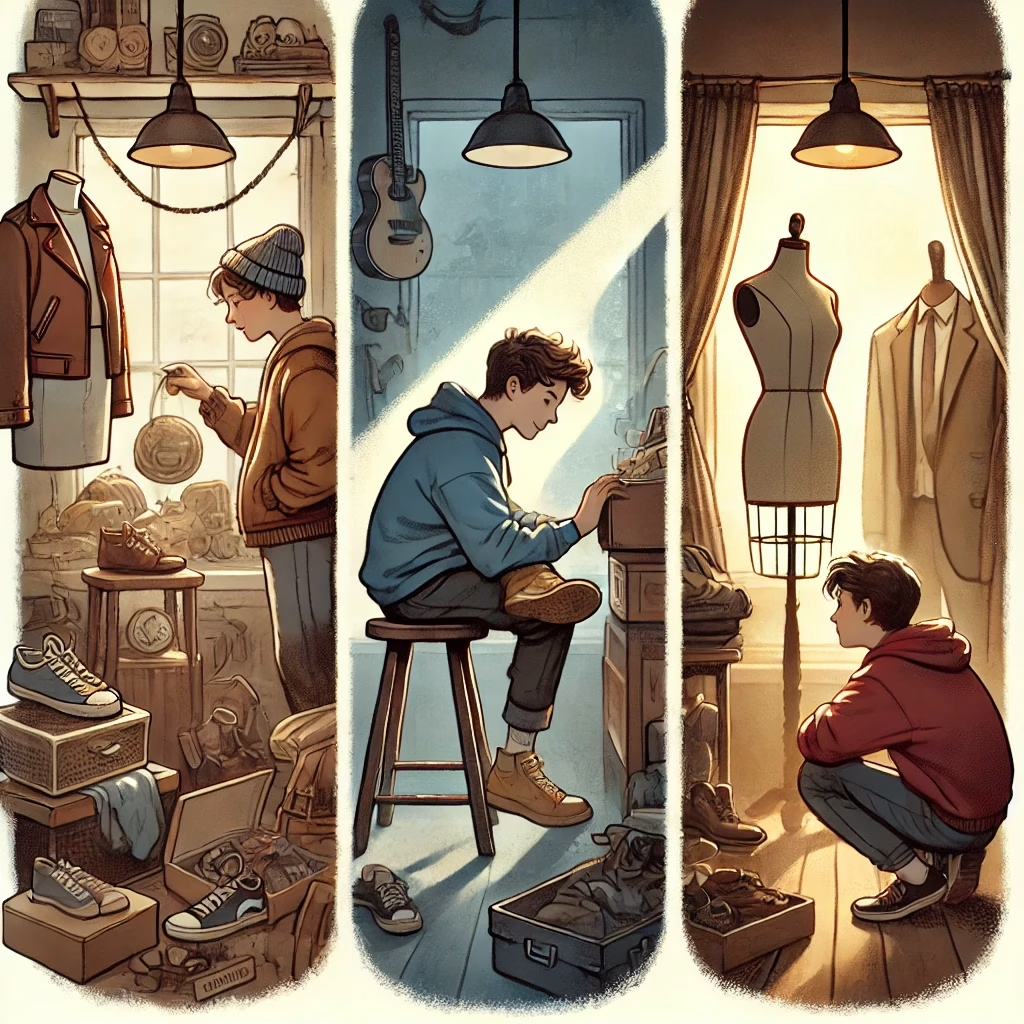
    That moment reminded me of something most adults forget—or maybe never knew: adolescent health is like a thrift store find. The kind of item most folks walk right past, scratched, stained, too much work to salvage.

    They don’t see the potential. They only see the problems. They judge from a deficit lens instead of a strengths one.

    But every now and then, somebody looks closer. They see the story underneath the dust.

    That “difficult” teen might actually be carrying leadership skills big enough to start a movement.
    That kid skipping class might be avoiding a social environment that’s slowly crushing them.
    That so-called “problem child” acting out? They might just be using the only survival tools they’ve got in a system that keeps failing them.

    Here’s what hits different: while we’re busy labeling teens with harmful titles that can stick for life, we’re missing the treasure that’s right in front of us.

    The Crisis Behind the Numbers

    The statistics are heavy, and let’s not forget—they represent more than numbers, they represent kids.

    During the pandemic, nearly 4 in 10 high school students said their mental health was poor.
    Almost half reported feeling persistently sad or hopeless—the highest level the CDC has ever recorded.
    And nearly 1 in 5 seriously thought about suicide.

    The CDC’s 2021 data reveals that 37.1% of high school students experienced poor mental health during the pandemic.

    Picture your teen’s classroom, or a crowded school bus.

    Every other seat filled with kids carrying sadness so heavy it’s hard to name.

    And this isn’t just a pandemic thing.

    It’s a long-building crisis of disconnection.

    Derek Thompson of The Atlantic called it “an extreme teenage mental health crisis,” noting that almost every measure of mental health is getting worse for every teenage demographic, all across the country.

    And here’s the part that stings: we were warned.

    Back in the late 1980s, sociologist Donna Gaines wrote Teenage Wasteland, where she showed that working-class teens who died by suicide weren’t simply “troubled.” They were trapped.

    Ignored by schools, dismissed by adults, and blamed for trying to survive systems that had already failed them.

    The conclusion?

    Teenage suicide won’t go away until kids’ bad lives do.”

    Decades later, that line still hits. Because the conditions haven’t really changed. If anything, they’ve only gotten worse, especially in a world where digital life can amplify isolation instead of easing it.

    And the fallout is clear.

    Approximately one in nine young people between 16 and 24 is disconnected from both school and work.

    These young people, sometimes called “opportunity youth” to highlight what they could bring, are nearly twice as likely to live in poverty as their connected peers.

    To me, the most revealing stat isn’t just about sadness or suicide attempts, it’s about connection.

    Students who felt close to someone at school had significantly lower rates of poor mental health (28.4% versus 45.2%), and were far less likely to attempt suicide (5.8% versus 11.9%).

    Connection is the protective factor we keep overlooking.

    The Thrift Store of American Adolescence

    In America, we treat adolescent health the way we treat thrift store shelves.

    We price talent based on marketability. Athletes and academic stars get scholarships and recognition. Everyone else is told to “be realistic.”

    We slap on labels. “Problem kids.” “At-risk youth.” “Troubled teens.” Labels that don’t just describe, they define. They shape how kids are treated and what they come to believe about themselves.

    We discard what doesn’t immediately shine. Resources and opportunities tend to flow toward the students who already look “promising,” while those who are struggling are left with scraps.

    We blame the product, not the store.

    When teens break down, we ask, “What’s wrong with them?” But if it’s happening to huge numbers of kids across the country, maybe the real question is: what’s wrong with the conditions shaping them?

    Back in the 1980s, Donna Gaines called out how so-called “burnouts” were written off because they didn’t fit the narrow pathways adults decided were valuable.

    Today’s teens may face different labels, but the logic hasn’t changed. Society still decides who’s worth investing in, and who gets left behind on the shelf.

    Ignoring that all adolescents have value, regardless.

    The Economics of Adolescent Disregard

    Look closer and you’ll see the economics baked into how we treat young people:

    • Acting like there’s only “enough” support for the kids who seem to deserve it
    • Investing in teens who make us look good on paper, while ignoring the ones who don’t
    • Praising success as individual hustle, while blaming struggle as personal failure
    • Pitting teens against each other for scraps of attention, programs, and resources

    This isn’t just bad policy. It’s bad math.

    Because what makes the thrift store metaphor so powerful isn’t only the overlooked potential, it’s the economics behind why things end up there.

    Thrift shops exist because someone no longer has a use for something.

    And that’s exactly how we treat adolescents.

    • We celebrate the high achievers who in essence, prove their worth.
    • We problematize the ones who might need a different approach.
    • We discard the ones who are damaged.

    Here’s the part we don’t say out loud: when we withhold resources from teens who need them most, everyone loses.

    If we poured support into the students labeled “difficult” or “at-risk,” we wouldn’t just change their lives, we’d strengthen the whole community.

    And the payoff isn’t hypothetical.

    We already know connection works.

    The more young people feel truly seen, supported, and connected, the better outcomes get, not just for them, but for the schools, families, and neighborhoods around them.

    Beyond “Fixing Kids”: Seeing the Treasure Hidden in Plain Sight

    What if we approached adolescent health the way skilled thrift shoppers approach the shelves?

    Instead of seeing problems to fix, we might notice:

    • A scratched record that still carries powerful music
    • A stained fabric that tells a story of resilience
    • A cracked frame that holds perspectives we desperately need

    But you don’t see that from the doorway.
    You have to walk in. Get close. Ask how it got there.
    And maybe, just maybe, choose to care for it.

    That’s what teens need, not quick fixes, but connection, recognition, and restoration.

    From Disconnection to Connection: What the Research Actually Shows

    The research is crystal clear.

    In the CDC’s study, students who were connected to others during the pandemic had lower rates of poor mental health, less persistent sadness, and fewer suicide attempts than those who weren’t.

    This has teeth.

    But here’s the problem: our systems are built for intervention, not for relationship.

    We pour resources into fixing crises after they happen, instead of building the connections that could have prevented them in the first place.

    Connection itself is prevention. When young people feel seen, supported, and rooted in community, purpose, or something bigger than themselves, the risk of poor health outcomes drops. Sadness softens. Hopelessness lifts. Futures shift.

    When you brush the dust off the research, what you find isn’t a story about “broken kids.”

    It’s a story about systemic disconnection.

    And the real treasure is hiding in plain sight. When teens feel genuine connection: to school, to family, to community, their mental health doesn’t just improve. Their whole future opens up.

    The Systems Behind the Symptoms

    This crisis didn’t come out of nowhere. It’s the result of choices and priorities that:

    • Value test scores over emotional wellbeing
    • Fund treatment instead of prevention
    • Celebrate attendance and graduation rates, while ignoring whether students actually feel connected or supported

    Layer on what Derek Thompson called a “perfect storm”: declining in-person interaction, hyper-digital connection, global instability, adult stress, and parenting shaped by fear.

    The result? Teens who are digitally saturated but emotionally starved.

    The pandemic didn’t cause this crisis, it just pulled the curtain back. It cut off the very relationships that protect mental health and exposed how fragile the foundation really was.

    And when things started falling apart?
    We didn’t ask why the foundation was so fragile.
    We asked why the kids couldn’t keep holding it up(even as adults were crumbling).

    Restoring Connection: The Path Forward

    So what would it look like to actually care for adolescents the way thrift hunters care for hidden treasures?

    Recognition: See teens not as problems to fix, but as people with strengths waiting to be developed. They already have them—it just takes a strengths lens instead of a deficit one.

    Connection: Build spaces for relationships before interventions. When connection comes first, there’s often less need for intervention later.

    Restoration: Create systems designed to repair and reconnect, not diagnose and discard.

    This isn’t abstract. It’s public health. It’s practical. It’s the blueprint we keep ignoring.

    The real question isn’t: Do these teens have value?
    The real question is: Will we finally act like they do?

    Because right now, nearly half of our high school students are telling us—through their sadness, their silence, their skipped classes—that the weight they’re carrying is too heavy.

    And most people keep walking right past, noticing only the scratches, the stains, the cracks.

    But if we take the time to look closer, to handle with care, to restore what’s been neglected—
    We’ll realize the treasure was there all along.
    What would adolescent health look like if we approached it with the care of someone who sees value in what others dismiss?

    This thrift shop metaphor ain’t just a clever turn of phrase, it’s a whole reframing of how we look at youth.

    Not as problems to fix… but as potential that’s been mis-shelved.

    It demands we ask different questions:

    • Not “What’s wrong with this teen?” but “What happened to disconnect them?”
    • Not “How do we fix them?” but “How do we connect with them?”
    • Not “What interventions work?” but “How do we prevent it from getting this bad?”

    The PHuncle’s Perspective

    Here’s the truth that no stat can fully capture:
    Every disconnected teen is both a personal tragedy—and a communal failure.

    In public health terms, they’re not isolated cases.
    They’re symptoms of a system that’s forgotten how to care.

    When nearly half of our high school students report feeling persistently sad or hopeless, we’re not just facing a mental health crisis, we’re staring into the reality of a connection crisis.

    Connection isn’t just a feel-good strategy.
    It’s the blueprint.
    The flashing neon sign that says:
    “Look here. This is the way forward.”
  • The True Cost of Cancer Prevention: How System Design Determines Who Gets Screened

    The True Cost of Cancer Prevention: How System Design Determines Who Gets Screened

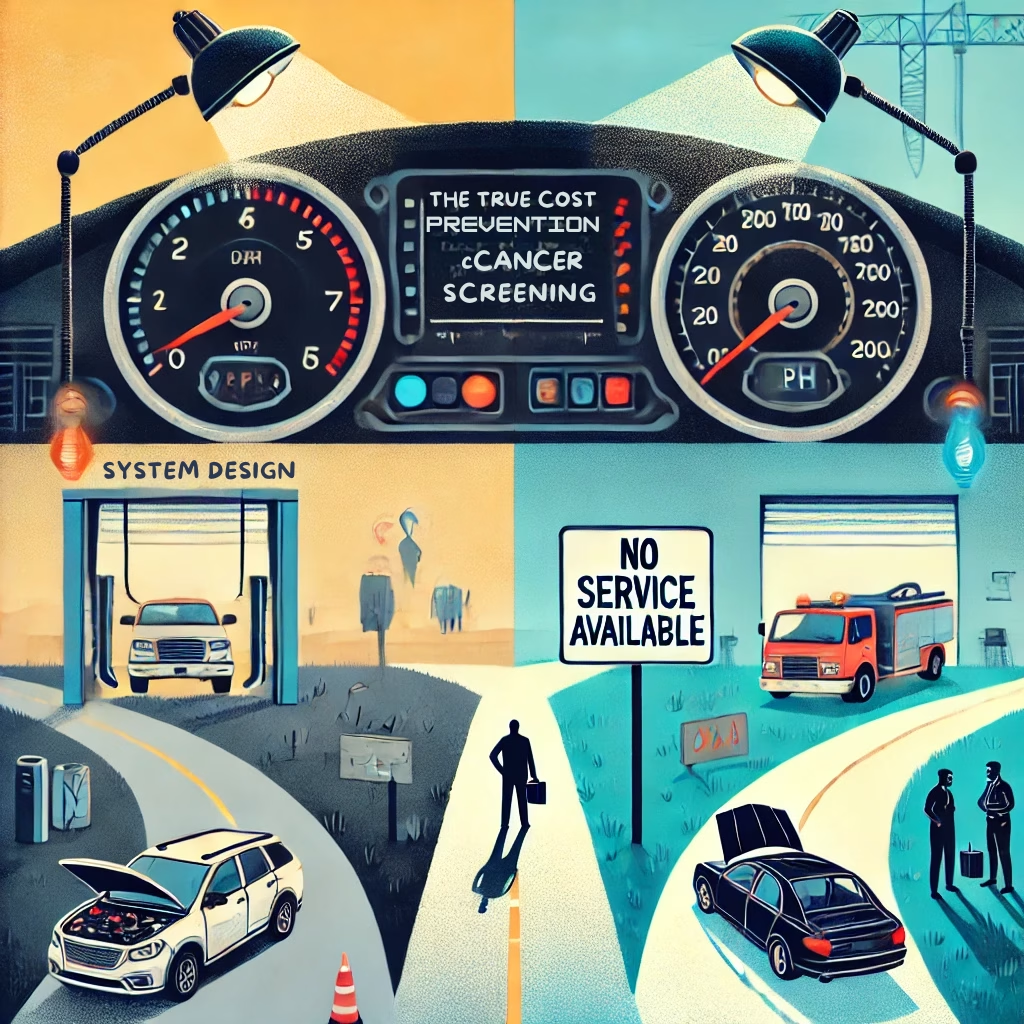
    Cancer Prevention is similar to car maintenance, except some neighborhoods ain’t even got a garage.

    When your check engine light flicks on, you got options. Take it to the shop now, wait till payday, or ignore it and hope for the best.

    But that same light hits different depending on where you live, what’s in your bank account, and whether you even have a mechanic you trust nearby.

    For over fifty years, America’s been fighting a war on cancer. Since 1971, we’ve poured over $100 billion into research, chasing miracle cures and breakthrough treatments.

    But despite all that investment, cancer remains one of our leading killers.

    We’ve been so focused on finding the perfect repair that we’ve ignored a fundamental truth: some people can’t even get their engines checked in the first place.


    The Three-Tier Garage: Understanding Prevention Levels

    Primary Prevention: The Regular Maintenance Plan

    Primary prevention is like that premium maintenance package—the one that keeps your car running so smoothly, you never even see the check engine light. It’s about stopping cancer before it starts.

    Take the HPV vaccine: one simple intervention cuts cervical cancer rates by almost 90%. That’s not just prevention—that’s damn near elimination.

    But that only works if you can access it, afford it, and trust the system offering it.

    Or look at smoking bans in public spaces.

    Between 1975 and 2000, tobacco control policies prevented almost 800,000 lung cancer deaths. Not by treating cancer, but by changing the environment so fewer people developed it in the first place.

    But here’s the thing about premium maintenance plans—they ain’t available to everybody:

    • Some communities have comprehensive school-based vaccination programs.
    • Others have underfunded clinics with long waits and limited hours.
    • Some neighborhoods banned smoking decades ago.
    • Others still have corner stores selling loosies to teenagers.
    • Some jobs offer cancer screenings as part of employee benefits.
    • Others don’t even offer paid sick leave for a doctor’s visit.

    The best maintenance plan in the world means nothing if you can’t get into the garage.


    Secondary Prevention: The Check Engine Light

    Secondary prevention is about catching cancer early, before it spreads—like noticing your check engine light the moment it starts blinking, instead of waiting until smoke pours from under the hood.

    Early detection saves lives. Catch skin cancer early, survival rates are nearly 99%.

    Catch it late? That drops below 30%.

    But screening access follows privilege pathways:

    • You need insurance that covers preventive care.
    • You need time off work that doesn’t cost you a paycheck.
    • You need transportation to facilities that might be counties away.
    • You need childcare while you get examined.
    • You need to trust that the medical system will treat you with dignity.
    • You need to believe that finding cancer won’t bankrupt your family.

    For too many Americans, that check engine light causes panic—not just because of what it means medically, but what it will cost financially. Sometimes, the darkness of not knowing feels safer than a bill you can’t pay.


    Tertiary Prevention: The Major Repair

    Once cancer takes hold, we shift to tertiary prevention—stopping it from causing further damage. This is the major engine overhaul, the desperate attempt to keep the vehicle running after the problem has already set in.

    In 2020 alone, Americans spent over $200 billion on cancer treatment. To put that in perspective, the federal government spent half that amount on prevention—for all diseases combined.

    We’re pouring resources into emergency repairs while neglecting basic maintenance.

    And here’s the bitter truth:
    The people most likely to need these expensive, last-resort interventions are the same ones least likely to access early prevention.
    If you can’t afford oil changes, you eventually need a new engine—if you can afford that either.


    The Maps to Different Garages: Systemic Inequality in Prevention

    Geographic Disparities

    Cancer prevention isn’t randomly distributed—it’s mapped onto existing patterns of privilege and disinvestment.

    • Rural residents travel twice as far for cancer care as urban patients.
    • Some counties don’t have a single dermatologist for skin cancer screenings.
    • Neighborhoods with the highest cancer rates often have the fewest screening centers.
    • Hospital closures take cancer screening equipment with them.

    In Beverly Hills, you have multiple cancer centers competing for your business. In rural Appalachia? You might be praying that lump is nothing because the nearest oncologist is two hours away.


    Economic Roadblocks

    Even when prevention technically exists, financial barriers create invisible walls.

    • A “free” screening still costs lost wages if you have no paid time off.
    • Getting checked might require spending $40 on gas.
    • Following up on a concern might mean weeks of unpaid leave.

    Counties with higher poverty rates have 12-29% higher cancer death rates than wealthier counties.
    That’s not coincidence—that’s causation.

    Poverty doesn’t just make prevention harder to access—it makes it harder to prioritize when you’re just trying to survive.


    The Trust Factor

    For Black and Indigenous communities, medical mistrust isn’t paranoia—it’s a rational response to history.

    • Tuskegee experiments.
    • Forced sterilizations.
    • J. Marion Sims’ gynecological experiments on enslaved women.
    • The unauthorized use of Henrietta Lacks’ cells.

    When your mechanic has a history of experimenting on people like you without consent, you might hesitate before letting them check under your hood.

    And that mistrust compounds other barriers:

    • Will this doctor take my symptoms seriously?
    • Will they blame my condition on my weight/lifestyle/genetics without proper examination?
    • Will they offer me the same treatments they’d offer a wealthy white patient?

    When prevention comes wrapped in a system that historically harmed your community, avoiding it isn’t irrational—it’s self-protective.


    Here’s What Hits Different: The True Cost Calculation

    When your check engine light comes on in Beverly Hills, you got:

    • Three mechanics competing for your business.
    • Courtesy cars to get you to work.
    • Platinum insurance that covers the repairs.

    But in other zip codes?
    That light stays on—not because people don’t care—but because finding out what’s wrong could destroy everything they’ve built.

    And unlike cars, you can’t trade in your body when the system lets it break down.


    Rebuilding the Prevention Infrastructure

    Community-Based Solutions

    • Mobile screening units in neighborhoods, workplaces, and churches.
    • Cancer prevention navigators to help people understand their risks.
    • Community health workers trained in cultural competency.

    Policy Interventions

    • Universal coverage for preventive care.
    • Paid leave for screenings.
    • Expanded Medicaid coverage.

    System Redesign

    • Shift funding from treatment to prevention.
    • Deploy resources based on need, not just demand.
    • Create accountability for equitable access.

    The Cancer Prevention Revolution We Need

    Cancer prevention isn’t just about individual choices—it’s about collective infrastructure.

    Because next time somebody says “Why don’t they just get screened?”—remind them:
    You can’t take your car to a shop that doesn’t exist.

    And you can’t navigate a prevention system that wasn’t built with you in mind.


    If this resonates, share it. Push for policy. Donate where it matters. Because prevention shouldn’t be a privilege—it should be a guarantee.

  • Global Health Systems: How International Health Challenges Connect and Affect Everyone

    Global Health Systems: How International Health Challenges Connect and Affect Everyone

    Oh, you a frequent traveller? Here’s a word about about global health that’ll change how you think about your next flight delay.

    You know how one cancelled flight in Chicago can mess up somebody’s travel plans in Miami?

    That’s not just an airline problem – that’s a perfect picture of how global health works.

    Except instead of missed connections, we’re talking about missed opportunities to save lives.

    Before we even step into this airport, let’s get something straight: Global health ain’t just international health with a fancy new name. It evolved from public health and tropical medicine like how airports evolved from simple airfields – adding layers of complexity, connection, and purpose along the way.

    The “global” in global health? It’s about the scope of the problems, not just where they happen. Think of it like how an airport handles both domestic and international flights – the principles are the same, but the scale and complexity level up.

    Global health ain’t just about treating sick people – it’s about preventing illness, promoting health equity, and recognizing that good ideas can take off from any terminal.

    It’s like running an airport where every gate contributes to keeping the whole system flowing, not just the premium terminals.

    The Terminal Reality: Where Your Gate Determines Your Fate

    Global health is like running an international airport – but this ain’t just about which terminals got the fanciest lounges.

    This is about running a whole system that’s built on understanding how everything connects: the weather patterns affecting flight paths (ecological factors), the history of who built which runways and why (historical context), the different ways passengers navigate the space (cultural practices), and the complex politics of who controls the airways (political-economic dynamics).

    Think about it like this: When a flight gets delayed, it ain’t just about the weather. It’s about:

    • Historical decisions about where to build airports
    • Cultural patterns in how different communities travel
    • Economic powers controlling the routes
    • Political forces determining who gets priority landing
    • Ecological factors shaping what’s possible where

    Some terminals got cutting-edge everything while others can’t keep the lights on. And just like how a power outage in one terminal affects the whole airport’s operations, health challenges in one part of the world ripple through the entire system.

    This ain’t just about moving people from point A to point B – it’s about understanding how every factor, from the ground up, shapes who gets to make the journey.

    Think about it: When COVID-19 hit, some terminals had state-of-the-art everything – ventilation systems, screening protocols, emergency response teams.

    Others?

    They were running on backup generators and hope. But that virus didn’t care which terminal you started in. It booked flights everywhere.

    The Connecting Flights: Disease Doesn’t Need a Passport

    While we’re out here acting like each country’s health system is its own separate terminal, diseases are booking international flights without even checking in. But the way these health challenges play out?

    That’s shaped by everything from local weather patterns to centuries of colonial history.

    Take tuberculosis – a disease we’ve known how to cure for decades.

    In some terminals, TB is basically extinct. In others? It’s still filling up gates like it’s peak travel season. And you know why?

    It ain’t just about the bacteria. It’s about:

    • Historical patterns of who got resources and who got exploited
    • Cultural factors affecting how people seek and receive care
    • Ecological conditions that make some communities more vulnerable
    • Political-economic decisions about which diseases get priority
    • Social structures determining who gets access to treatment

    Partners in Health figured this out years ago.

    They looked at TB in places like Haiti and Peru and said, “Hold up – this ain’t just about the disease being hard to treat. This is about understanding how everything from colonial history to local food systems shapes who gets sick and who gets better.”

    They showed us that solving health challenges means dealing with all the factors that create them in the first place.

    The Vaccine Gap: First Class vs. Economy Class Healthcare

    And don’t get me started on the vaccine gap. It’s like having a safety protocol that only applies to certain gates:

    • Some terminals got vaccines stacked to the ceiling
    • Others can’t even keep their basic meds refrigerated
    • We’re letting doses expire in rich countries while other nations can’t get their first shipments
    • And then acting surprised when new variants develop in unprotected populations

    Remember that smallpox story?

    That was a rare moment when the whole airport worked together.

    They didn’t just throw resources at premium terminals – they redesigned the whole system.

    Created a vaccine that could handle the heat when terminals didn’t have fancy cooling systems. Built distribution networks that reached every gate.

    Beyond the Premium Lounge: Rethinking Global Health Solutions

    Here’s the thing about global health that most folks don’t get: It ain’t about rich countries “helping” poor ones.

    It’s about creating a system where every society contributes its knowledge, resources, and experience. It’s about recognizing that in this airport, we’re all connecting flights.

    Think about it like this: Global health is like an airport where every terminal is both teaching and learning.

    It’s interdisciplinary – meaning we got people from all kinds of backgrounds working together, from medical scientists to community organizers, from policy makers to local healers.

    This ain’t just doctors and nurses running the show – it’s epidemiologists tracking disease patterns like air traffic controllers track flights, environmental health specialists maintaining our atmosphere like airport maintenance crews, and community health workers connecting with people like ground staff helping passengers find their way.

    Take Uganda’s HIV response in the ’90s.

    While premium terminals were throwing billions at pharmaceutical solutions, Uganda developed the ABC approach that dramatically dropped infection rates.

    When this approach started showing results, instead of learning from it, some power players in premium terminals tried to hijack the message.

    The U.S. conservatives looked at ABC like it was a buffet – taking what matched their agenda and leaving the rest. They turned “Abstain, Be faithful, use Condoms” into “Abstinence-only, Because we said so, Can’t talk about condoms.”

    That’s like seeing a successful three-engine plane and deciding only one engine matters because it matches your politics.

    But here’s the real lesson: Solutions can take off from any terminal.

    Yeah, ABC had its limitations – focusing on individual behavior when we know systemic factors drive epidemics. And pushing abstinence-only messaging?

    That’s like telling people not to fly instead of making air travel safer.

    But the rates dropped.

    The approach worked in its context.

    And instead of learning from that success – understanding how it worked, why it worked, what elements could be adapted – some folks were more concerned about controlling the narrative than controlling the epidemic.

    This is exactly what I’m talking about when I say good ideas don’t need a first-class ticket to work.

    But we gotta be real about how power and politics can turn effective local solutions into ideological weapons.

    Sometimes the biggest barrier to global health ain’t the diseases – it’s the folks who think wisdom only flows one way.

    Building Better Terminals: Infrastructure for Health Equity

    Take the TransAfrican Highway – it ain’t just about roads. It’s about:

    • Getting medicine to clinics faster
    • Connecting people to better healthcare
    • Building networks that strengthen entire health systems
    • Creating infrastructure that supports community health

    Now South Africa and Ghana are building vaccine factories.

    That’s not just about production – it’s about power.

    About terminals controlling their own health destiny instead of waiting for premium gates to share their supplies.

    The Future Flight Path: Where Do We Go From Here?

    We need to stop treating global health like it’s about charity and start seeing it for what it is – a connected system where every terminal matters. That means:

    1. Building capacity in every terminal, not just the premium ones
    2. Supporting local solutions instead of just exporting “premium” approaches
    3. Creating infrastructure that connects and strengthens entire regions
    4. Recognizing that health innovations can take off from any terminal

    We’re All on This Flight Together

    Next time somebody talks about global health like it’s just rich countries “saving” poor ones, remind them: In this airport, we’re all connected flights.

    And maybe the solution we need is sitting in a terminal we’ve been ignoring.

    Global health ain’t just about studying problems or treating diseases – it’s about understanding how everything connects. It’s about recognizing that:

    • Health challenges emerge from complex historical contexts
    • Solutions must respect and work within cultural frameworks
    • Ecological factors shape both problems and possibilities
    • Political-economic forces determine who gets what care
    • Every community’s knowledge and experience matters

    It’s like trying to run an airport where you gotta consider:

    • The historical reasons why some routes exist and others don’t
    • The cultural practices that shape how people use the space
    • The ecological factors affecting where and how we can build
    • The political decisions about who controls what
    • The economic forces determining who can access services

    That’s why real solutions can’t just be copied and pasted from one terminal to another.

    They gotta be built from the ground up, considering all these factors, working with local knowledge, and understanding how everything connects.

    It’s about building a system where health equity isn’t just a destination – it’s the whole damn flight plan.

    Because in this airport?

    We’re all trying to reach the same destination: a healthier world for everybody, no matter which terminal they call home.

    But getting there means understanding that every flight path is shaped by history, culture, ecology, and power – and our solutions need to account for all of it.

    Because here’s the truth: Your health is only as secure as the most neglected terminal in our global airport.

    We can keep building luxury lounges in the same old spots, or we can create an airport where every terminal works for everybody.

    Where a health crisis in any terminal gets the same rapid response.

    Where good ideas can take off no matter where they originate.

    That’s not just better global health – that’s better health for everyone.

    And in this airport?

    We’re all just trying to reach the same destination: a healthier world for everybody, no matter which terminal they call home.

  • Pandemic Preparedness Shouldn’t Need an ROI

    Pandemic Preparedness Shouldn’t Need an ROI

    Think about running a theater production.

    Every successful show has understudies ready to step in, backup sets stored for emergencies, and protocols drilled until they’re muscle memory.

    But when it comes to pandemic preparedness?

    We’re out here running the biggest show on Earth with half the safety nets we need in the name of penny pinching upfront and calling it “fiscal responsibility.”

    The Paradox of Prevention: When Success Becomes Invisible

    A word about public health, it’s the ultimate victim of its own success.

    When it’s working perfectly, if you’re not in this industry, you likely don’t see it.

    Nobody’s writing news stories about the pandemic that didn’t happen, the outbreak that got contained, or the lives saved by prevention. No flowers to be given.

    The 2014 Ebola outbreak barely touched America—not because it couldn’t, but because our public health system was actually functioning.

    We had rapid response teams ready to deploy, contact tracing systems in place, and international coordination networks active. The system worked exactly as designed.

    But instead of celebrating this success, we did something wild: We started cutting those same programs that kept us safe. By 2018, the CDC’s global disease outbreak prevention work had been reduced from 49 countries to just 10.

    And presently, as of February 16th 2025?

    We just fired nearly half of the disease detectives from the CDC’s Epidemic Intelligence Service (EIS). The very specialists trained to catch outbreaks before they spiral out of control.

    This isn’t just another budget cut. This isn’t pruning inefficiencies…

    This is a deliberate decision to weaken our defenses right when new threats like bird flu are emerging threats.

    When Success Becomes Invisible, Disaster Becomes Inevitable

    We’re not just underfunding public health, we’re actively dismantling our early warning systems at the exact moment we need them most.

    It’s like firing your fire department while smoke is rising on the horizon.

    And when that fire hits?

    Don’t be surprised when there’s nobody left to sound the alarm.

    The EIS officers we just let go? They’re the same kind of disease detectives who:

    • Tracked down the first SARS cases
    • Contained the 2014 Ebola outbreak
    • Identified the link between Zika and birth defects
    • Led the initial COVID-19 response

    These aren’t just jobs we’re cutting, they’re our first line of defense against the next pandemic.

    And we’re choosing to eliminate them right when multiple alarm bells are ringing. That’s not just short-sighted, it’s dangerously negligent.

    Behind the Curtain: A System Set Up to Fail

    Look at what happens when you treat public health like it’s optional.

    During COVID, health departments across the country were trying to track a modern pandemic using technology from the last century. We had major counties attempting to manage outbreak data with fax machines and Excel spreadsheets from the ’90s.

    Not because they wanted to – because they had to do what they had to with what they had.

    That’s not just scattered examples. This is systemic breakdown by design.

    The Real Cost of Budget Cuts

    Since 2008, we’ve lost 55,000 public health workers nationwide.

    Think about that.

    While the population grew, while health threats multiplied, while we needed more eyes on the ground, there’s a mass public health exodus cutting qualified pros by nearly a quarter.

    So what does that look like?

    Rural health departments handling pandemic response with skeleton crews.

    Three or four people trying to manage what should be a 20-person operation.

    Ever work in retail where you’re swamped and need backup? There, it’s just unruly customers upset they’re not receiving fast enough service.

    With this? They out here

    • Tracking disease spread with systems older than the interns using them
    • Managing community outreach in multiple languages with machine translation because they can’t afford interpreters (if that)
    • Running 24/7 emergency operations with staff already working double shifts
    • And somehow trying to maintain regular public health services at the same time

    The Infrastructure We Need

    A functioning public health system isn’t a luxury, it’s basic infrastructure.

    When we actually invest, here’s what success looks like:

    At the Federal Level

    Remember how quickly we contained SARS in 2003? That wasn’t luck – that was a fully funded CDC doing its job. We’re talking about:

    • Rapid response teams ready to deploy
    • Strategic stockpiles maintained and ready
    • Research capabilities primed for new threats
    • Coordination systems that don’t have to be built mid-crisis
    • The Strategic National Stockpile supplying emergency resources ready to be deployed at the drop
    • The National Institutes of Health’s groundwork enabling rapid vaccine development
    • The Food and Drug Administration’s food safety systems preventing mass outbreaks

    At the State Level

    • Laboratory networks that can scale up testing
    • Training programs for rapid response teams
    • Data systems that actually talk to each other
    • Emergency operations centers ready to activate
    • Massachusetts’ healthcare system reducing preventable hospitalizations
    • New York’s pandemic data systems improving response time
    • California’s early warning system for environmental health threats

    At the Local Level

    Community health workers reduce disparities because they know their neighborhoods. This means:

    • Trusted faces in vulnerable communities
    • Rapid response teams who understand local context
    • Communication systems built on existing relationships
    • Resources allocated based on need, not politics
    • School-based health centers improving access for children
    • Neighborhood response teams preparing for crises

    Beyond Borders: Global Health Security

    Our global health system is only as strong as its weakest link. The evidence is clear:

    Success Stories That Show What’s Possible

    • Smallpox: Eradicated through global cooperation
    • Polio: Nearly eliminated through international effort
    • HIV/AIDS: Death rate dropped 47% through coordinated programs
    • Ebola: Contained through rapid international response

    Current Challenges We Can’t Ignore

    Climate change isn’t just an environmental issue – it’s creating new disease patterns. We’re facing:

    • Deforestation bringing humans and wildlife closer
    • Antibiotic resistance spreading globally
    • Supply chain vulnerabilities exposed
    • New pathogens emerging in unexpected places

    Environmental Protection: The First Line of Defense

    Let me tell you something about deforestation and disease – they’re connected in ways that’ll keep you up at night.

    When we tear down forests, we’re not just losing trees. We’re:

    • Forcing wildlife into human areas they never meant to be in
    • Creating new transmission routes for diseases
    • Disrupting natural barriers that kept viruses contained
    • Setting up a microbial meet-and-greet nobody asked for

    The Numbers Don’t Lie

    • Every 1% of forest lost increases new disease risk by 4%
    • We’ve already lost 40% of global forests
    • Climate change is pushing species into new territories
    • Diseases are showing up where they’ve never been before

    This ain’t just about saving trees – it’s about keeping natural firewalls intact. Because once those barriers break down? The microbial world has a free pass to remix in ways we’ve never seen before.

    The Economic Reality

    Let’s talk real numbers:

    Prevention Savings

    • Every $1 in public health = $5.60 saved in healthcare costs
    • Vaccine programs return $44 for every $1 invested
    • Prevention programs save $5.3 billion annually
    • Early warning systems prevent $360 billion in losses

    Crisis Costs

    • COVID-19: $16 trillion in the U.S. alone
    • 2014 Ebola: $53 billion
    • 2009 H1N1: $45-55 billion
    • Annual flu: $11.2 billion

    The Show We Need to Run

    The solution isn’t just better healthcare – it’s fundamental system change:

    Immediate Needs

    • Restore those EIS positions we just cut
    • Modernize our surveillance systems
    • Build robust laboratory networks
    • Strengthen community programs

    Long-term Investments

    • Universal healthcare access
    • Global early warning systems
    • Environmental protection
    • Research capabilities

    Here’s what hits different: None of these investments work alone. They’re all connected:

    • Environmental protection keeps new diseases contained
    • Universal healthcare helps us spot problems early
    • Early warning systems tell us where to look
    • Research helps us understand what we’re seeing

    And all of it together? That’s how you prevent a pandemic instead of just responding to one.

    The Bottom Line

    Because here’s the truth: We’re not actually saving money by cutting public health funding. We’re just choosing to pay more later, in dollars and in lives. The question isn’t whether we can afford prevention – it’s whether we can afford to keep choosing crisis over preparation.

    Next time somebody suggests we can’t afford pandemic preparation, remind them: The cost of prevention is always less than the price of failure. And in public health, failure isn’t measured in ticket sales – it’s measured in lives lost.

    And that’s no metaphor – that’s reality.

  • Healthcare Access? Insurance Doesn’t Guarantee Care in US

    Healthcare Access? Insurance Doesn’t Guarantee Care in US

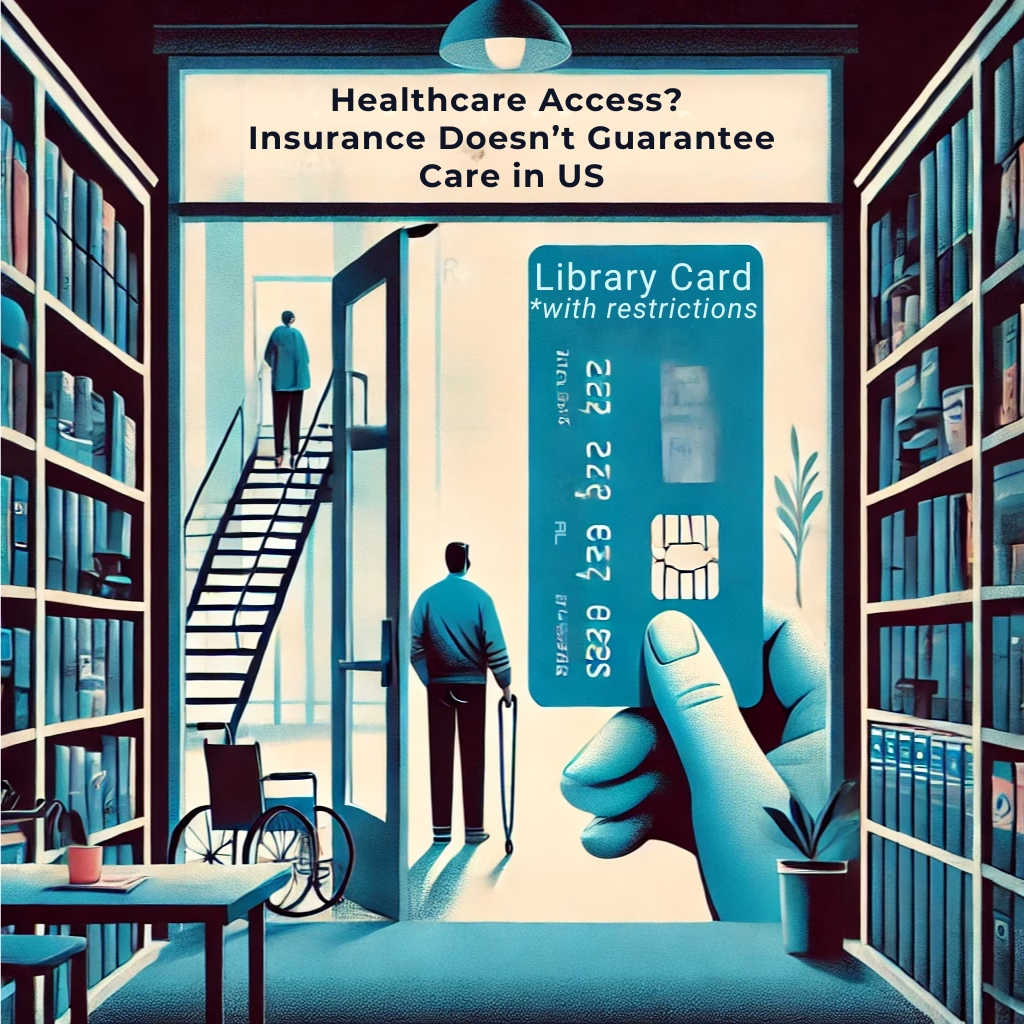
    Healthcare Access in America is like having a library card for a system designed to make reading damn near impossible.

    And trust me, that ain’t by accident.

    Picture this: You finally get that shiny insurance card after jumping through all the hoops.

    Maybe your job provides it, maybe you navigated the marketplace, maybe you qualified for Medicaid. But when you try to use it?

    The library’s closed, the books are in a language you don’t understand, and the elevator’s broken. Meanwhile, other folks stroll right in like they own the place.

    According to fresh CDC data, 21.7% of adults — that’s more than 1 in 5 people — couldn’t access healthcare in 2022 despite being insured. And the reasons? They’ll make your blood boil.

    American Healthcare Access aka the Dysfunctional Library

    We’re spending 17% of our GDP on healthcare — nearly $4.5 trillion in 2022 alone.

    That’s double what other rich countries spend. We’re building the fanciest medical libraries in the world, buying the most expensive equipment, paying the highest salaries… and somehow still running a system where basic care feels like trying to check out a book from a dungeon.

    Imagine a library where:

    • The building’s only open during hours most working folks can’t make it
    • Most books are written in languages the community doesn’t speak
    • The elevator’s broken, making access impossible for some
    • And half the librarians won’t even accept your “approved” library card
    • Every floor requires different membership levels
    • And the late fees can bankrupt your whole family

    Sound ridiculous? Welcome to American healthcare, where having insurance is just your ticket to a whole new maze of obstacles.

    The Price Tag of Dysfunction: Breaking Down America’s Healthcare Numbers

    Let’s talk about what we’re actually buying with all this money, because these numbers will have you questioning everything:

    Administrative Waste: The Hidden Tax

    • We spend about $1,055 per person just on administrative costs
    • That’s four times what Canada spends for their entire system’s administration
    • We’re literally spending more on paperwork than some countries spend on actual healthcare

    The Network Shell Game

    • 26 million Americans still don’t have coverage
    • A quarter of working Americans are “underinsured”
    • Even with insurance, 4.4% couldn’t find providers accepting their plans
    • Networks change more often than some people change their oil

    The Global Embarrassment

    The Commonwealth Fund’s Mirror, Mirror 2024 report just dropped the receipts:

    • We rank dead last among 10 high-income countries for healthcare performance
    • We’re spending way more for way less
    • Countries like Australia and the Netherlands are getting better results while spending half what we do

    This isn't about not having enough money.

    We're spending more than enough — we're just spending it wrong. We built a system that's great at making profit but terrible at providing care.

    The Barriers Behind the Card: Why Healthcare Access Isn't Just About Insurance

    The Time Poverty Trap

    Remember that 12.5% who couldn't get care because they were "too busy"?

    • 14% of women vs. 10.9% of men faced this issue
    • For working-age adults (18-34), it jumps to 18.4%
    • Nearly 20% of low-wage workers report skipping care due to work conflicts

    When you're working two jobs just to keep the lights on, "just take time off" isn't just unhelpful advice — it's a slap in the face.

    And for hourly workers? Taking time off for healthcare means choosing between your health and your rent.

    The Language of Exclusion

    Imagine finally getting into that library just to find out none of the books are in your language. Now imagine it's your health on the line:

    • Limited English proficiency affects over 25 million Americans
    • Cultural competency remains an afterthought in medical education
    • Studies show non-English speakers receive lower quality care
    • Medical terminology is its own language barrier, even for native speakers

    The Geographic Games

    That 4.6% who couldn't physically get to a provider? That's just the tip of the iceberg:

    • Rural hospital closures have created healthcare deserts across America
    • Over 80% of rural counties lack adequate OB-GYN care
    • Some communities face 3+ hour drives for specialty care
    • Public transportation to medical facilities is often nonexistent

    The Network Trap

    Let's talk about that 4.4% who couldn't find providers accepting their insurance:

    • Provider directories are often outdated
    • Networks change without notice
    • Specialists are particularly hard to access
    • Emergency care often leads to surprise billing despite network status

    The Real Cost of Restricted Healthcare Access: Beyond the Numbers

    When we talk about healthcare access, we're not just talking about convenience — we're talking about life and death. Let's break down what these barriers actually cost us:

    Individual Impact: When Care Delayed Becomes Care Denied

    Community Cost: The Ripple Effect

    This ain't just about individual tragedies — it's about community devastation:

    • Health disparities that follow zip codes
    • Economic ripple effects when breadwinners can't work
    • Communities losing hospitals and never getting them back
    • Generational trauma from a system that treats some lives as more valuable than others
    • Loss of community wealth through medical debt

    The Equity Crisis

    The Commonwealth Fund's report exposed some ugly truths:

    • The U.S. ranks last on equity among peer nations
    • Income-related health disparities are highest in America
    • Racial and ethnic minorities face compounded barriers
    • Even with similar education and income, disparities persist

    So I repeat, how exactly is this healthcare access?

    Global Receipts: How Other Countries Make It Work

    Other libraries are ran, like well, accessible libraries, where members and even non members can benefit from services and offerings.

    The Netherlands Model

    • Universal coverage without the maze
    • Primary care that's actually accessible
    • After-hours care as a standard
    • Administrative simplicity

    Australia's Approach

    • Mixed public-private system that actually works
    • Better outcomes across the board
    • Half our spending per capita
    • Focus on prevention

    Japan's Success Story

    • Highest life expectancy
    • Universal coverage that works
    • Cultural adaptation of care
    • Cost control without compromise

    These countries aren't doing anything magical. They just decided healthcare shouldn't be a luxury brand.

    They built systems where:

    • Administrative costs don't eat half the budget
    • Prevention doesn't require premium access
    • Universal coverage means actually being able to use services
    • And profit isn't prioritized over people

    The Solution: Beyond Just Handing Out Library Cards

    We need more than just insurance cards — we need a complete system redesign:

    Building a Better System: Beyond Band-Aid Solutions

    Real solutions ain't about slapping new paint on a crumbling building. When your library's fundamentally broken, you don't just extend the hours – you rebuild the whole damn thing from the ground up.

    Structural Solutions: Redesigning the Whole Building

    Healthcare Access Redesign: Making the Library Actually Usable

    Look at the Netherlands – they didn't just build prettier buildings, they redesigned the whole concept of access:

    • Extended hours that match real life, not banker's hours
    • Evening and weekend care as standard, not luxury
    • Mobile clinics bringing care to communities
    • Virtual care options that actually work
    • Walk-in services for basic needs
    • Care coordination that doesn't require a PhD to navigate

    You know what hits different about their system? They designed it for users, not profits. Wild concept, right?

    Administrative Overhaul: Stopping the Paper Chase

    We're spending $1,055 per person just on pushing paper – that's four times what Canada spends on their entire administrative system. Here's how we fix that mess:

    • One standardized billing system (like every other developed nation)
    • Universal forms that actually make sense
    • Automated eligibility verification
    • Real-time cost transparency
    • Simplified authorization processes
    • Digital health records that actually talk to each other

    The wildest part? These aren't radical ideas – they're standard practice everywhere else in the developed world.

    Provider Support: Giving Healthcare Workers What They Need

    Australia's killing it here. They've figured out that supporting providers means better care for everyone:

    • Fair distribution of medical resources based on community needs
    • Robust community health worker programs
    • Real incentives for serving underserved areas
    • Mandatory cultural competency training
    • Work-life balance that prevents burnout
    • Education support that doesn't create lifetime debt

    When providers aren't drowning in paperwork and debt, they can actually focus on what matters – patient care.

    Policy Prescriptions: Changing the Rules of the Game

    Let's talk about what real policy change looks like – because "thoughts and prayers" don't fix broken systems.

    Immediate Actions: Stop the Bleeding

    We need immediate interventions that can start saving lives today:

    Administrative Simplification:

    • Standardized billing codes across all providers
    • Universal prior authorization processes
    • Simplified enrollment systems
    • Automated eligibility verification
    • Real-time benefits checking

    Network Adequacy Requirements:

    • Minimum provider-to-patient ratios by specialty
    • Maximum wait times for appointments
    • Geographic distribution requirements
    • After-hours care mandates
    • Specialist availability guarantees

    Transportation and Access:

    • Covered medical transportation
    • Mobile health services
    • Telehealth integration
    • Community-based care centers
    • Home care options

    Language and Cultural Access:

    • Mandatory interpreter services
    • Translated materials requirements
    • Cultural competency standards
    • Community health worker integration
    • Diverse provider recruitment

    Long-term Changes: Building for the Future

    Here's what hits different about long-term change – it ain't just about fixing what's broken, it's about building what should have been there all along:

    Universal Healthcare Access Framework:

    • Coverage that follows people, not jobs
    • Standardized benefit packages
    • Elimination of network restrictions
    • Simplified enrollment processes
    • Automatic coverage at birth

    Provider Incentive Reform:

    • Value-based care that actually values care
    • Support for primary care providers
    • Rural practice incentives
    • Education debt relief
    • Work-life balance protection

    Community Health Investment:

    • Local health center funding
    • Public health infrastructure
    • Community health worker programs
    • Prevention programs
    • Social determinants addressing

    Prevention-Focused Funding:

    • Early intervention programs
    • Health education initiatives
    • Screening program support
    • Environmental health investment
    • Social support integration

    Here's the truth about these changes: They ain't radical – they're rational.

    Every other developed nation has figured this out. The only thing stopping us is the profit machine that's been built on our broken system.

    If everyone's doing something different and we're the only ones with that big of a problem, it seems like we should probably reflect on our operations, no?

    Like in what world can we keep deflecting and projecting, saying we number one and the best when we spend the most on healthcare but get the least, while having the lowest stats?

    Remember: The Netherlands didn't just decide one day to have better healthcare – they built it, step by step, policy by policy.

    Australia didn't magically get better outcomes – they designed a system that actually serves people.

    And Japan? They didn't achieve the world's highest life expectancy by accident – they prioritized access over profit.

    Oh, and there was a point where American life expectancy was leaps and bounds above Japans', so, impactful chnges have been made there.

    The solutions are right there. The evidence is clear. The only question is: Are we ready to admit that our current system is designed to fail most people while profiting a few?

    And even past admitting, will we confront this and reform?

    The Bottom Line: Time to Build a Better System

    Let me be clear: Healthcare access isn't about not having enough money.

    We're spending more than enough — we're just spending it wrong. We built a system that's great at making profit but terrible at providing care.

    The solution isn't just giving everyone a library card — it's about:

    • Building healthcare facilities where people actually live
    • Providing care that speaks the community's language
    • Designing systems that work for everyone, not just the privileged
    • And finally admitting that access without usability isn't access at all

    Next time somebody says "just get insurance," remind them: A library card doesn't mean much if you can't actually use the library.

    And right now? America's running the world's most expensive library system that a majority of its community members can't actually use.

    It's time to stop pretending this is about individual choice and start admitting it's about systemic design. Because until we fix the system, we're just handing out cards to locked buildings and calling it healthcare access.

    The cost of getting this wrong isn't just measured in dollars — it's measured in lives. And that's a price none of us should be willing to pay anymore.

  • The Public Health Approach to STIs: Moving Beyond Stigma to System Solutions

    The Public Health Approach to STIs: Moving Beyond Stigma to System Solutions

    America deserves an L for how it handles STIs.

    We’ve taken what should be straightforward public health issues and buried them under mountains of moral judgment, systemic barriers, and manufactured shame.

    The result?

    A “prevention” approach that’s not only failing to keep vulnerable populations safer – it’s actively harming those who need care most.

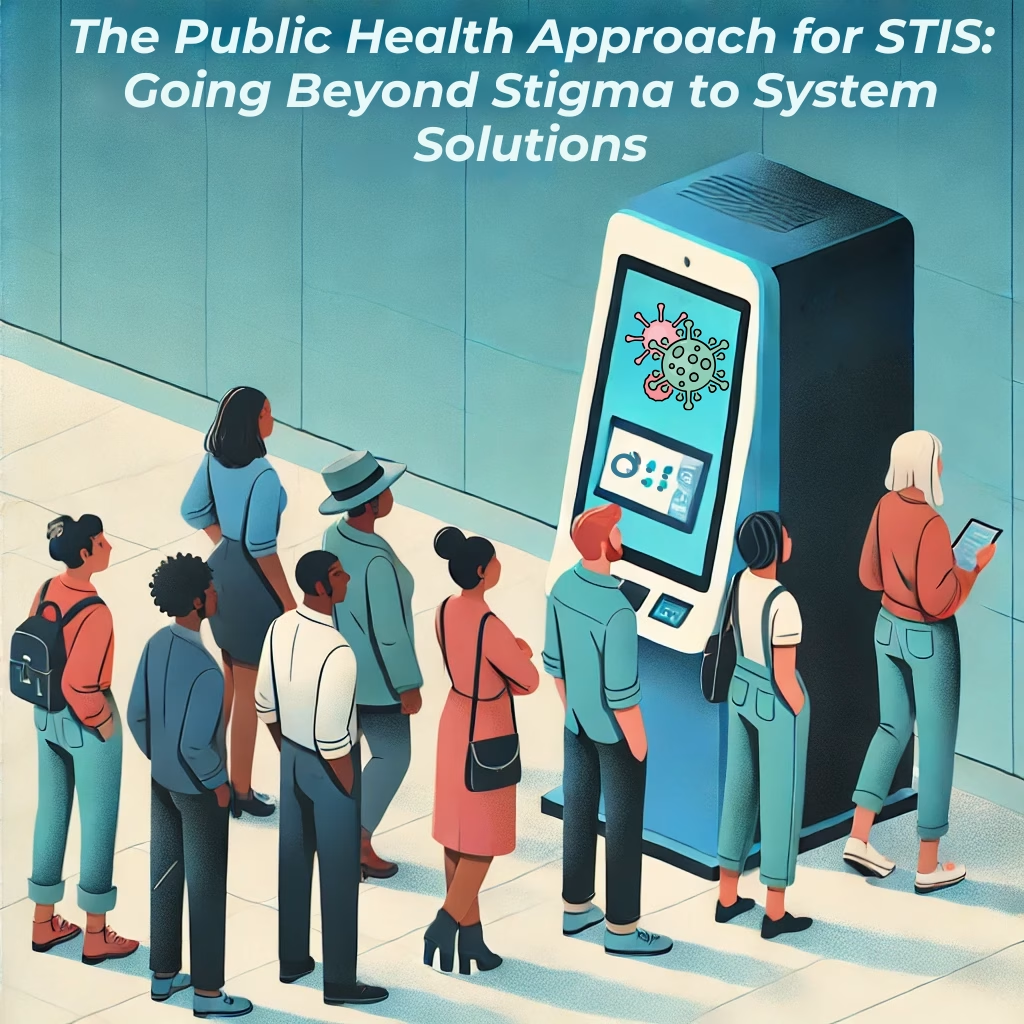
    You know those touchscreen kiosks that have been popping up at places you can order food, or purchase tickets, or see where you are in a mall?

    touchscreen to depict how people, in the moment, likely don't reflect on exposure for this everyday activity.

    You’ve used them,

    I’ve used them.

    Everyone’s tapping on the same screen, right?

    Nobody stops to think too hard about who touched it last in that moment.

    You can’t see what’s left behind.

    And strategically touching in one corner, or a specific part of the screen? That’s not enough to keep you germ-free.

    Through this lens, we act like only certain people are “the type” to get STIs—just like we pretend only certain people are spreading germs.

    But viruses and bacteria don’t care about your demographics, your relationship status, or how careful you think you are.

    The System Behind the Stigma

    The numbers don’t lie—but they do vary.

    Depending on the source, estimates for sexually transmitted infections (STIs) in America paint a stark picture: 20 million new infections annually (CDC, 2024), up to 110 million total cases when including long-term prevalence (2008 data), and rising rates of preventable infections like chlamydia, gonorrhea, and syphilis.

    Confused by the math?

    You’re not alone.

    Different studies measure different things—new infections, cumulative cases, or even specific groups like youth or women.

    But no matter how you slice it, the takeaway is the same: STIs are rampant, and still poses a challenge

    These are preventable infections that we’re failing to prevent.

    Instead of focusing on accessible screening and care, we’re too busy pointing fingers, victim blaming, and piling on stigma, and coaxing the fire that increases resistance to testing, or having an open dialogue about sexual health

    That’s not a public health strategy—that’s a public health failure.

    These aren’t just statistics – they’re symptoms of a broken system. Every infection represents a point where prevention failed, where barriers won over access, where shame won over health.

    In a country with our resources, that’s not just unfortunate – it’s engineered failure.

    We gotta address this, cause the systems we’ve built around sexual health don’t just reflect our failures—they actively create them.

    How STIs Are Spread: Let’s Keep It Simple

    Sexually transmitted infections spread through specific types of sexual contact. That includes:

    • Condomless vaginal, anal, or oral sex: Direct contact with infected body fluids, such as semen, vaginal fluids, or blood, can transmit infections like gonorrhea, chlamydia, or HIV.
    • Skin-to-skin contact: Infections like herpes and HPV can spread through close contact with infected skin, even if there are no visible symptoms.
    • Sharing needles or syringes: Bloodborne STIs like HIV and hepatitis B or C can be transmitted this way.
    • Childbirth or breastfeeding: Some STIs, like HIV or syphilis, can be passed from parent to child during delivery or through breast milk.

    It’s not about who you are—it’s about exposure and prevention.

    And just like germs on a touchscreen, STIs don’t discriminate.(the touchscreen metaphor is strictly to make a connection between an activity most engage in, mindlessly even, that can expose you. It is not to share how STIs are transmitted.)

    Everyone is vulnerable.

    That’s why prevention requires planning ahead, protecting yourself and others, and knowing the facts.

    The shift from Sexually Transmitted Disease(STD) to Sexually Transmitted Infection(STI) isn’t just alphabet soup – it’s a fundamental change in how we understand sexual health:

    • Moving from punishment to prevention
    • Recognizing medical accuracy (not all infections become diseases)
    • Shifting from moral panic to public health approach
    • Understanding transmission as a community health issue, not an individual failing

    The Legacy of Fear: How AIDS Shaped American STIs

    When AIDS emerged in the 1980s, America’s response revealed exactly how our healthcare system treats “undesirable” populations. Instead of:

    • Urgent public health response
    • Emergency research funding
    • Community support systems
    • Prevention infrastructure
    • Healthcare mobilization

    We got:

    • Years of government silence
    • Media stigmatization
    • Religious condemnation
    • Systematic neglect
    • Criminalization of illness

    By 1985, over 12,000 Americans had died – yet President Reagan hadn’t even said “AIDS” publicly.

    What prompted Reagan to ultimately speak up, was his friend Rock Hudson dying related to AIDS, a high profile case.

    This wasn’t just negligence – it was intentional silence.

    The message was clear: some lives mattered less than others.

    The 1980s AIDS crisis didn’t just create stigma – it fundamentally shaped how America approaches sexual health, creating patterns we’re still struggling to break:

    • Defunding public health infrastructure
    • Privatizing healthcare access
    • Provider bias impact care quality
    • Turning health issues into moral crusades
    • Creating lasting distrust in medical systems

    When crack cocaine hit Black communities, we built prisons.

    When AIDS affected gay communities, we turned our backs.

    But when opioids hit suburban white communities? Suddenly we’re talking about “public health approaches” and “harm reduction.”

    Same script, different cast. The reoccuring theme of our history is showing that until a specific subset of the population is afflicted, it doesn’t matter how many lives are lost.

    There’s no impetus or urgency to intervene.

    But how many more lives could be saved if at the first sign of adverse health outcomes, prevention soon follows?

    Reimagining the Platform: Building Systems that Actually Work

    When we stop treating STIs as moral issues and start treating them as the public health challenges they are, real solutions emerge. Here’s what works:

    Evidence-based prevention requires:

    • Convenient testing locations
    • Flexible clinic hours
    • Mobile health units
    • Self-testing options
    • Telehealth services

    But more importantly, it requires dismantling barriers like:

    • Insurance requirements ID checks
    • Parental consent rules
    • Geographic isolation
    • Financial hurdles

    Education Over Evasion

    Real sex education means:

    • Age-appropriate comprehensive information
    • Evidence-based prevention strategies
    • Clear communication about testing
    • Resources for accessing care
    • Support for making informed decisions

    Not

    • Shame-based messaging
    • Abstinence-only programs
    • Fear tactics
    • Judgment
    • Misinformation

    Community-Led Solutions

    Successful programs:

    • Partner with local organizations
    • Hire from affected communities
    • Reflect cultural values
    • Build on existing trust
    • Address specific needs

    Communities know what they need. They just need the resources and support to build it.


    The Failed Logic of “Just Don’t”

    Abstinence only sex education is like telling someone they don’t want bad credit.

    You might’ve been told “just don’t get bad credit” the same way we heard “just don’t have sex.”

    Both messages focus entirely on avoidance without teaching the tools for healthy engagement.

    It’s all subtract, no add.

    Here’s what hits different: When you only teach avoidance, you’re not actually preparing anybody for reality.

    • How credit actually works
    • The benefits of good financial health
    • Tools for responsible management
    • What to do if things go wrong
    • How to recover from mistakes

    Sound familiar?

    Because that’s exactly how abstinence-only education approached sexual health

    • Just don’t do it
    • No discussion of protection
    • No information about testing
    • No guidance on healthy relationships
    • No real-world preparation

    The Cost of Not Knowing

    When we focus only on “don’t,” we miss the whole “do” part of the equation. Just like how avoiding credit entirely means missing out on:

    • Building a strong credit history
    • Learning responsible management
    • Getting better interest rates
    • Accessing financial opportunities
    • Developing financial literacy

    Abstinence-only education left whole generations missing:

    • Knowledge about their bodies
    • Understanding of safe practices
    • Access to prevention tools
    • Comfort discussing sexual health
    • Resources for making informed decisions

    Building Better Systems

    Public health approaches succeed where “just don’t” fails because they:

    • Start with reality, not ideology
    • Provide comprehensive education
    • Offer multiple prevention tools
    • Create supportive environments
    • Focus on health, not shame

    It’s the difference between “avoid bad credit” and “here’s how to build good financial health.”

    One leaves you scared to engage; the other empowers you to engage responsibly.

    It’s like telling someone “just don’t get bad credit” without explaining:

    The Skills Gap: Beyond “Just Don’t”

    When we only teach avoidance, we’re not just missing information – we’re missing crucial skill development.

    Credit Management vs. Sexual Health

    Teaching credit:

    • How to read credit reports
    • Understanding interest rates
    • Knowing when to use credit
    • Skills for budget management
    • Recovery strategies if things go wrong

    Teaching sexual health:

    • Understanding all prevention options
    • Knowing how different methods work
    • Communication skills with partners
    • Regular testing and healthcare navigation
    • Access to accurate health information

    Building Better Systems: From Shame to Solutions

    We know what works. Public health victories from clean water to vaccine programs have shown us the blueprint.

    When we remove shame, increase access, and treat health as a community priority rather than a personal moral test, we get results.

    What Real Solutions Look Like

    Multiple Access Points

    • Same-day testing options
    • Mobile health units serving remote areas
    • School-based health centers
    • Community health workers
    • Telehealth options where appropriate

    Remove Financial Barriers

    • Universal coverage for STI testing
    • Free or low-cost prevention tools
    • Affordable treatment options
    • Transportation support
    • Elimination of hidden costs

    Cultural Competency in Care

    • Providers who reflect their communities
    • Language-appropriate services
    • LGBTQ+ inclusive care
    • Youth-friendly environments
    • Trust-building initiatives

    Comprehensive Education

    • Evidence-based sex education
    • Clear prevention information
    • Healthcare navigation support
    • Partner communication tools
    • Resource connection

    Policy Changes That Matter

    • Increased public health funding
    • Protected access to care
    • Expanded clinic hours
    • Reduced insurance barriers
    • Streamlined testing processes

    Making Prevention Possible

    The goal isn’t just making testing available – it’s making prevention possible. This means:

    • Regular screening becomes routine
    • Prevention tools are accessible
    • Treatment starts early
    • Communities build trust
    • Health improves systematically

    Making Solutions Stick: What Research Shows Works

    The evidence is clear about how to implement effective STI prevention and treatment. Studies show several key approaches that actually move the needle:

    Modernize Testing Approaches

    Research shows point-of-care testing and “sample-first” approaches can:

    • Reduce time between testing and treatment
    • Increase appropriate treatment from 52% to 100%
    • Lower costs for both clinics and patients
    • Save 9-13 minutes per visit
    • Improve antimicrobial stewardship

    Rethink Clinic Flow

    Successful programs have:

    • Implemented express testing options
    • Created efficient triage systems
    • Used self-sampling programs
    • Reduced wait times
    • Maximized staff efficiency

    Leverage Electronic Health Systems

    Studies show electronic systems can:

    • Increase testing rates from 5.5% to 45.2%
    • Provide automated screening reminders
    • Track patient follow-up
    • Improve provider compliance
    • Support evidence-based care

    Build Provider Support

    Research identifies key needs:

    • Clear communication protocols
    • Staff training and education
    • Resource allocation guidance
    • Cultural competency development
    • Administrative support

    The Investment That Pays Off

    When we invest in these solutions:

    • Prevention becomes possible
    • Treatment starts earlier
    • Costs go down
    • Health outcomes improve
    • Communities benefit

    Moving Forward: The System Upgrade We Need

    Every successful public health intervention in history required both community buy-in and policy support. STI prevention is no different.

    For these solutions to work, we need:

    • Sustained public health funding
    • Protected access to care
    • Community-led programs
    • Comprehensive education
    • Barrier-free prevention

    We know what works:

    • Point-of-care testing that delivers quick results
    • Systems that prioritize access over judgment
    • Programs that meet people where they are
    • Prevention that’s possible, not premium
    • Care that’s competent and compassionate

    But here’s the truth: None of these solutions work in isolation. Just like you can’t solve systemic problems with individual solutions, you can’t fix broken systems with isolated fixes.

    When we stop treating STIs as moral failings and start treating them as the public health challenges they are, we can build systems that actually protect community health. Because shame never prevented a single infection – but access to care? That’s prevention that works.

  • Premium Access Only: How Healthcare Became a Subscription Service

    Premium Access Only: How Healthcare Became a Subscription Service

    Let me tell you something about streaming services. You think having “choices” means you’re in control, right? Netflix, Hulu, Disney+, HBO Max — pick your platform, pick your plan, watch what you want.

    But then your favorite show disappears overnight. That series you were halfway through? Deleted from existence. The content you thought you had “access” to? Turns out you were just renting the illusion of choice, all while paying cable prices — actually, more than cable prices — for five different subscriptions. At least with cable, you knew all your shows were in one place. Now you’re paying multiple companies for the right to maybe watch your shows… until they decide to move them somewhere else or delete them entirely.

    Some folks got every premium subscription — no ads, highest quality, watch on all devices, download for offline. Others are stuck sharing passwords, dealing with buffering, and getting hit with more ads than your Facebook feed during holiday season.

    And here’s why that matters…

    When Healthcare Goes Premium

    Sound familiar? Because this is exactly how our health system operates. Just like streaming platforms, we’ve got:

    • Different tiers of access based on what you can pay
    • “Choice” that’s really just picking between pre-selected options
    • Content that can disappear without warning (employers changing the plan)
    • Services that keep getting more expensive while offering less
    • Corporations deciding what you get access to, when, and how

    And just when you thought this couldn’t get more dystopian, have you heard of Northwell Health Studios?

    New York’s largest health system announced the opening of its own film studio to create “promotional content.” You read that right – a healthcare system is now in the entertainment business. Not satisfied with just controlling your health options, seems they want to control the narrative too.

    Here’s what hits different: Imagine being a patient with a rare condition, knowing the same system that’s supposed to care for you is eyeing your struggle as their next potential content drop. What happens when you don’t want your health journey turned into their next Netflix series? How freely can you say “no” to being filmed when the same people control your access to care?

    We’ve seen how the medical system treats bodies as resources to be exploited – just look at Henrietta Lacks. They straight up stole her cells without consent, turned them into a mass-production research goldmine, and created treatments and vaccines that generated billions in profit. Her family just got a settlement in 2024. Now, healthcare systems are building whole studios, and communities can’t even get basic care.

    Politicians are watching healthcare costs soar while pocketing donations from the same systems causing the problem. These political decisions ripple through communities like a bad streaming connection – except instead of buffering, you’re dealing with:

    • Entire counties without a single OB-GYN because it “wasn’t profitable” to keep maternity wards open. That’s not about medical need – that’s about politicians letting healthcare systems cherry-pick their markets like streaming platforms cherry-pick their content.
    • Communities where the only remaining hospitals were just bought by a religious healthcare system. Suddenly, certain reproductive services “violate their values”. They’re even blocking evidence-based practices like tai chi because they wrongly assume it’s “religious”(what’s going on in my neck of the woods) – as if healthcare should come with content restrictions like a PG-13 rating. Culture and bias literally determine what care you can access.
    • Rural clinics getting shut down because they couldn’t generate enough “subscriber revenue” to satisfy their new corporate owners. The same way streaming platforms cancel shows with loyal but smaller audiences, healthcare systems are deciding some communities just don’t have enough “market potential.”

    And just like how streaming services keep jacking up prices while adding restrictions – looking at you, Netflix, going from “love is sharing a password” to “that’ll be an extra $7.99 for your cousin to watch” – healthcare systems keep charging more while offering less. And you do remember the share your password philosophy Netflix lived by? Now they’re cracking down on the same feature they used to promote, doing that whole “part of your household” thing. And you know what’s coming – other platforms are watching those profits roll in and getting ready to follow suit. Once one company finds a new way to squeeze more money out of you, it’s only a matter of time before they all do it. Just like how healthcare systems used to talk about ‘patient choice’ before they merged into monopolies that leave you no choice at all.

    They’re not even trying to hide it anymore. Both industries are basically saying “We got you hooked on the service, now watch us squeeze you for everything we can.”

    The Global Channel Guide

    Other countries figured this out ages ago. They’re running their healthcare like a public streaming service – one platform, accessible to everyone, no confusing tiers or hidden fees. Meanwhile, we’re over here with a system that’s got more turns than a Hot Wheels track – and every loop costs extra.

    Taiwan has a system where you can walk into a doctor’s office the same day, like pulling up any show you want, without checking five different streaming services first. The UK, Japan, Germany? They’re all running healthcare systems that cost less and work better than ours – and these aren’t some socialist utopias; they’re free market economies just like us.

    The difference? They built systems. We built a market.

    And yeah, their doctors might not make as much as U.S. doctors, but their medical school doesn’t cost the same as a small island, either. Their taxes actually go toward public services instead of… whatever we’re doing with ours. It’s like they’re paying a reasonable subscription fee that covers everything while we’re over here getting charged separately for the platform, the content, the HD upgrade, the multiple screens, ability to watch offline, AND still seeing ads.

    When people say “America’s too big” or “too complicated” for universal healthcare, this is a good reminder that we’re one of the richest nations in the world.

    Remember when getting packages on Sunday was “impossible”? Then Amazon decided there was money in it, and suddenly, the impossible became inevitable. Funny how that works – when there’s profit involved, systems find a way to change. The infrastructure, the workforce, the whole damn culture around commercialism and convenience shifted because somebody saw dollar signs.

    Behind the Scenes: The Power Players

    Want to see how this plays out in real-time? Look at Disney+ absorbing Hulu and bundling with ESPN+. One company is slowly consuming everything until they control what you can watch, how you can watch it, and how much you’ll pay. Sound familiar? That’s exactly what’s happening with healthcare systems buying up local hospitals, private practices, and specialty clinics.

    These mergers ain’t about “better service” or “increased options” – they’re about control. Every time Disney acquires another studio, they’re not thinking about what’s best for viewers. They’re thinking about market share and profit margins. The same thing happens when big healthcare systems swallow up local clinics. They’ll tell you it’s about “integrated care” and “efficiency,” but watch how quickly prices go up and options go down once they’re the only game in town.

    The exploitation just got a rebrand. Instead of stealing cells, they’re harvesting stories. They’re out here talking about “leveraging the power of storytelling” through their entertainment divisions while people can’t afford insulin. They’ll film dramatic surgeries and heartwarming recoveries, but you won’t see episodes about:

    • The patient rationing insulin because their “network” doesn’t cover the full prescription
    • The rural community driving two hours for basic care after their local hospital got swallowed up
    • The family drowning in medical debt even though they “did everything right”
    • The clinic that closed because it wasn’t “profitable” enough for the healthcare system

    These healthcare systems want to be both the main character AND the director. They want to control your care AND control how people think about healthcare. It’s like if Amazon owned Netflix and made documentaries about how great their warehouse working conditions are.

    Changing the Channel: Making Strategic Moves

    But here’s the thing about transforming systems — it takes more than just good ideas. It takes political will. It takes sustained pressure from people who refuse to accept less. The same way streaming platforms only changed their practices when enough subscribers complained (looking at you, Netflix password sharing), healthcare systems only change when there’s enough pressure from the public AND policymakers.

    We need:

    • Politicians who answer to communities, not corporations
    • Policies that treat healthcare as a right, not a revenue stream
    • Laws that break up these healthcare monopolies
    • Communities having real power in healthcare decisions
    • Advocacy that goes beyond just “raising awareness”

    While streaming services are out here fighting over who gets to show The Office, healthcare systems are deciding which communities get to have emergency rooms. While platforms argue about password sharing, people are sharing insulin because they can’t afford their own. And while executives debate new pricing tiers, families are debating whether they can afford to take their kid to the doctor.

    Time to Change the Program

    The tools for change are right there:

    • Community organizing that builds real power
    • Policy advocacy that demands better
    • Data that exposes what’s really happening
    • Stories that make decision makers uncomfortable
    • Solutions that have already worked elsewhere (though, remember that each community is unique and interventions one place may not neatly be adapted)

    Next time you’re frustrated about having to subscribe to yet another streaming service just to watch one show, remember: That’s annoying, but it’s just entertainment. Now imagine if that same system controlled whether you could see a doctor or afford medication.

    Want to help change the channel on healthcare? Here’s where to start:

    • Get informed about health policy decisions in your area (your local hospital shouldn’t be harder to track than your Netflix watchlist)
    • Connect with health advocacy organizations in your community
    • Share stories about how healthcare access (or lack of it) affects your community
    • Show up to local government meetings where healthcare decisions are made
    • Support politicians who treat healthcare as a right, not a premium package

    Because while streaming services might have you thinking twice about what shows you can watch, these healthcare monopolies have people thinking twice about whether they can afford to stay alive. And that’s one show we need to cancel.

  • The War on Drugs to Public Health Crisis: America’s Shifting Response to Substance Use

    The War on Drugs to Public Health Crisis: America’s Shifting Response to Substance Use

    Supporting people with substance use disorders is like being a lifeguard at a beach with strong currents. But for decades, America hasn’t been acting like a lifeguard at all – we’ve been more like prison wardens patrolling the shore, deciding who deserves rescue and who deserves punishment.

    Think about it – real lifeguards don’t:

    • Judge who decides to swim where
    • Lecture people about making better choices
    • Wait until somebody’s drowning to set up safety systems

    They’re there to save lives, period. No questions asked, no moral judgments passed.

    But when crack cocaine hit Black communities in the 80s? Instead of setting up rescue stations, we built more prisons. Instead of throwing out life preservers, we threw people behind bars. Instead of training more lifeguards, we hired more police. The message was clear: some swimmers deserve rescue, others deserve handcuffs.

    When the opioid crisis started affecting White suburban communities, suddenly we’re all about harm reduction and treatment-first approaches. The same system that criminalized Black and Brown communities for decades is now preaching compassion and understanding. We went from “just say no” to “let’s understand the root causes” real quick – but only for certain beaches.

    Let’s be real about what this shift means:

    • When Black communities were drowning, we blamed the swimmers
    • When White communities started struggling, we blamed the current
    • Same waters, different response – and that ain’t no coincidence

    The most twisted part? While thousands of people sit in cells for marijuana possession, corporate America is making millions selling it legally. Same water, different rules – depending on who’s swimming and who’s selling the swimsuits.

    From Punishment to Public Health: How We Got Here


    In 1971, America decided to treat a health crisis like a military operation. Nixon declared drugs “public enemy number one” – effectively declaring war on his own citizens. But this wasn’t about public health; it was about public control.

    Despite only 4% of American adults having tried cannabis in 1969, nearly half the country believed drugs were a “serious problem” in their communities. Made me go “hmm…”– that’s manufactured fear for you.

    Let me tell you what that looked like:

    • The Controlled Substances Act of 1970 creating arbitrary “schedules” of drugs
    • The DEA forming in ’73 to militarize what should’ve been healthcare
    • Reagan’s ’86 Anti-Drug Abuse Act dropping $1.7 billion on “enforcement”
    • Communities of color becoming occupied territories under the guise of public safety
    • Prevention and treatment replaced by surveillance and punishment

    Nixon’s own domestic policy chief later admitted the truth – this was never about drugs. “We couldn’t make it illegal to be against the war or Black,” he said, “but by getting the public to associate drugs with specific communities… we could disrupt those communities.”

    Given this, is its shocking?:

    This wasn’t just bad policy – it was policy working exactly as designed. We turned beaches into battlegrounds, lifeguards into soldiers, and people needing help into “enemies of the state.” All while telling ourselves this was for the “public good.”

    A Tale of Two Crises: Who Gets a Lifeguard?

    The 1980s crack epidemic showed exactly how this system was designed to work. When crack cocaine hit lower-income Black and Hispanic communities, the response wasn’t treatment centers and support – it was sirens and cell blocks.

    And it was reflected and reinforced through policy:

    • “Three strikes” laws turning drug users into career criminals
    • Civil forfeiture letting police departments seize assets before conviction
    • Mandatory minimums stripping judges of any humanity in sentencing
    • And media painting crack users as “super predators” while portraying cocaine users as opulent and powerful

    Fast forward to today’s opioid crisis, and suddenly we’re all about “harm reduction” and “treatment-first approaches.” Same crisis, different community, completely different response.

    When pharmaceutical companies flooded White suburban communities with opioids, we didn’t militarize the police – we medicalized the response. No tanks rolling through affluent neighborhoods. No mandatory minimums for doctor shopping. Instead, we got:

    • Treatment centers instead of prison cells
    • Good Samaritan laws protecting people who report overdoses
    • Narcan distribution instead of “Just Say No” campaigns
    • And media coverage focusing on the “tragedy” of addiction

    For the record, happy for the progress but it tastes very bitter, considering:

    • 65% of incarcerated people meet addiction criteria
    • Only 11% ever get treatment
    • Half can’t find jobs their first year out
    • And the system calls this “rehabilitation”

    We’re finally starting to treat addiction like the public health crisis it always was. But we can’t ignore the bodies in our wake – the communities destroyed, the families separated, the lives derailed because they had the wrong zip code when their crisis hit.

    Beyond the Headlines: The Reality of America’s Response

    When we talk about substance use disorders, we need to understand something: While the response has shifted from pure criminalization to something more complex, the inequities are just wearing different clothes.

    Let’s break down what “disorder” looks like in 2024:

    For some communities, substance use gets rebranded as:

    • “Mommy needs her wine” culture making alcoholism cute
    • “Adult sippy cup” turning dependency into a lifestyle brand
    • “Self-medication” for the professional class
    • “Stress relief” when it happens in the suburbs

    For others, it’s still:

    • A mark of moral failure
    • A family shame that can’t be discussed
    • A “choice” they should “just stop making”
    • A reason to be excluded from family gatherings

    We’ve moved from zero tolerance to selective understanding. The war on drugs might be winding down, but we’re still fighting battles over who deserves compassion and who gets consequences.

    • White collar workers get “stress leave” and rehab
    • Service workers get termination notices
    • Suburban substance use gets therapy referrals
    • Urban substance use gets police responses
    • Some families rally with support groups
    • Others change the locks and block numbers

    The system’s evolved from pure punishment to something more insidious: a two-tier response where some folks get treatment while others still get handcuffs.

    We’re not just criminalizing addiction anymore – we’re gentrifying it.

    And even when families want to understand, many still can’t grasp that “just quit” isn’t a treatment plan. Recovery houses are full of people whose families implore them to “just stop” while being unwilling or unable to understand the deeper roots of substance use disorder.

    The opioid epidemic finally forced America to admit something we should’ve known decades ago: substance use disorder is a health condition, not a moral failing. But that recognition came with a price tag – and guess who’s still paying it?

    Think about how treatment access plays out in real time:

    Some communities get:

    • Insurance-covered rehab facilities
    • Medicated-supported recovery options
    • Integrated mental health support
    • Employment protection during recovery
    • Family counseling services

    While others face:

    • Waitlists for underfunded programs
    • Treatment centers hours away from home, sometimes in different states
    • Choice between treatment or keeping their job
    • Programs they can’t afford to enter
    • Services that don’t understand their culture or community

    We’re watching substance use disorder get rebranded and remarketed like a premium service. The same system that criminalized crack is now selling “wellness” and “recovery” – but only to those who can afford the subscription.

    Because let’s be real about how this gentrification of addiction treatment works:

    • Private facilities market “holistic healing journeys”
    • Public programs struggle to keep their doors open
    • Some neighborhoods get recovery yoga studios
    • Others get overcrowded methadone clinics
    • Wealthy communities get discrete “wellness centers”
    • Poor communities get visible treatment lines around the block

    The cultural rebrand of substance use isn’t just about changing attitudes – it’s about who profits from the change. When White, wealthy communities started demanding compassionate care, the market responded. Addiction treatment became an industry, recovery became a lifestyle brand, and sobriety became something you could buy if you had the means.

    But for every luxury rehab center opening in a wealthy area, there’s a community program closing in the inner city. For every corporate “mental health day” policy, there’s a service worker losing their job for missing a shift to attend treatment. For every influencer posting about their “sobriety journey,” there’s someone sitting in jail for the crime of being addicted while poor.

    We’ve moved from criminalizing addiction to commodifying recovery.

    And while that’s better than prison cells, it’s still leaving too many people drowning while the lifeguards check membership cards.

    The Real Cost of Recovery: More Than Just Willpower

    Let me be crystal clear about something: Getting and staying sober is one of the hardest journeys anyone can take. Whether you’re doing it in a luxury facility or a community program, whether you’ve got family support or you’re fighting alone – that battle is real, and every single person maintaining their sobriety deserves recognition for that work.

    • Every day sober is a victory
    • Every person in treatment is showing courage
    • Every step toward healing matters
    • And everyone deserves the support they need to make it

    It’s not about minimizing anyone’s struggle or journey. It’s about recognizing that while the challenge of addiction touches all communities, the pathways to recovery aren’t equally accessible.

    Think about what recovery requires:

    • Time away from work
    • Safe spaces to heal
    • Medical support
    • Community understanding
    • Access to treatment
    • Ongoing maintenance
    • Support systems

    Some folks get all these pieces built into their recovery journey. Others have to fight for each one individually, often having to choose between treatment and survival. The strength it takes to get sober doesn’t change – but the obstacles sure do.

    We need a system where everyone has access to the support they need, not just those who can afford the premium package. Because sobriety shouldn’t be a luxury brand – it should be a right that comes with being human.

    Building a Better Lifeguard System: What Real Support Looks Like

    When we talk about equitable recovery support, we’re not just discussing treatment access – we’re talking about reimagining the entire system that surrounds substance use disorder. Because right now? We’re running a pay-to-play recovery model in a system designed for profit, not healing.

    Think about what recovery actually requires:

    Immediate Needs:

    • Safe detox facilities within reach
    • Treatment that doesn’t bankrupt families
    • Work protection during recovery
    • Childcare during treatment sessions
    • Transportation to and from programs
    • Cultural competency in care

    Long-Term Support:

    • Ongoing mental health services
    • Housing stability
    • Employment opportunities
    • Community reintegration
    • Family reconciliation support
    • Reoccurence prevention networks

    While luxury rehabs market “holistic healing journeys” complete with yoga and organic meals, community programs struggle to provide basic services. We’re watching recovery get turned into a commodity while basic harm reduction still faces political resistance.

    Because equitable support would mean:

    • Treatment on demand, not waitlists
    • Programs that work with your work schedule, not against it
    • Services in your language and cultural context
    • Support that doesn’t require choosing between rent and recovery
    • Care that follows you after discharge
    • Communities equipped to support healing, not just punishment

    The gaps aren’t just about money – they’re about how we fundamentally approach recovery:

    Current System:

    • Individual responsibility focus
    • Treatment in isolation
    • One-size-fits-all approaches
    • Success measured by abstinence alone
    • Support dependent on insurance
    • Communities left out of solutions

    What We Need:

    • Community-based healing
    • Integrated support networks
    • Culturally responsive care
    • Multiple pathways to recovery
    • Universal access to treatment
    • Community-led solutions

    The solution isn’t just building more treatment centers – it’s about building better systems of support. Because recovery isn’t just about getting sober – it’s about having the resources, support, and dignity to maintain it.

    Beyond Band-Aids: The Policy Changes We Need

    Let’s talk about what real policy reform looks like. Because while “thoughts and prayers” and awareness ribbons are nice, they don’t build treatment centers or protect people seeking help.

    Think about our current approach:

    • Criminalizing addiction while corporations profit from legal drugs
    • Spending billions on enforcement but pennies on prevention
    • Building prisons faster than treatment facilities
    • Letting insurance companies decide who deserves care
    • Maintaining policies that punish people for seeking help

    Here’s what hits different: Other countries have already shown us what works. While we’re debating whether addiction is a moral failing, they’re implementing evidence-based solutions that actually save lives:

    • Safe consumption sites reducing overdose deaths
    • Decriminalization focusing resources on treatment
    • Universal healthcare covering addiction services
    • Employment protection for people in recovery
    • Community-based prevention programs that work

    Think about the policy changes we need:

    • Full decriminalization of personal use
    • Mandatory insurance coverage for treatment
    • Federal funding for community recovery programs
    • Protection against employment discrimination
    • Expungement of prior drug convictions
    • Investment in prevention over punishment
    • Universal access to harm reduction services

    From Policy to Practice: Building Real Solutions

    But policy changes are just the blueprint – we need to build the actual structure. Here’s what that looks like:

    Immediate Actions:

    • Expanding Medicaid coverage for treatment
    • Funding mobile treatment units
    • Creating rapid-response crisis teams
    • Supporting peer recovery programs
    • Establishing community health workers
    • Building recovery-ready workplaces

    Long-term Investments:

    • Training more addiction specialists
    • Creating integrated care systems
    • Developing prevention infrastructure
    • Building recovery housing
    • Supporting family reunification
    • Funding research into treatment

    The solution isn’t just throwing money at the problem – it’s about fundamentally reshaping how we approach substance use disorder. Because until we build systems that treat addiction as a health condition deserving of care rather than a crime deserving of punishment, we’ll keep watching some communities drown while others get premium rescue services.

    Next time somebody suggests we can’t afford these changes, remind them: We’re already paying the price – in lost lives, broken families, and shattered communities. The question isn’t whether we can afford to change; it’s whether we can afford not to.

    The Future We Need: From War Zones to Safe Harbors

    Let me tell you about OnPoint NYC. While politicians debate whether people deserve help, they’re out here showing what real solutions look like. No judgment, no morality tests, just trained lifeguards ready to pull people from dangerous waters and help them find their way to shore.

    Think about what they provide:

    • Safe spaces for consumption that prevent overdose deaths
    • Medical care without questioning whether someone “deserves” it
    • Support services that meet people where they are
    • Community-based solutions that actually work
    • Dignity in place of discrimination

    While the system keeps debating whether to throw life preservers or handcuffs, organizations like OnPoint are proving that compassion saves more lives than criminalization ever could.

    Reflect on the history with 2024 eyes:

    • We’ve watched the War on Drugs destroy communities
    • We’ve seen punishment fail as prevention
    • We’ve proven that treatment works better than prison
    • We’ve documented how support beats stigma
    • And we’re still arguing about whether to fund solutions we know work

    The pathway forward isn’t a mystery. We know what works:

    • Community-based harm reduction
    • Universal access to treatment
    • Support over surveillance
    • Healthcare instead of handcuffs
    • Investment in prevention
    • Resources for recovery

    We’ve spent fifty years treating substance use like a war to be won instead of a health crisis to be solved. We’ve watched some communities get rescue boats while others got prison bars. We’ve seen treatment become a luxury brand while basic care remains out of reach.

    It’s time to stop pretending we don’t know how to fix this. It’s time to stop acting like some lives matter more than others. It’s time to build a system where every lifeguard station is fully staffed, every beach has rescue equipment, and nobody drowns because they couldn’t afford the premium rescue package.

    Because at the end of the day, we’re all in these waters together. And the only way we make it to shore is by making sure everyone has a chance to swim.

  • What Causes Health Disparities? Breaking It Down | PHuncle Explains

    What Causes Health Disparities? Breaking It Down | PHuncle Explains

    When people get sick more often in certain neighborhoods, it’s easy to blame individual choices. But let me tell you why that’s like focusing on the leaves while ignoring the roots.

    Take Type 2 diabetes rates in different neighborhoods. Easy to say, “Well, people should just eat better,” right? But what happens when the closest grocery store is two bus rides away while the corner store selling processed foods is right there?

    And let me break down this transportation piece real quick – having your own car isn’t just about convenience. It’s about access to better jobs, better healthcare, better food options, better everything.

    But between car payments, insurance, maintenance, and gas, that’s a major investment many can’t swing. Even if they could, some neighborhoods are designed to make driving more difficult—poor road maintenance, limited parking, and safety concerns.

    So when we talk about “food choices,” we’re really talking about:

    • Transportation access
    • Neighborhood design
    • Time constraints
    • Resource availability
    • Economic barriers

    Digging Up the Real Causes

    First, let’s be clear about what we mean by health disparities: these are differences between groups in health outcomes that are systematic, unjust, and – this is key – avoidable. We’re not talking about random chance here. We’re talking about predictable patterns that follow lines of advantage and disadvantage. Here are some examples of what these may look like.

    Food Access and Chronic Disease:

    • Food deserts in certain neighborhoods
    • Limited access to fresh produce
    • Higher concentration of fast food
    • Time and transportation barriers
    • Result: Higher rates of type 2 diabetes, heart disease

    Maternal Health Disparities:

    • Limited healthcare access in certain areas
    • Fewer prenatal care options
    • Transportation challenges
    • Stress from systemic racism
    • Result: Higher rates of low birth weight and complications

    These disparities can also show up across different realms:

    Economic Stability:

    • Higher stress-related conditions in financially insecure communities
    • Limited ability to take time off for preventive care
    • Choosing between medicine and other necessities
    • Result: Worse management of chronic conditions

    Neighborhood and Built Environment:

    • Food deserts leading to poor nutrition
    • Lack of safe spaces for physical activity
    • Environmental hazards in certain areas
    • Result: Higher rates of chronic diseases and respiratory problems

    Health and Healthcare:

    • Limited healthcare facilities in certain areas
    • Insurance coverage gaps
    • Cultural barriers with providers
    • Result: Delayed care and worse health outcomes

    Language Access:

    • Misunderstandings during medical visits
    • Difficulty understanding medication instructions
    • Limited health education materials
    • Result: Medical errors and poor treatment adherence

    Social and Community Context:

    • Isolation affecting mental health
    • Limited social support networks
    • Chronic stress from discrimination
    • Result: Higher rates of depression and anxiety

    Education:

    • Lower health literacy levels
    • Difficulty navigating health systems
    • Limited access to health information
    • Result: Poorer health management

    We also see disparities in:

    • Deaths of despair (overdose, suicide, alcohol-related)
    • Injury rates (workplace, environmental)
    • Violence exposure
    • Access to mental health services
    • Preventive care utilization

    Beyond Individual Choices

    Let’s be real—telling people to “make better choices” when the system is designed against them is like telling someone to cook a healthy meal in a kitchen with no power. I mean, they could build a fire pit in the living room, but maybe we should address the electricity situation(plus, open fire in the crib? That’s a manufacturing a hazard to try and relieve a situation, something else to think about fam.)

    These root causes create a web of challenges:

    • Limited transportation affects job opportunities
    • Job limitations affect income
    • Income affects housing options
    • Housing location affects healthcare access
    • Healthcare access affects health outcomes

    That’s that merry-go-round.

    Real Talk About Solutions

    Addressing health disparities means changing systems, not just behaviors. Let’s break this down by where we need to make changes:

    System Level:

    • Better public transportation networks
    • More healthcare facilities in underserved areas
    • Language access services in all healthcare settings
    • Cultural competency requirements in healthcare
    • Living wage policies
    • Affordable housing initiatives

    Community Level:

    • Local food access programs
    • Community health worker programs
    • Mental health support networks
    • Social support systems
    • Cultural and language-specific resources
    • Safe spaces for physical activity

    Policy Changes:

    • Healthcare coverage expansion
    • Environmental protection in all neighborhoods
    • Education funding equity
    • Housing quality standards
    • Workplace safety regulations
    • Anti-discrimination enforcement

    Because here’s the truth: health disparities aren’t accidents. They’re the result of decisions and systems that were designed this way. The good news? What humans design, humans can redesign.

    Every disparity we see—whether in chronic disease rates, mental health access, or health literacy—has root causes we can address. Each barrier we remove opens up opportunities for better health.

    Next time you hear someone talk about “personal responsibility” in health, ask them: responsibility for what?

    The food deserts?

    The lack of healthcare access?

    The transportation barriers?

    Sometimes, the most responsible thing we can do is acknowledge these root causes and work to change them.